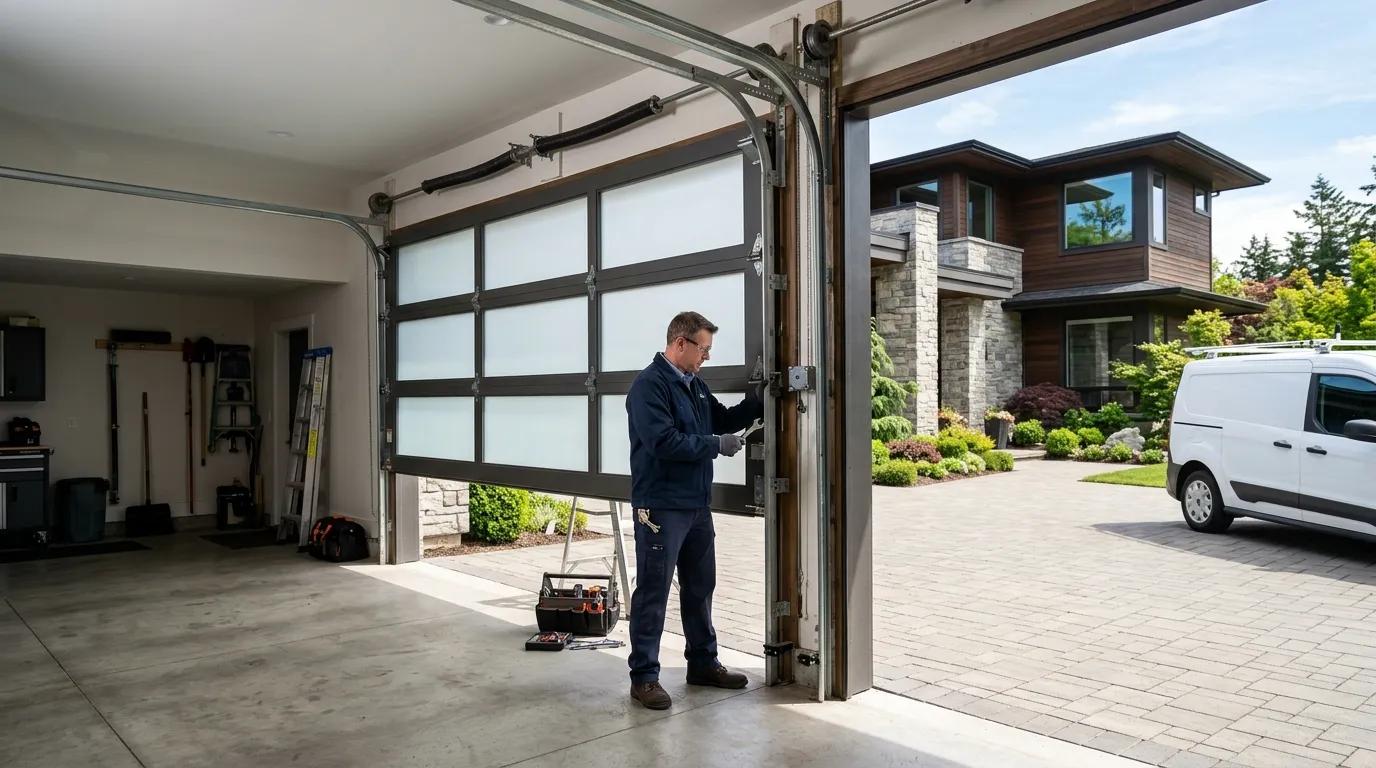
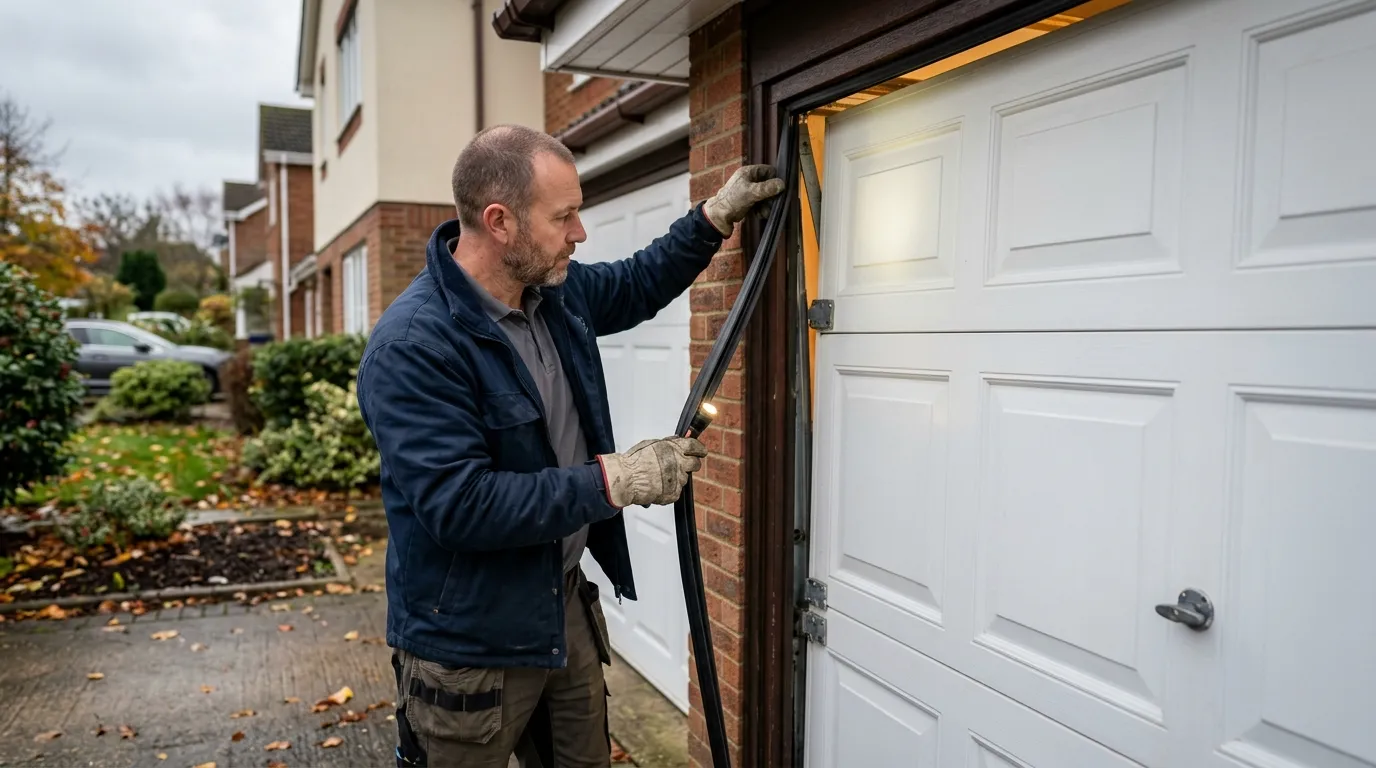
How It Shows Up
The opener hums but the door doesn't move. It moves for a second, then stops and reverses. The light blinks a pattern you can't decode. Or it's just quiet - dead, no matter how many times you hit the wall button or the remote.
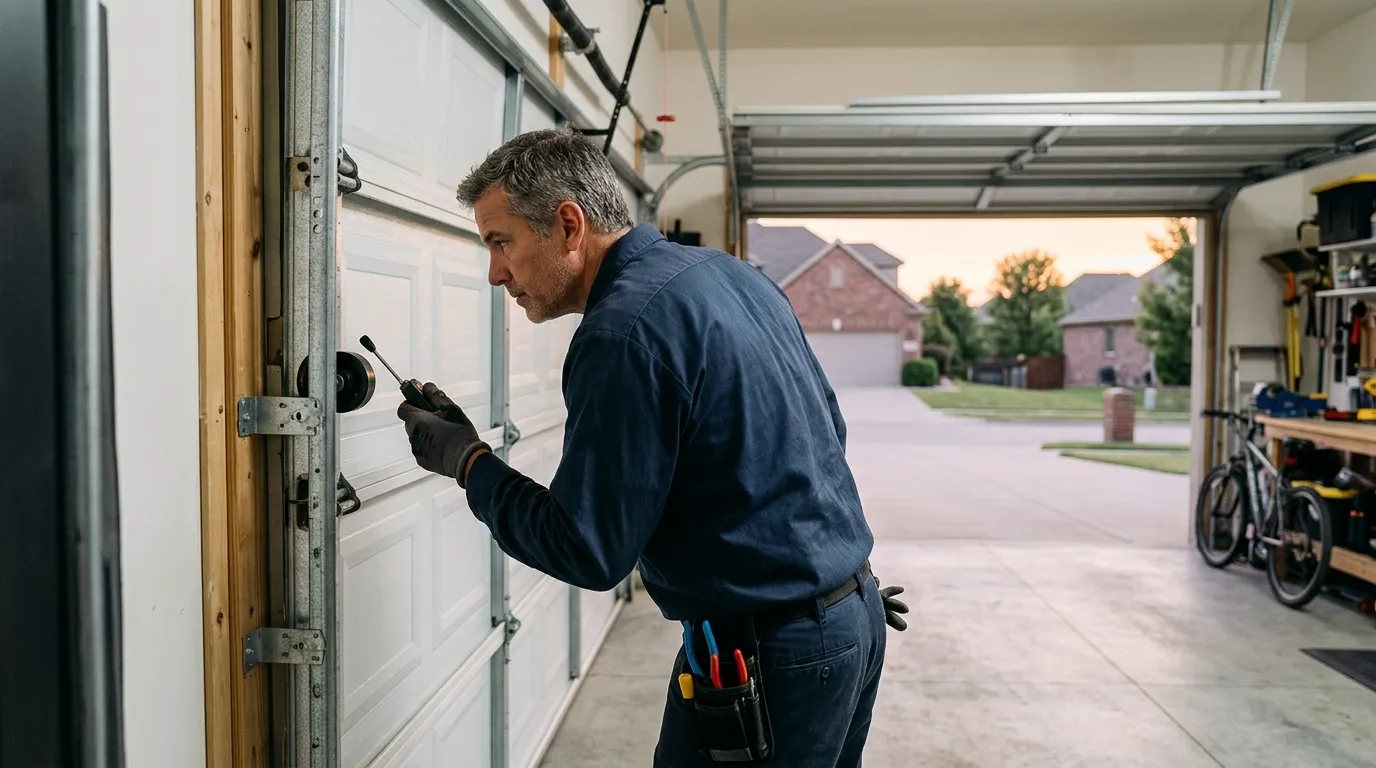
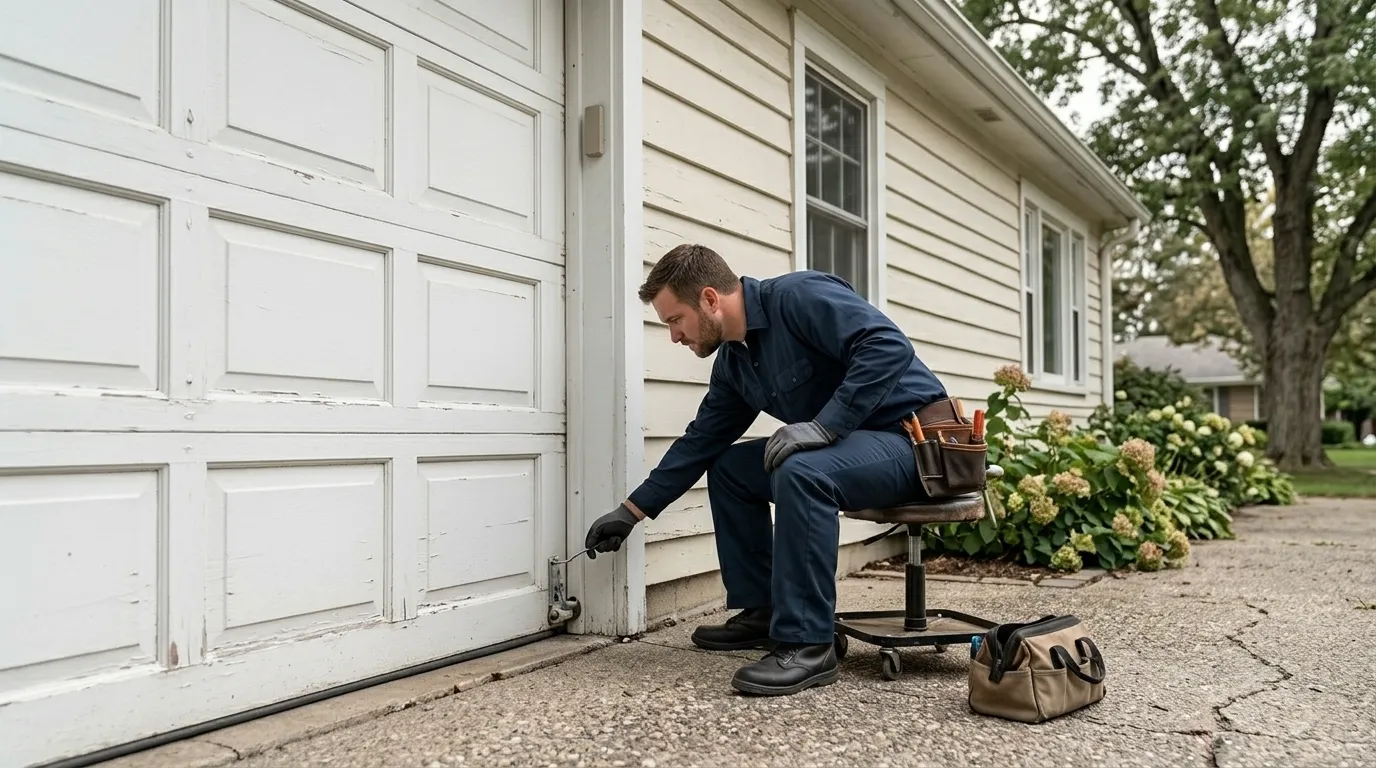
Most calls we get start with one of those. Sometimes it's the logic board losing its mind after years of power surges. Sometimes it's a worn drive gear inside the housing, plastic teeth ground down to nothing, which is common on units that have been running the same motor since installation. Sometimes the safety sensors near the floor have drifted out of alignment or gotten dirty enough that the opener thinks something's blocking the door when nothing is.
A lot of houses in this service area were built between 1956 and 2011, with the median landing around 1981. That spread means we're working on everything from decades-old chain-drive units bolted to original wood-frame ceilings to newer belt-drive systems with smart-home boards. The failure looks different depending on which era of opener you've got, but the symptom set - dead, stuck, or erratic - covers almost every call.
Time on the Job
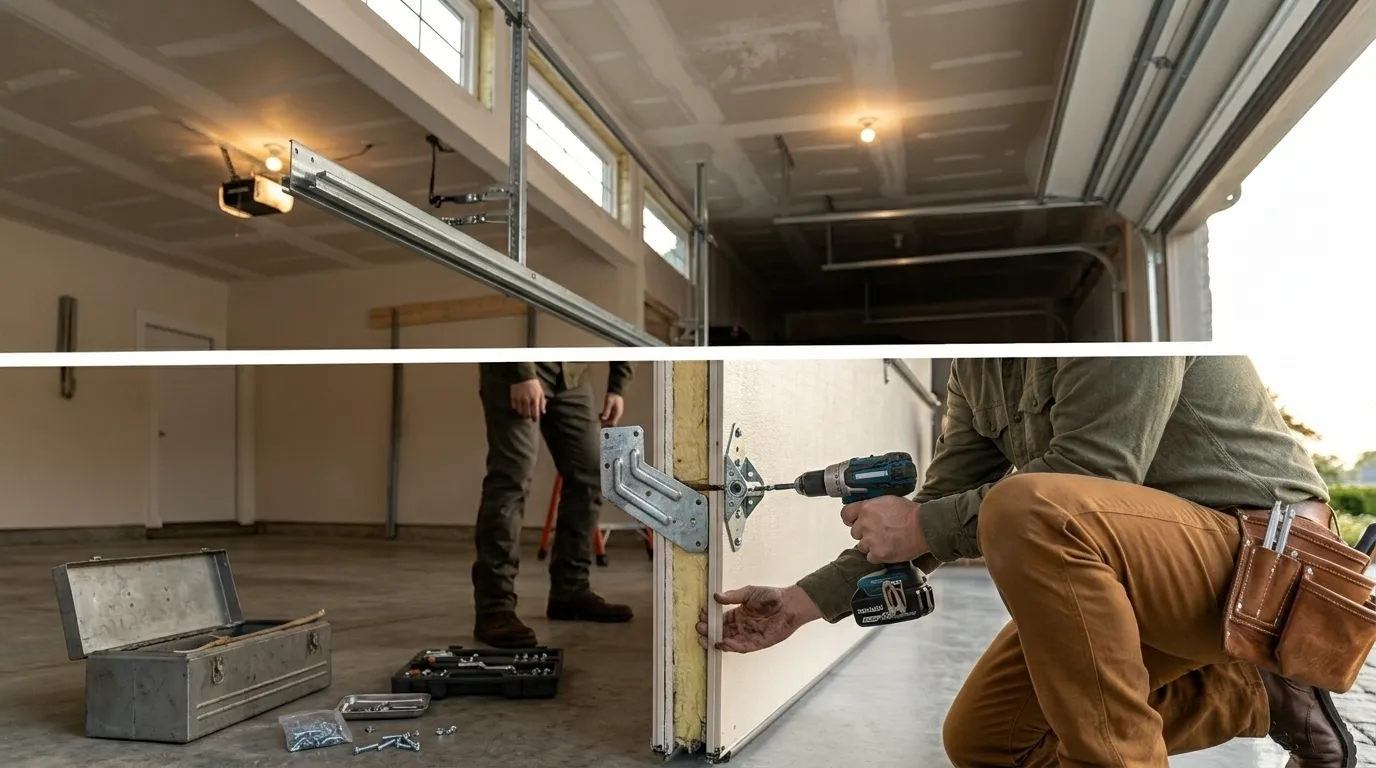
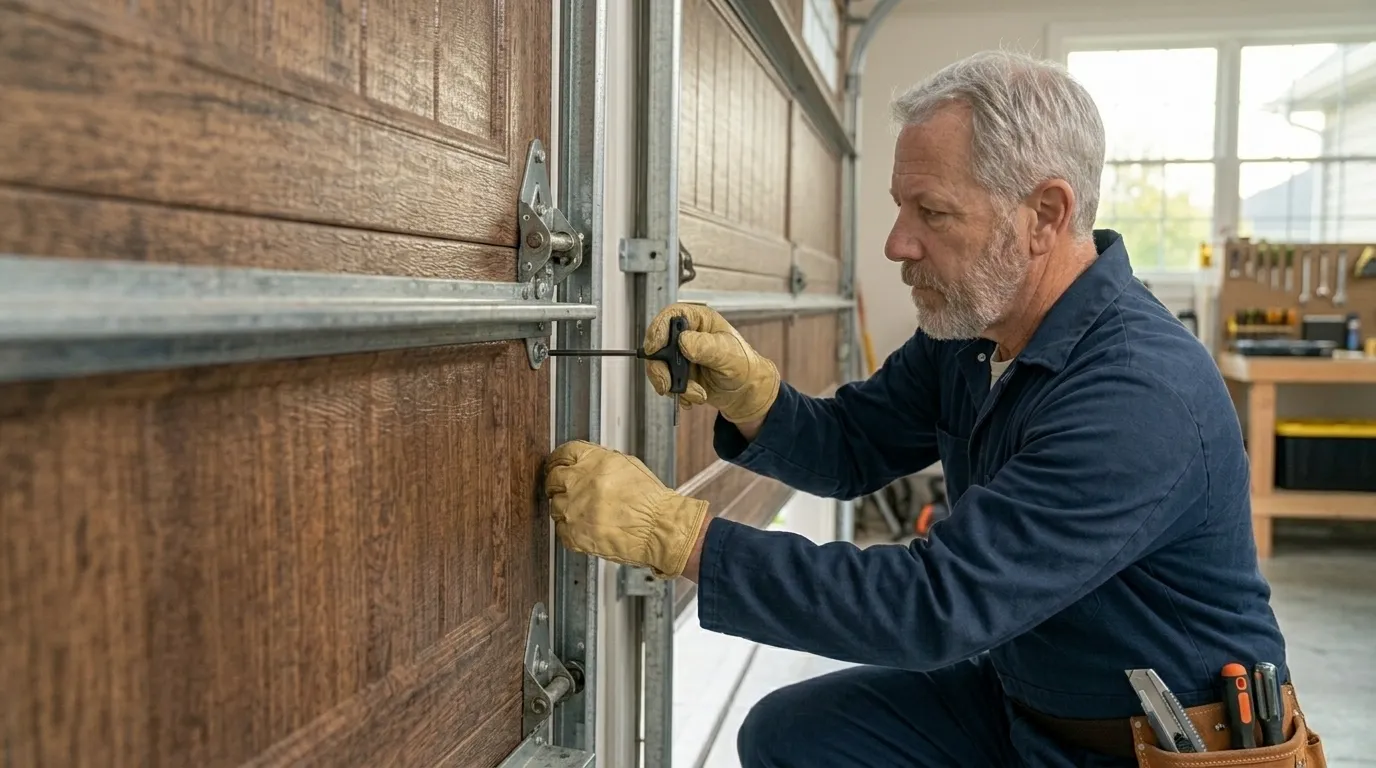
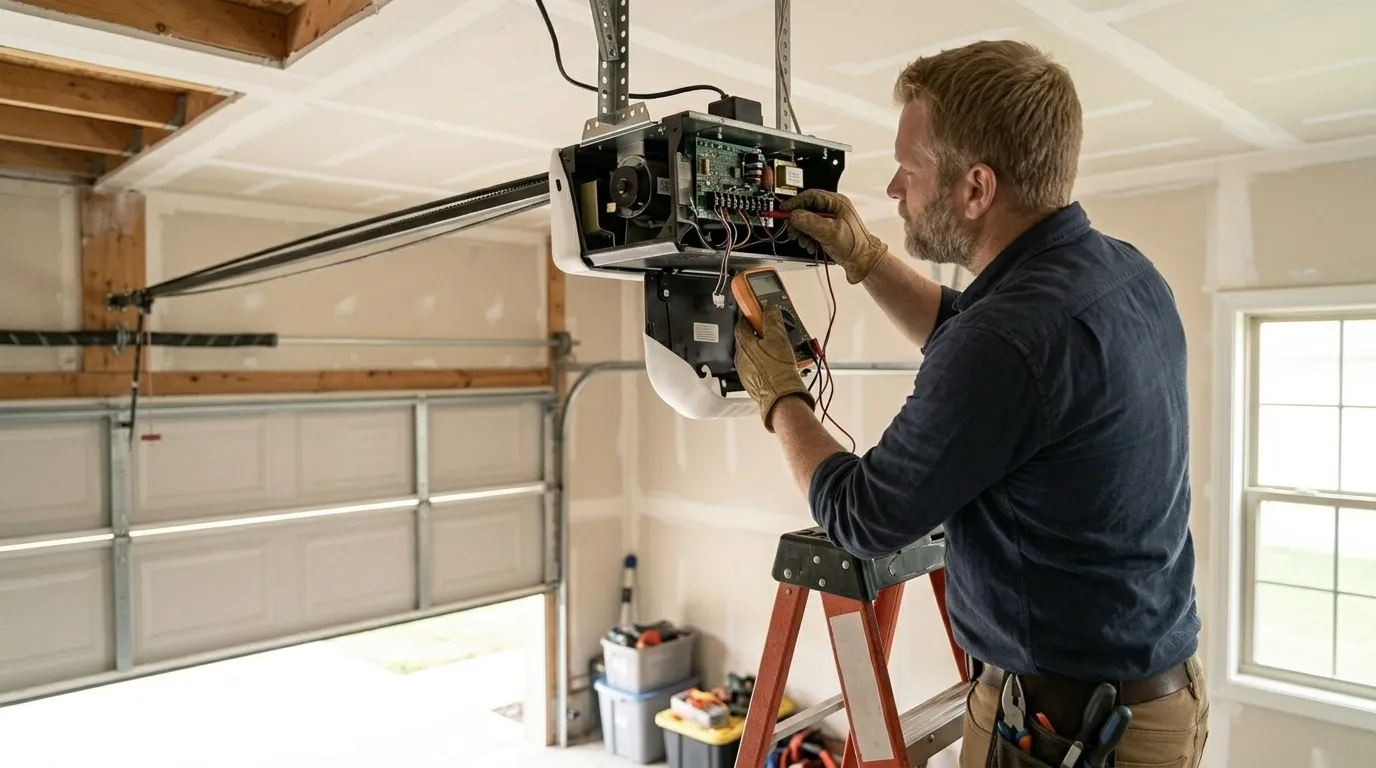
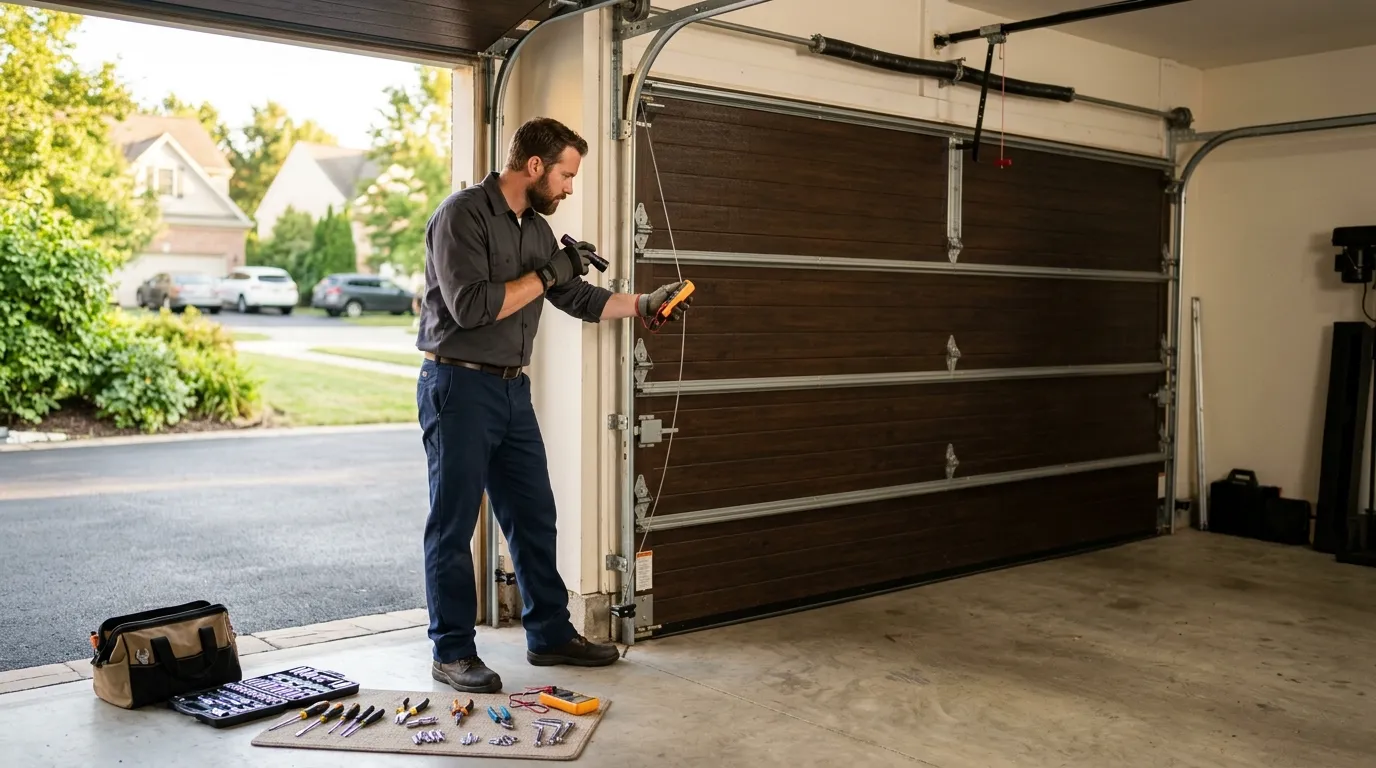
Diagnosing an opener starts the same way every time: check power at the outlet, check the wall control, check the sensors, then open the housing and look at the board and gear. Most of what fails inside an opener is one of those four things, and once we know which one it is, the fix follows a known path - reseat or replace a sensor, swap a gear kit, replace a board, or in some cases the whole unit.
We carry common parts on the truck because opener failures repeat themselves across the housing stock here - a lot of units from the 1980s and 90s share the same drive gear and board designs, since that's when most of the area's stock across its 18 named neighborhoods went up. When the part on hand matches what's on the ceiling, the job moves fast. When it doesn't - an odd or discontinued board, an older chain-drive unit nobody built that gear for anymore - the job takes longer, and we tell you that up front rather than guess.
We don't pad the visit. If the fix is a five-minute sensor realignment, that's what you're billed for, not a full motor teardown.
The Cost of This Job
An opener repair is usually one of three tiers: a sensor or wiring fix, a gear or board swap, or a full unit replacement when the motor itself is done. Which tier you land on depends on the age and condition of what's on your ceiling, not on the size of your door.
With 17,400 owner-occupied houses across this service area, a good share of them built before 2000, opener boards fail at a predictable clip every year, and that's part of why we stock the common gear and board kits rather than order them on demand. Median household income across the area runs $70,478, which is part of why so many owners choose a board or gear repair over a full unit swap when the motor itself still runs fine - it's the cheaper path and it works, as long as the motor housing and wiring are still sound.
Here's the honest limit: if the motor windings themselves are burned out, or the unit is old enough that parts aren't made anymore, repair isn't the better deal. At that point we'll tell you straight that a new opener costs less over time than chasing parts for one nobody stocks.