Doing It Yourself
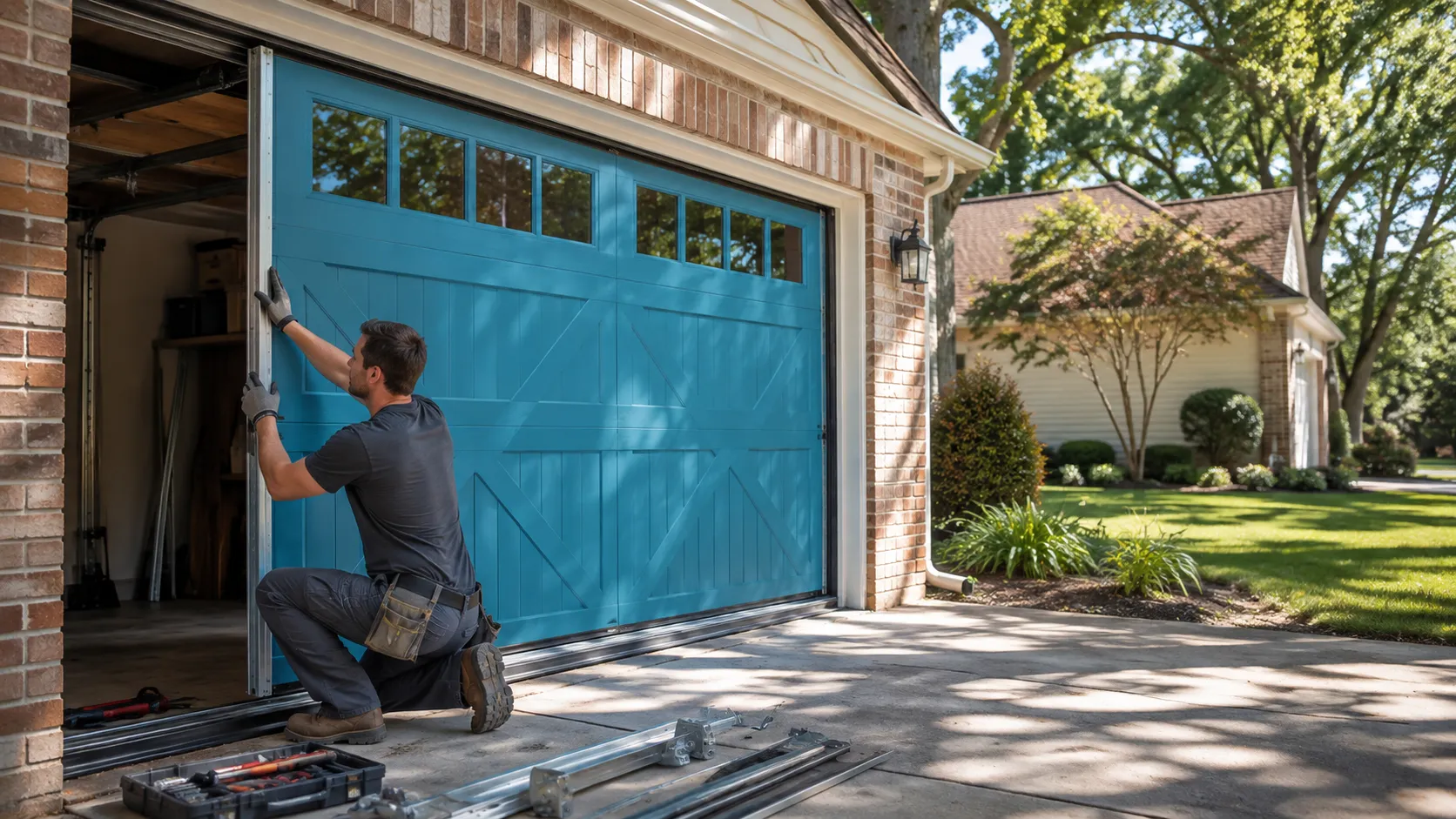
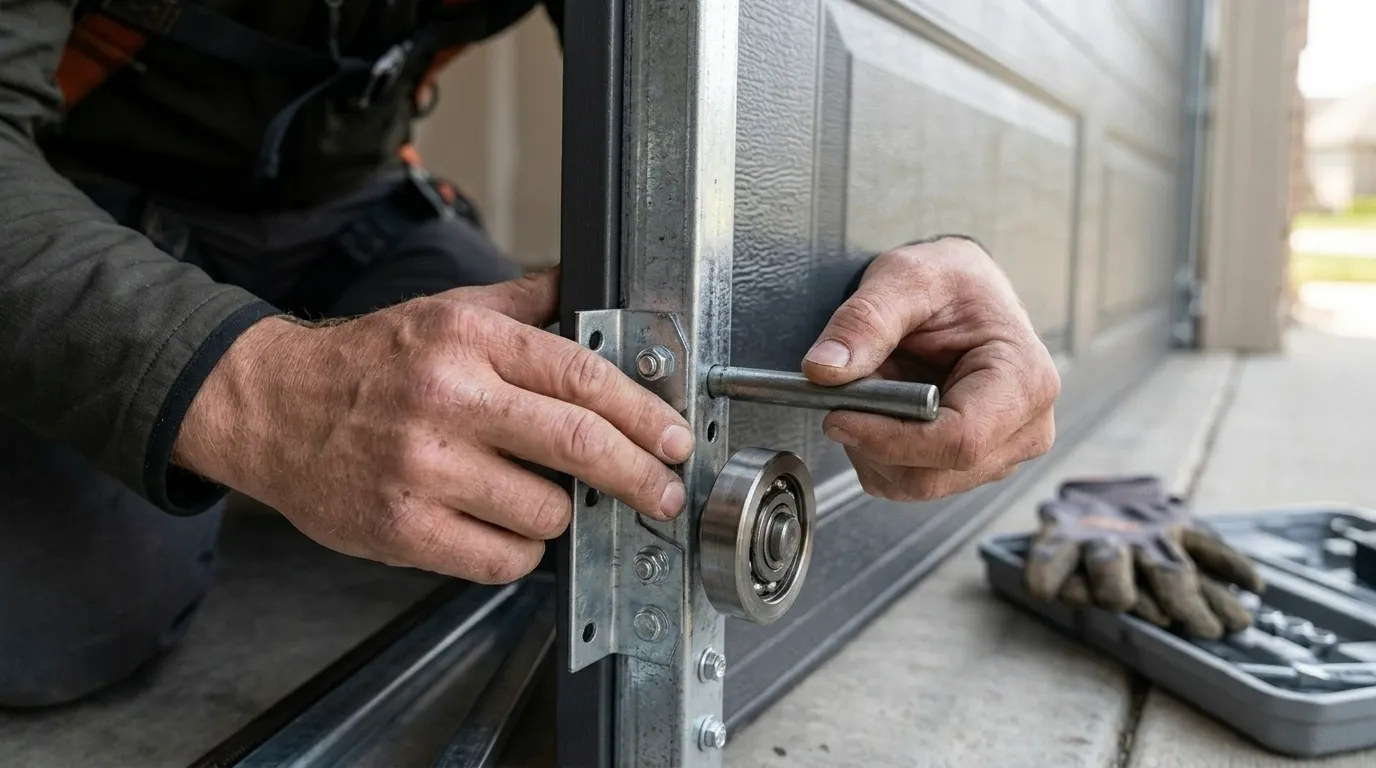
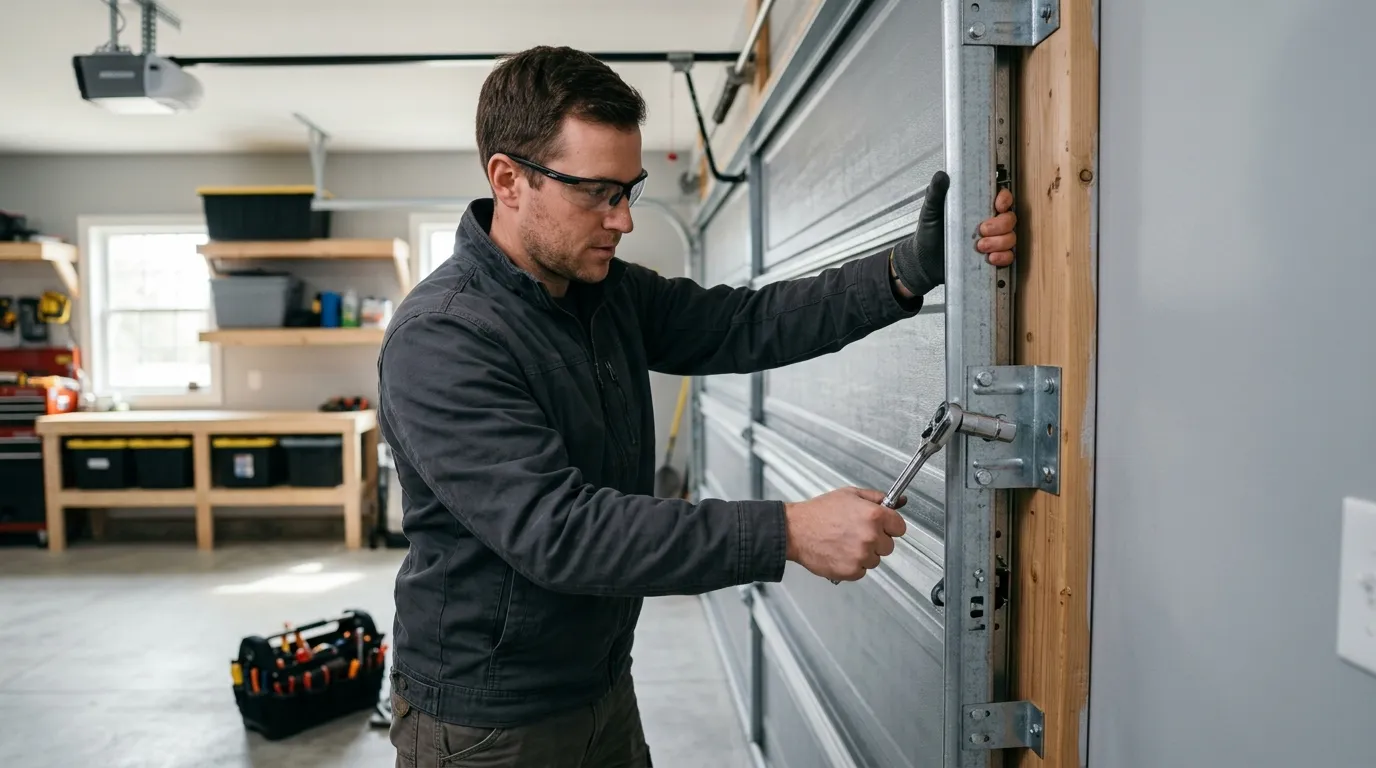
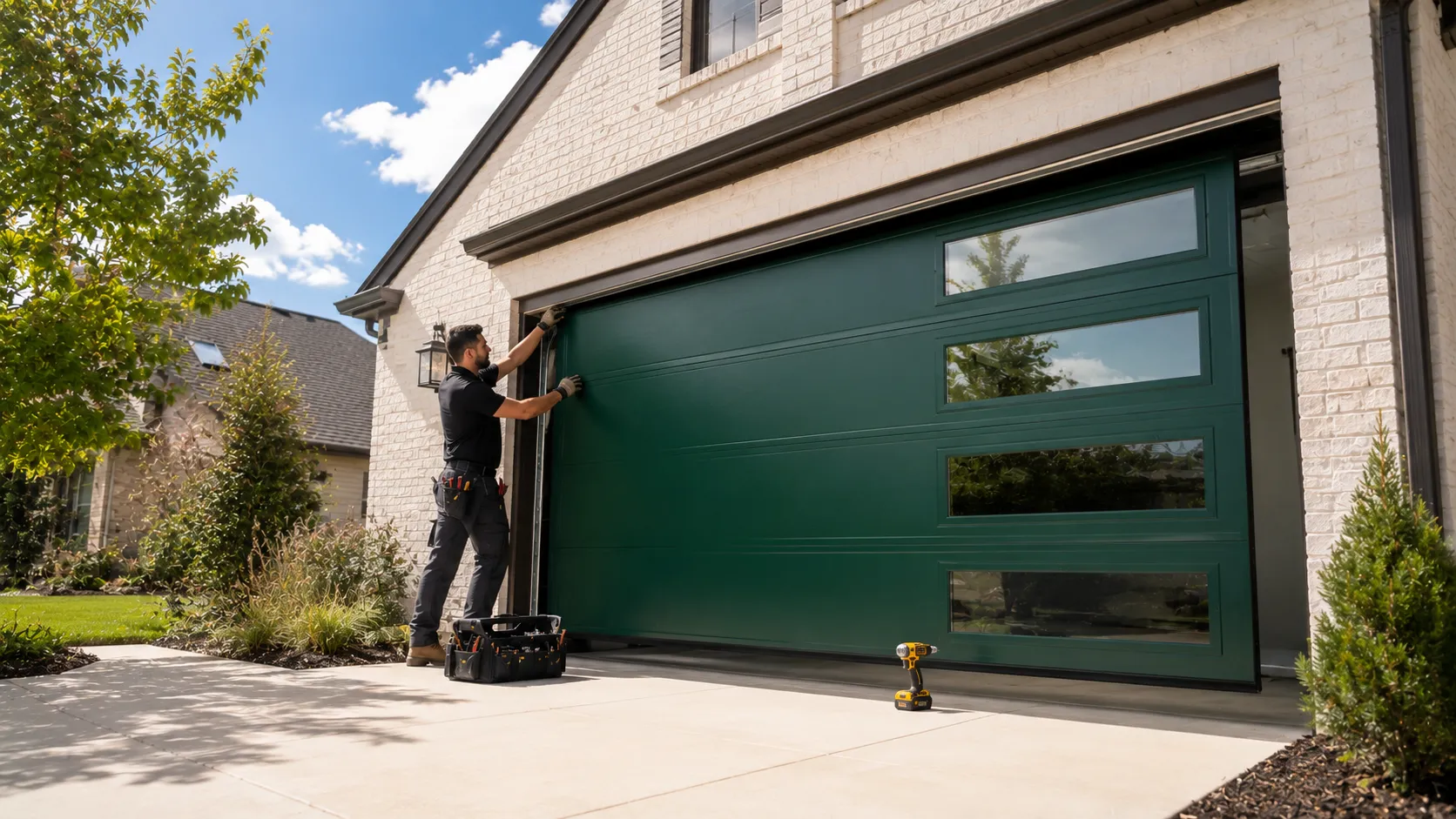
Woodbranch went up around 1982, and a lot of that original hardware is still hanging there - the same torsion spring, the same steel track bolted to the same jamb brackets. If you're thinking about swapping the door yourself, the first problem isn't the door panel. It's that nothing on a 1982 setup matches what you'll pull off a hardware store shelf today. Track widths changed, drum sizes changed, and the spring wind that worked on a lighter wood-panel door from that era will fight a heavier insulated steel door if you just bolt on the new one and reuse the old spring. A DIY install on a house this age usually means removing more of the original system than the job listing implies - jamb brackets, the header bracket, sometimes the whole track - because none of it was built to spec for a modern door. That's not a knock on the work you can do yourself. It's why a straight panel swap on a house like this turns into a full teardown once you're a few bolts in.
Why This Fails Locally
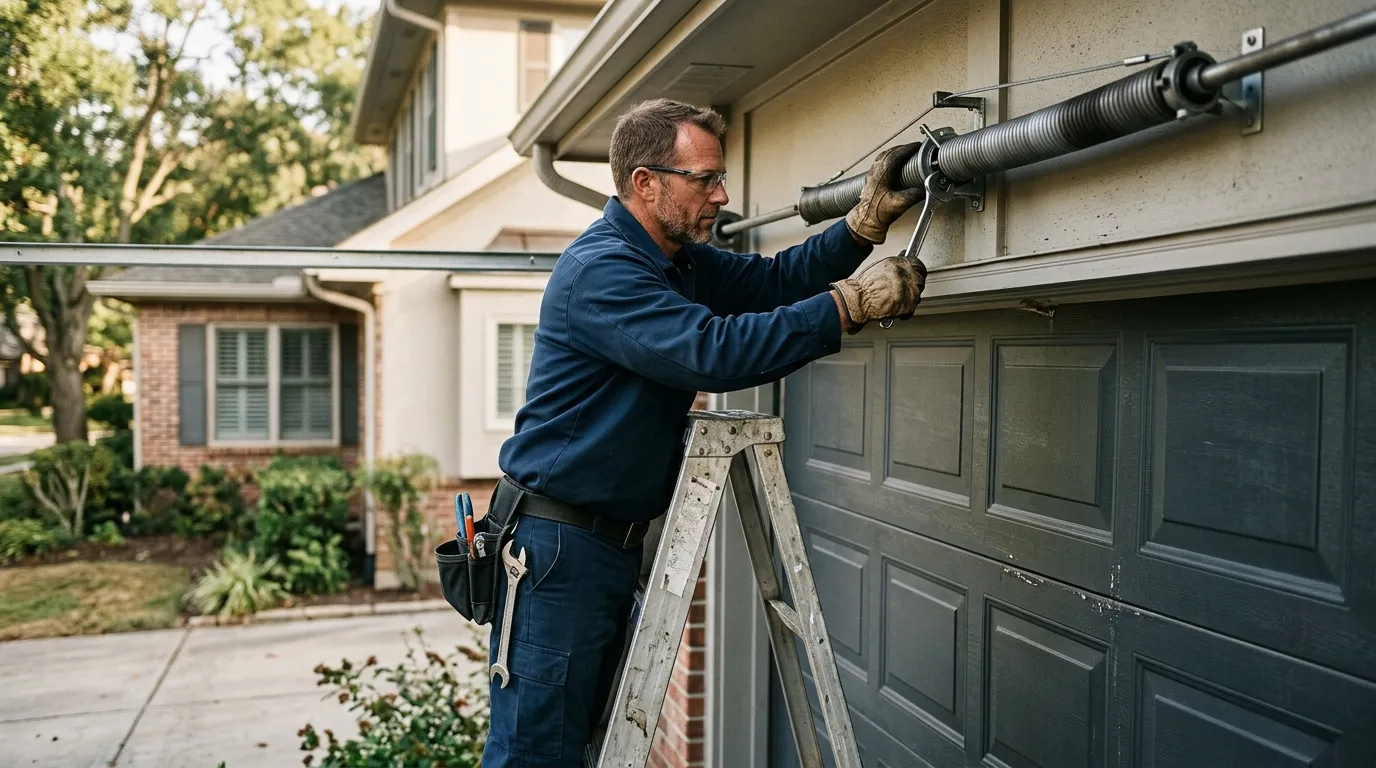
The failure here isn't rust from hard freezes - this part of Texas sits in a mild band with only occasional freeze, so you're not fighting ice-cracked panels the way a northern climate would. The failure is thirty-plus years of a door and opener working against hardware sized for a house that's never had it replaced. Torsion springs lose wind capacity over decades of cycling even without weather damage, and a spring calibrated for a 1982 door assembly is often noticeably underpowered or overpowered for whatever's been bolted onto it since. On a street where houses were built close together in the same year, this shows up house after house: the same jamb bracket, the same worn cable drum, the same undersized opener bracket trying to hold a heavier door than it was rated for. It's less a Woodbranch-specific defect than a Woodbranch-specific timeline - one build year, one generation of hardware, all aging out at once.
Time on the Job
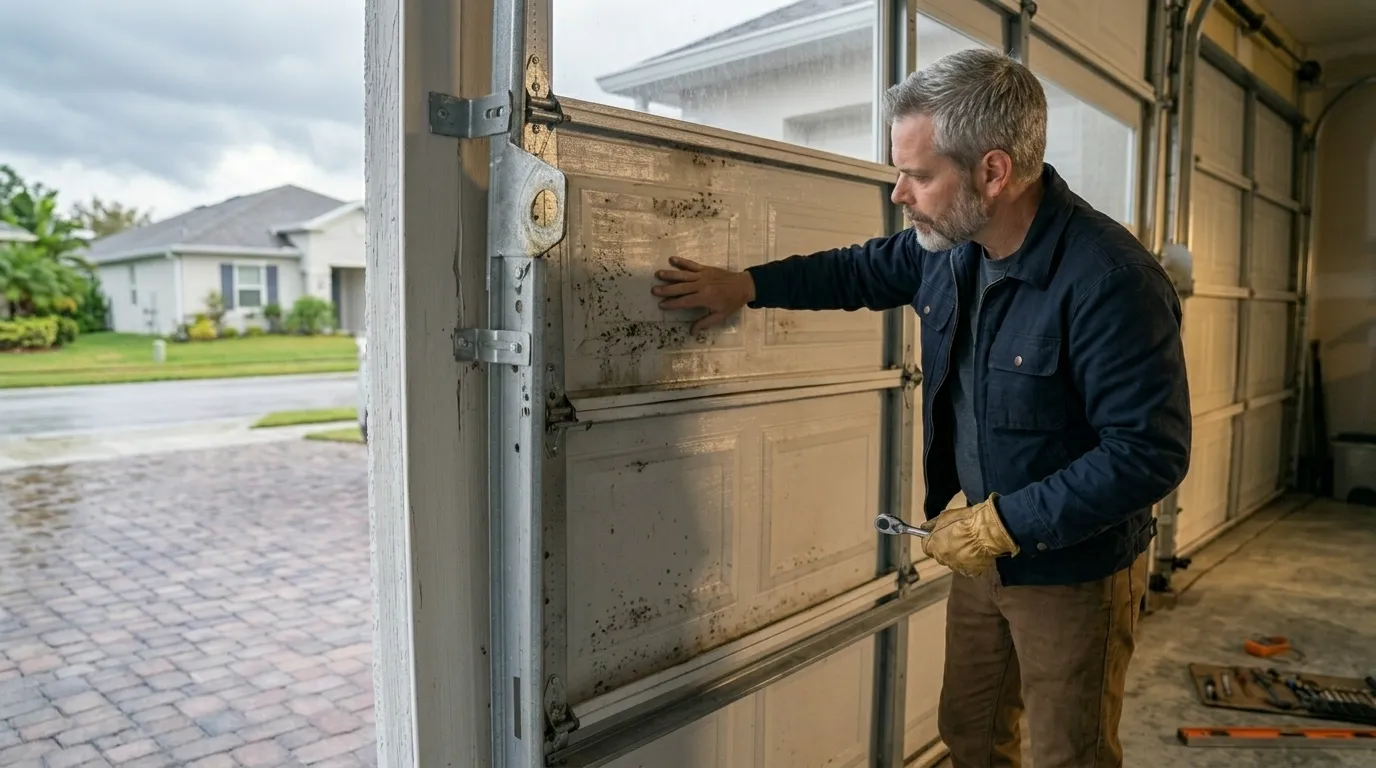
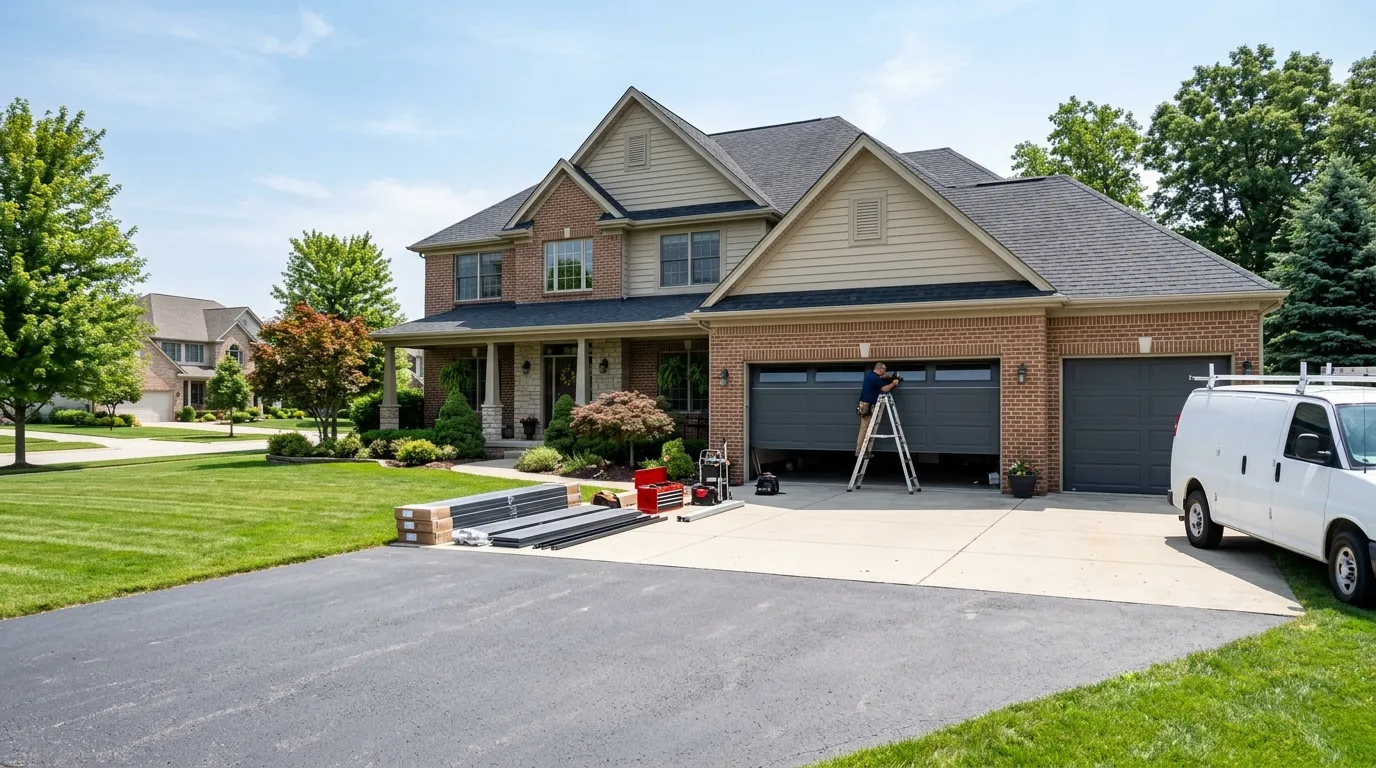
We come out from Humble, about 14 miles, so plan the visit around that drive rather than a same-day walk-in. A straight install on a house with cooperative original framing is a different job than one where the jamb brackets and header need rebuilding to take a modern door - and on 1982-era houses, it's more often the second. We won't know which one you've got until someone's standing in front of the opening. One honest limit: if the framing around the opening has shifted or rotted, that's carpentry work beyond a door swap, and we'll tell you before we start rather than force a door into an opening that isn't square.