Doing It Yourself
Woodbranch is 14 miles out from our shop in Humble, which matters more than it sounds like. A call out here isn't a quick loop around the corner - it's a drive, and it changes how the job gets scheduled and what gets brought on the truck the first time. We try to diagnose over the phone before we head that way: chain drive or belt, brand if you know it, whether the light blinks a code. Getting that right on the phone saves a second trip.
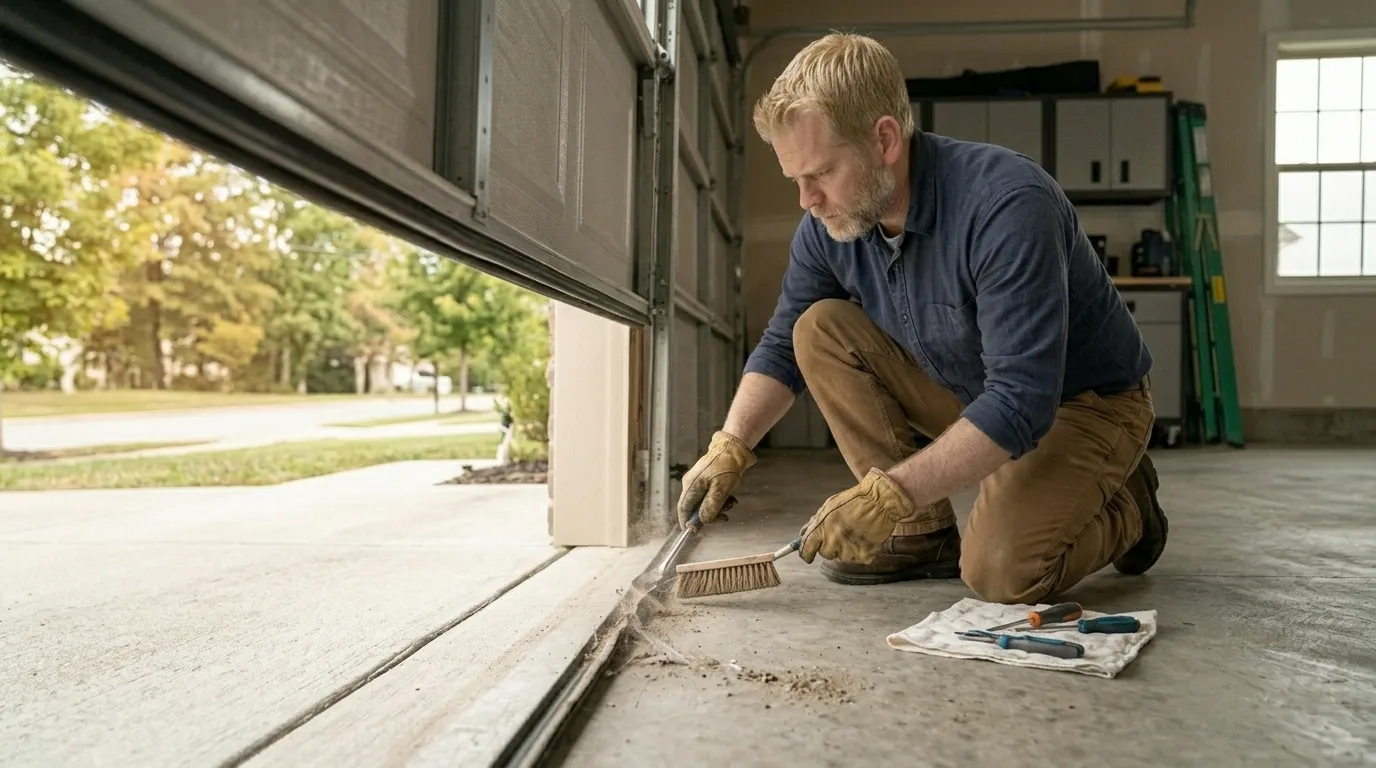
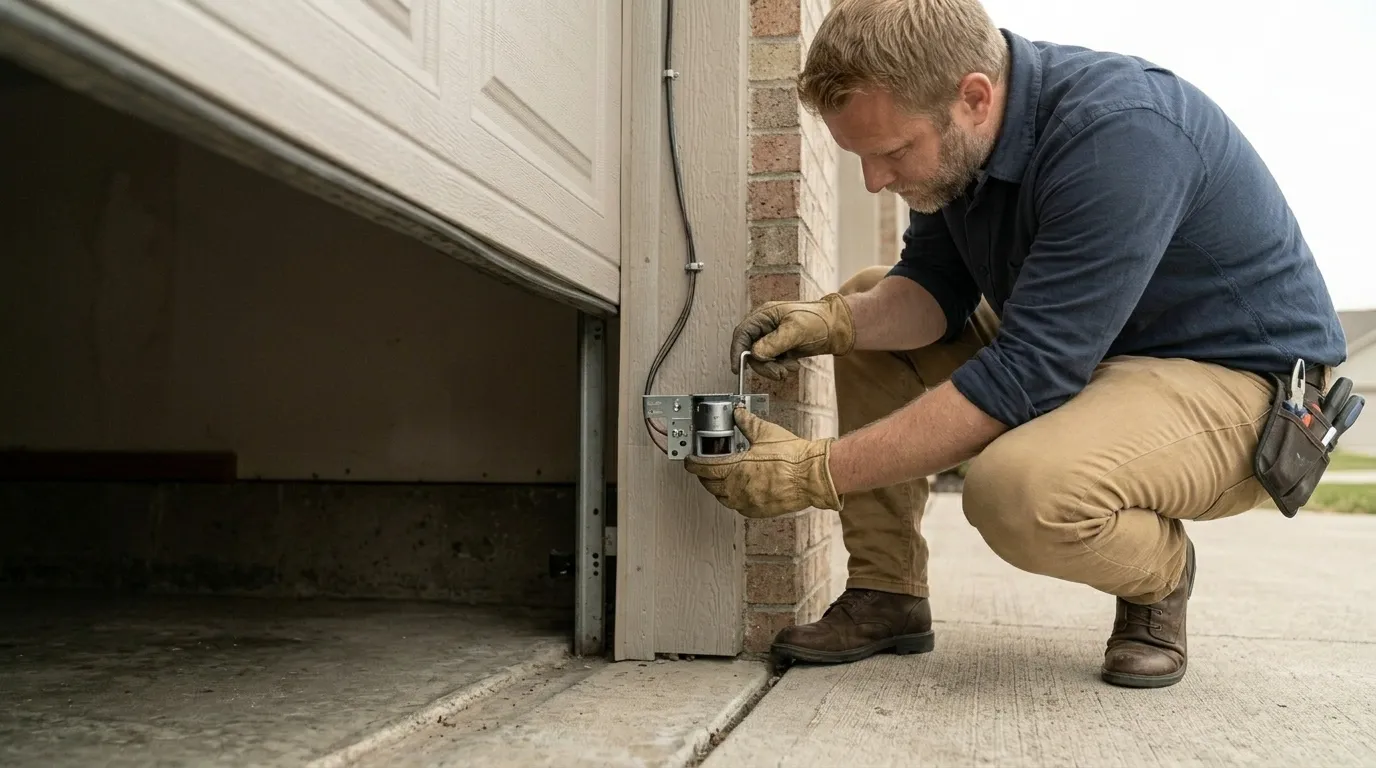
Most of what a homeowner can safely check before calling: the wall button contacts, whether the safety sensors at the bottom of the track are aligned (a blinking light usually means they're not), and whether the breaker tripped. Beyond that - pulling the opener head down, touching the circuit board, or messing with the force adjustment screws - isn't worth the risk of turning a $200 repair into a $600 one. Openers built in the era common to this area often use control boards that don't match what's sold at the hardware store today, so swapping in a generic replacement part can do more harm than the original fault.
Why This Fails Locally
Housing in the wider service area runs 1956 to 2011 with a median build year of 1981, but Woodbranch itself centers on 1982 - right in the thick of that build wave. That means openers here are commonly the chain-drive units and early screw-drive models that shipped with mid-size garages of that decade, often on 1/3 horsepower motors that were adequate then and are undersized now for heavier insulated doors people have added since.
The area's median household income sits at $87,000, well above the wider service area's $70,478, which we mention because it changes the calculus on repair versus replace. A lot of owners here choose to replace an aging opener with a quieter belt-drive unit rather than keep patching a 40-year-old chain drive, and that's a reasonable call given the age of the stock. We don't push that decision either way - if the motor and logic board are sound, a capacitor or sensor fix is the cheaper and correct answer.
Time on the Job
Because the drive from Humble runs about 14 miles, a Woodbranch opener call is built around getting it right in one visit rather than a quick patch-and-return. That means the truck carries a broader stock of capacitors, gear kits, and sensor pairs than a job five minutes from the shop would need. Most opener repairs - capacitor swap, gear replacement, sensor realignment - run under an hour once we're on site.
Where it takes longer: if the logic board itself has failed on an opener old enough to match the 1982 median build year here, and the exact board isn't something we carry on the truck, that becomes a return trip once the part is in hand. We won't pretend otherwise - it's the one honest limitation on same-day work in a town this far out. We'd rather tell you that up front than promise a fix we can't deliver on the first visit.