The Cost of This Job
What drives the cost here isn't the opener box itself, it's what's behind the wall and above the door. Homes in Spring Valley Village cluster tightly around 1981, the year local construction here settled into its median, and a lot of those garages were wired for a single low-draw circuit meant for a chain-drive unit half the weight of what people want installed today. If the door itself has been upsized or replaced since then, which is common at the income level this area runs, the opener has to be matched to a heavier door, not just the outlet that's already there.
At a median household income of $227,857, Spring Valley Village runs more than triple the $70,478 median across the wider service area, and that shows up in what people ask for: quieter belt-drive units, battery backup, smart-phone control. None of that changes what the wiring and header clearance will actually allow. We quote the job after we've looked at the bracket, the header, and the circuit, not off a price list, because on a house this age those three things vary more than the opener does.
What Can Go Wrong
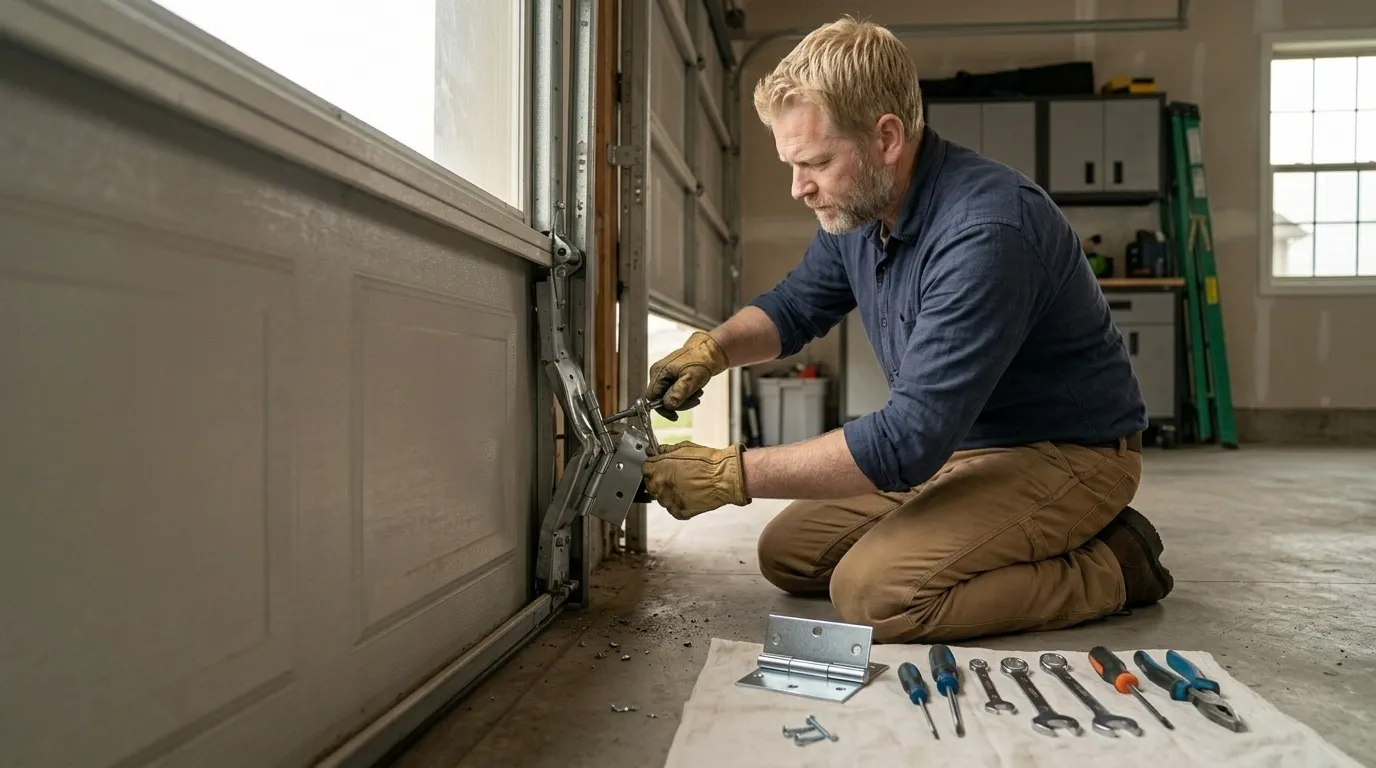
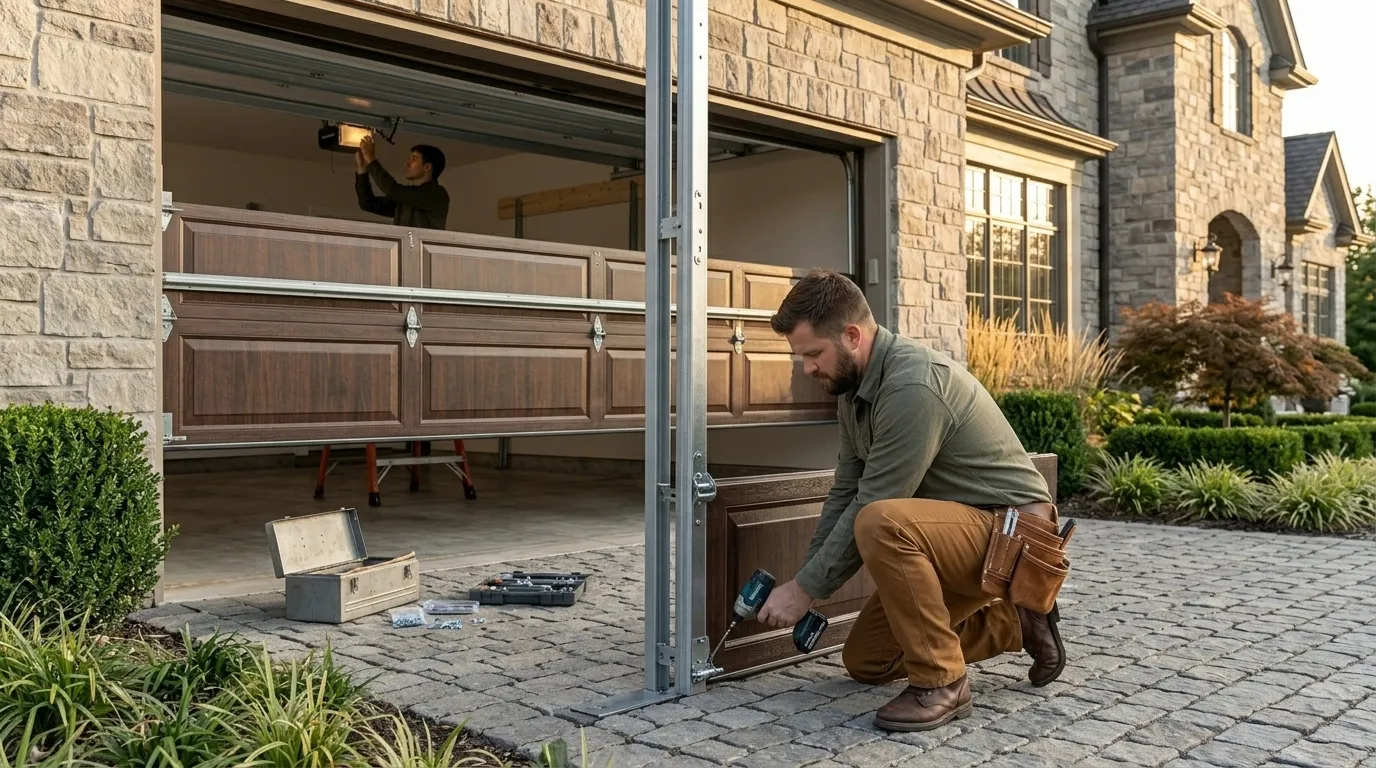
The most common issue on a 1981-era garage isn't the opener failing, it's the opener being asked to do a job the mounting wasn't built for. Wood jamb brackets from that era loosen over four decades of seasonal swelling, even in a mild climate with only occasional freeze events, and a new opener bolted to a soft jamb will rack the door instead of lifting it evenly.
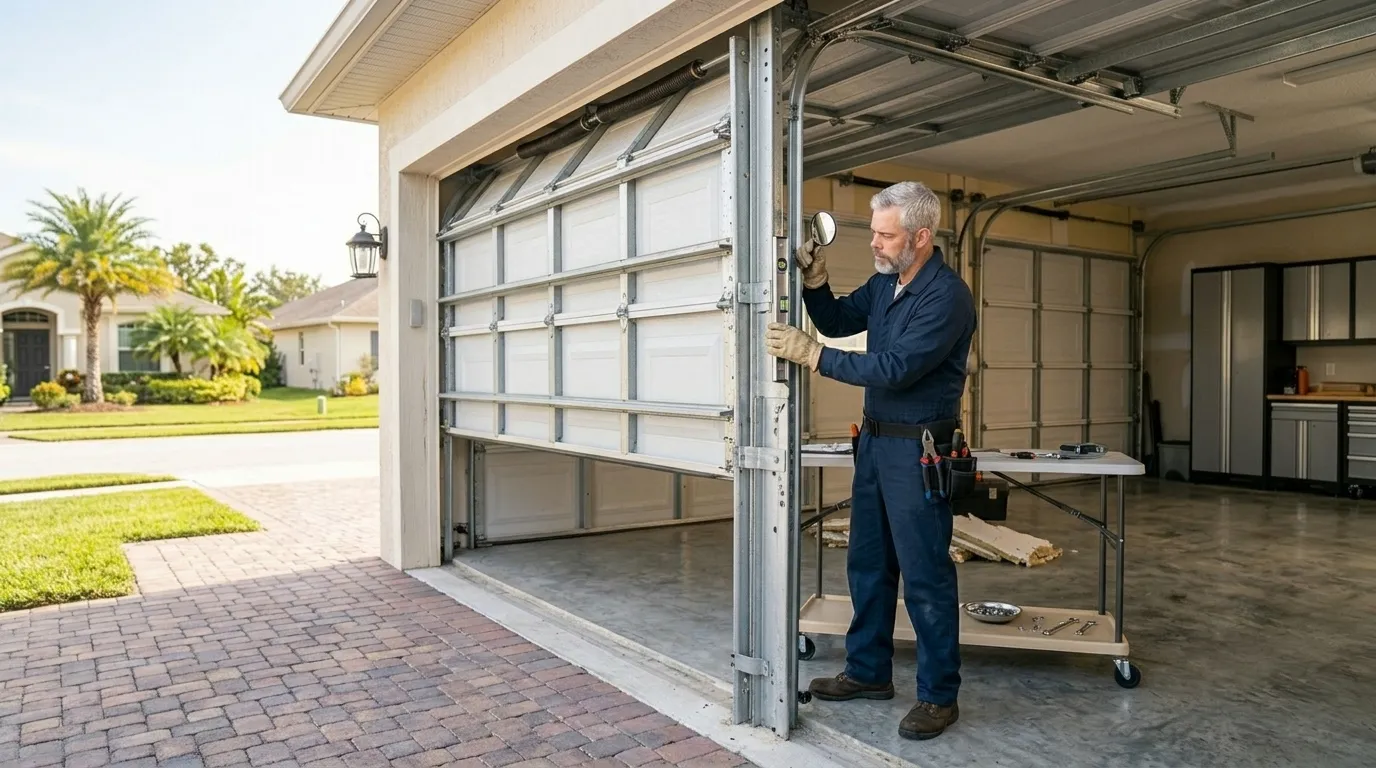
The second problem is clearance. Original construction from this period often left less header room above the door than modern opener rail systems assume, which means the rail has to be repositioned or a low-headroom kit used instead of the standard mount. Skip that step and the opener either won't fit square or it'll bind against the top panel on every cycle.
Third, and this is the honest limitation: if the existing door itself is original, wood, and warped from decades of Gulf humidity, no opener install fixes that. We'll tell you straight when the door, not the opener, is the actual problem, and that sometimes means a smaller job than the one we came out to quote.
Stocked Parts
The truck comes from Humble, twenty miles out, so what's on it matters more here than it would for a same-block job. We carry standard belt and chain-drive units, current rail kits, low-headroom conversion kits, and the brackets and lag hardware sized for both original wood jambs and newer steel-reinforced ones, since Spring Valley Village has a mix of both depending on when a given house was last touched.
What we don't carry, and won't pretend to, is parts for openers old enough to predate standard rail sizing - some of the earliest chain-drive units from this era used proprietary rail and carriage assemblies that manufacturers stopped supporting years ago. If that's what's on the wall, the honest answer is full replacement, not a patched repair, and we'll say so on-site rather than order a part that may not show up for weeks.
Why This Fails Locally
A 1981-built home in Spring Valley Village usually still has its original single-circuit garage outlet, sized for a chain-drive opener half the weight of what a modern belt-drive unit pulls, and that mismatch is the root of most install problems here. It's not a Humble problem or a general Texas problem - it's specific to a housing stock that settled into its median build year before belt-drive and smart openers were standard equipment.
With roughly 1,308 households in Spring Valley Village, this is one of the smaller pockets in the region, but the housing age is consistent enough that the same fault shows up house after house: original bracket, original circuit, door upgraded without the mounting hardware being upgraded to match. Add a mild climate with occasional freeze swings, which loosens wood jamb screws over time even without severe weather, and you get an opener that was installed correctly in 1981 and simply isn't correct anymore.