How It Shows Up
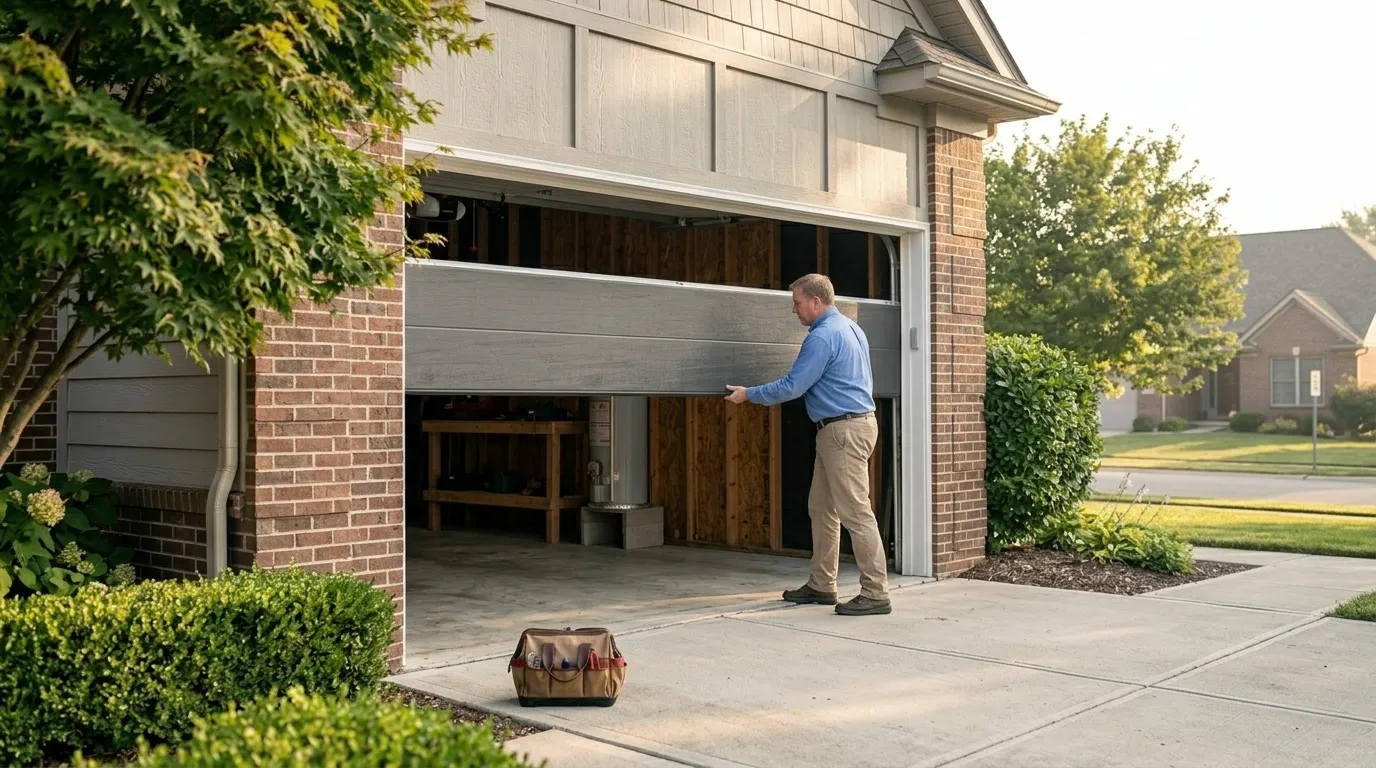
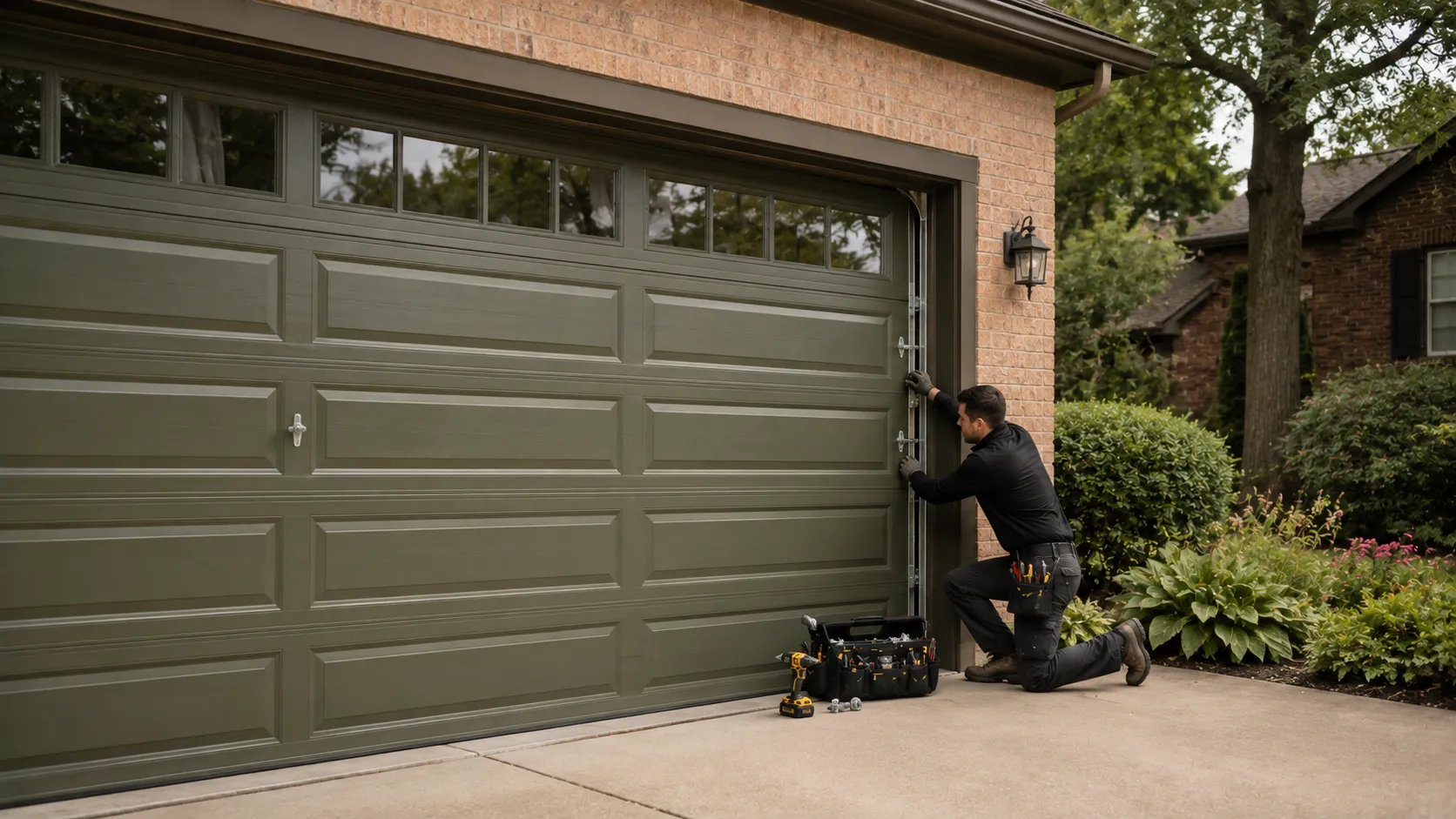
Most houses in Patton Village went up around the mid-1990s, which puts the typical door here at a steel sectional, either a 16x7 double or an 8x7 single, hung with a woodgrain-stamped finish that was standard builder spec in that era. These aren't the heavy insulated doors going into new construction today - they're thinner steel skins over a light foam core, sometimes no foam at all, and after two and a half decades the bottom two panels usually show it first. A cracked seam near the bottom roller track, a dent from a trailer hitch or a soccer ball, rust bubbling up where the drip edge sits against a slab that's settled a little - all normal wear for a door this age. You don't need to replace the whole unit for one bad panel if the rest of the run is sound, but on doors this old, finding a matching panel gets harder every year the model sits out of production.
Because Patton Village sits inland with a mild climate and only occasional freezes, you're not dealing with the swelling and cracking that wood-composite panels see up north. The damage here is almost always mechanical - impact, or slow rust at ground contact - not weather fatigue.
What the Repair Takes
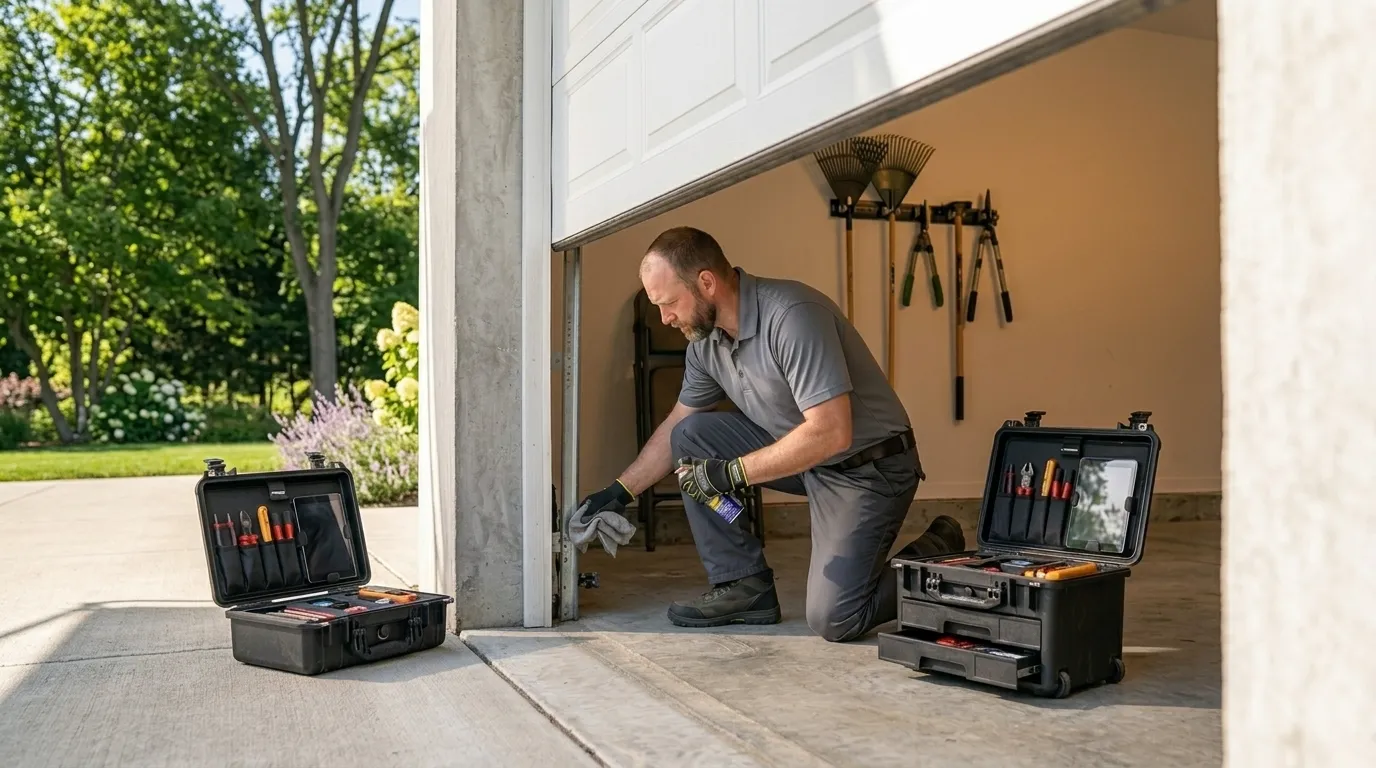
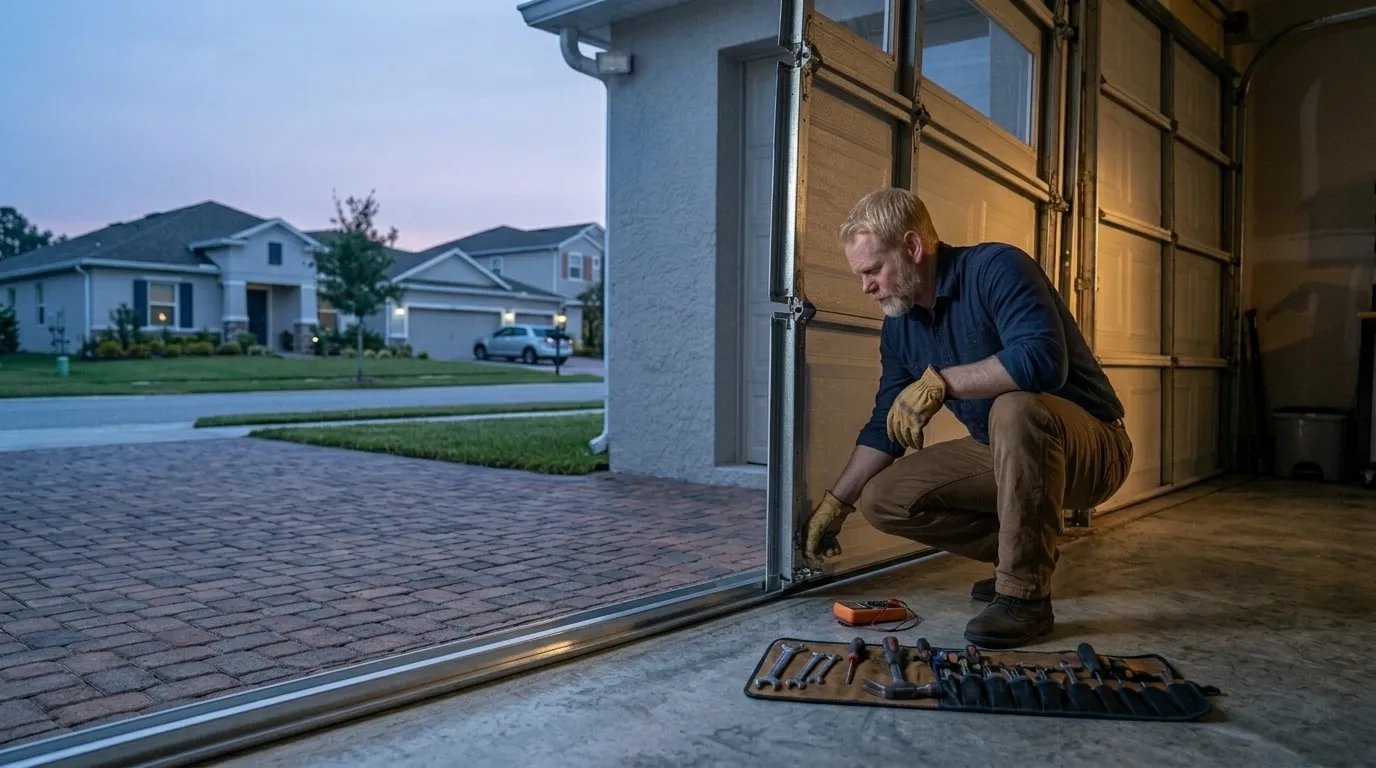
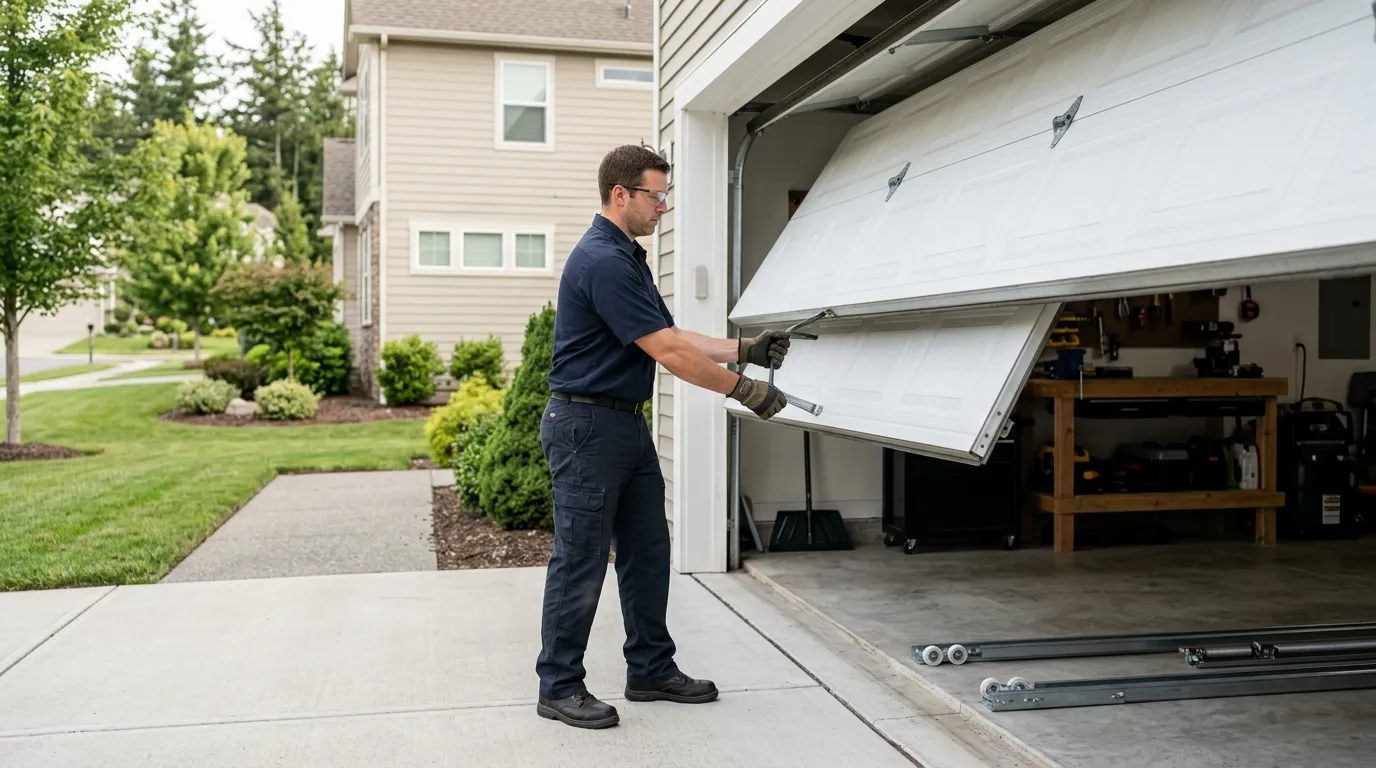
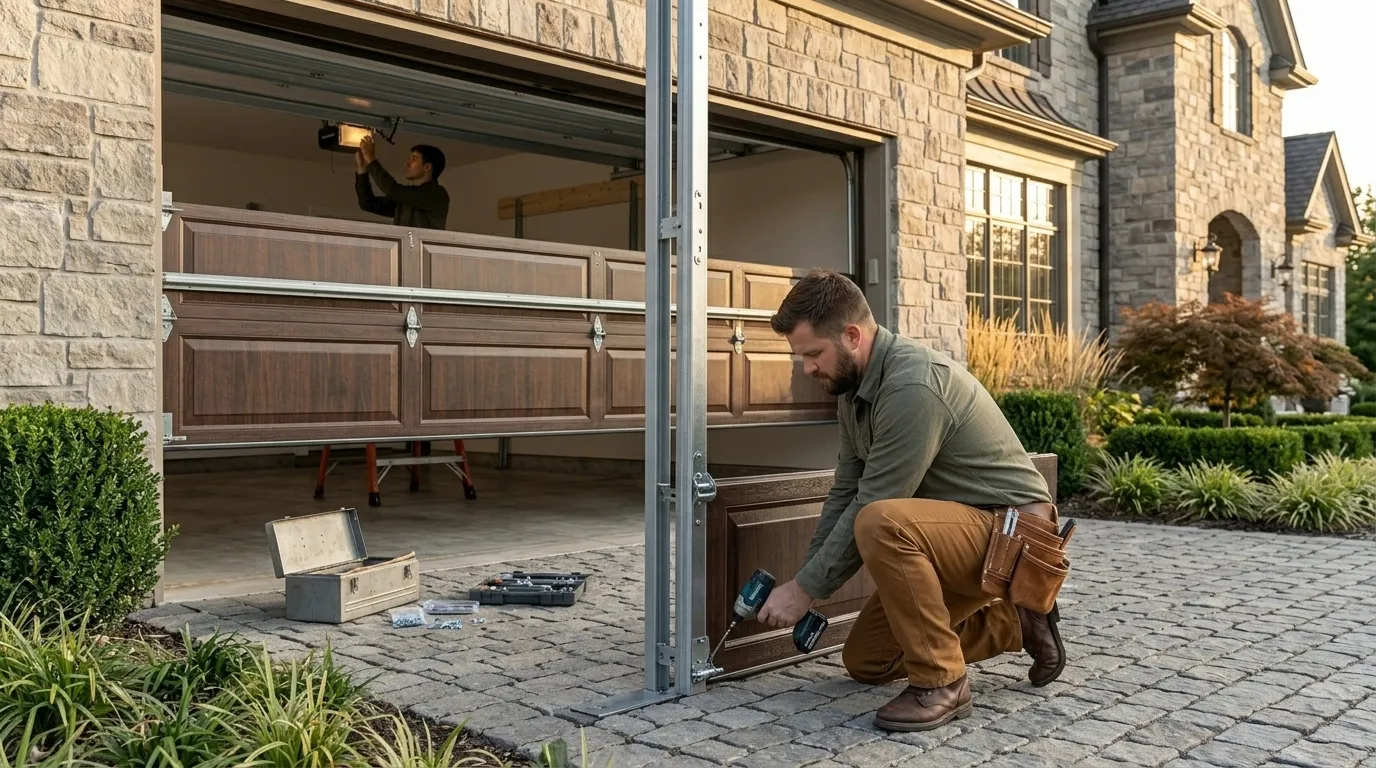
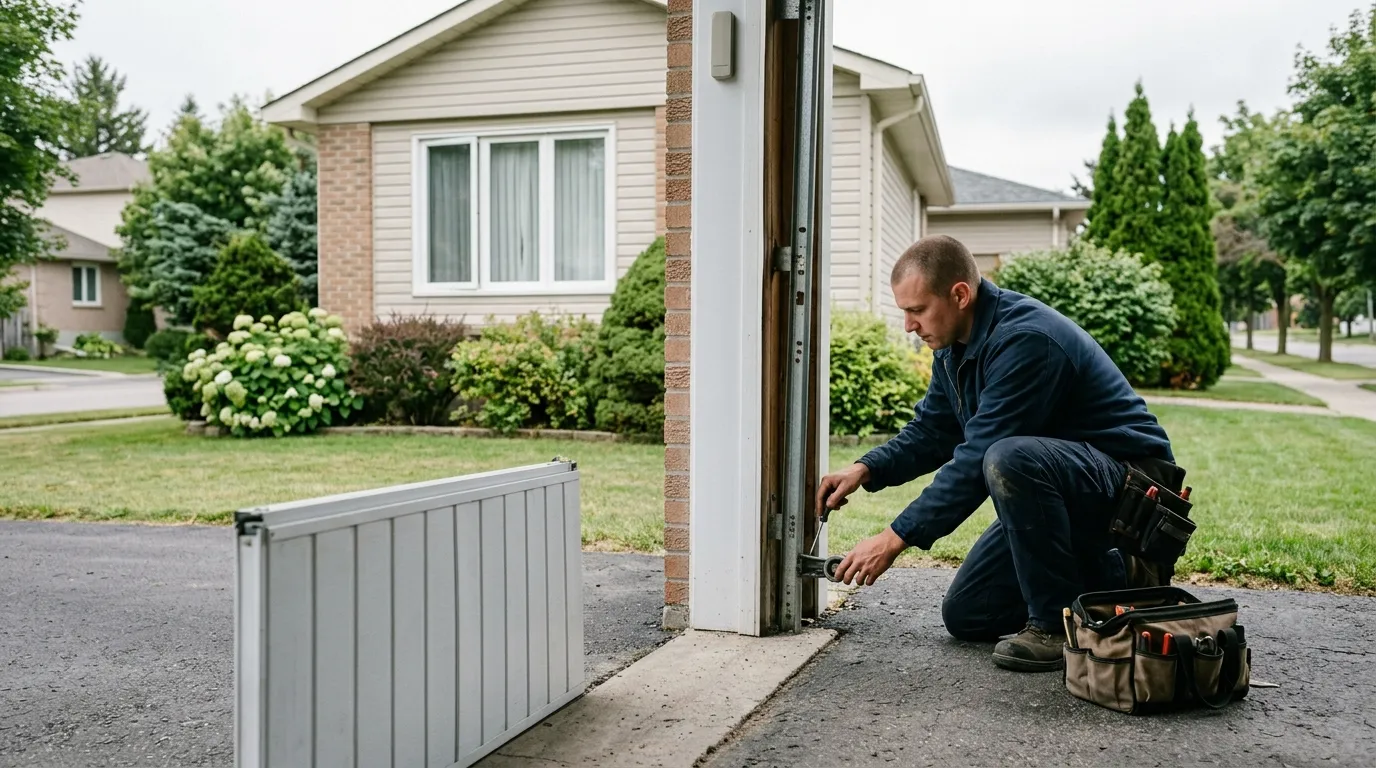
A single-panel swap on a mid-90s steel door means matching the panel profile, the rib spacing, and usually the color, since factory-matched steel from that period is often discontinued and we're working from close equivalents rather than exact stock. On a double 16x7 door this is a half-day job on site: pull the track brackets, slide the damaged section out without disturbing the torsion spring if the break is cosmetic, and reset the rollers once the new panel's seated. If the bottom panel has rusted through at the corners from ground moisture, we'll check the u-channel weatherstrip while we're in there - on a door this age it's usually due anyway.
One thing worth saying plainly: if two or more panels are cracked, or the steel's thin enough that a new panel would flex differently than the old ones next to it, patching becomes false economy. At that point a full door replacement is priced closer to what four individual panels would cost, and you get hardware and insulation that matches, instead of a door that's part 1996 and part new.
What Can Go Wrong
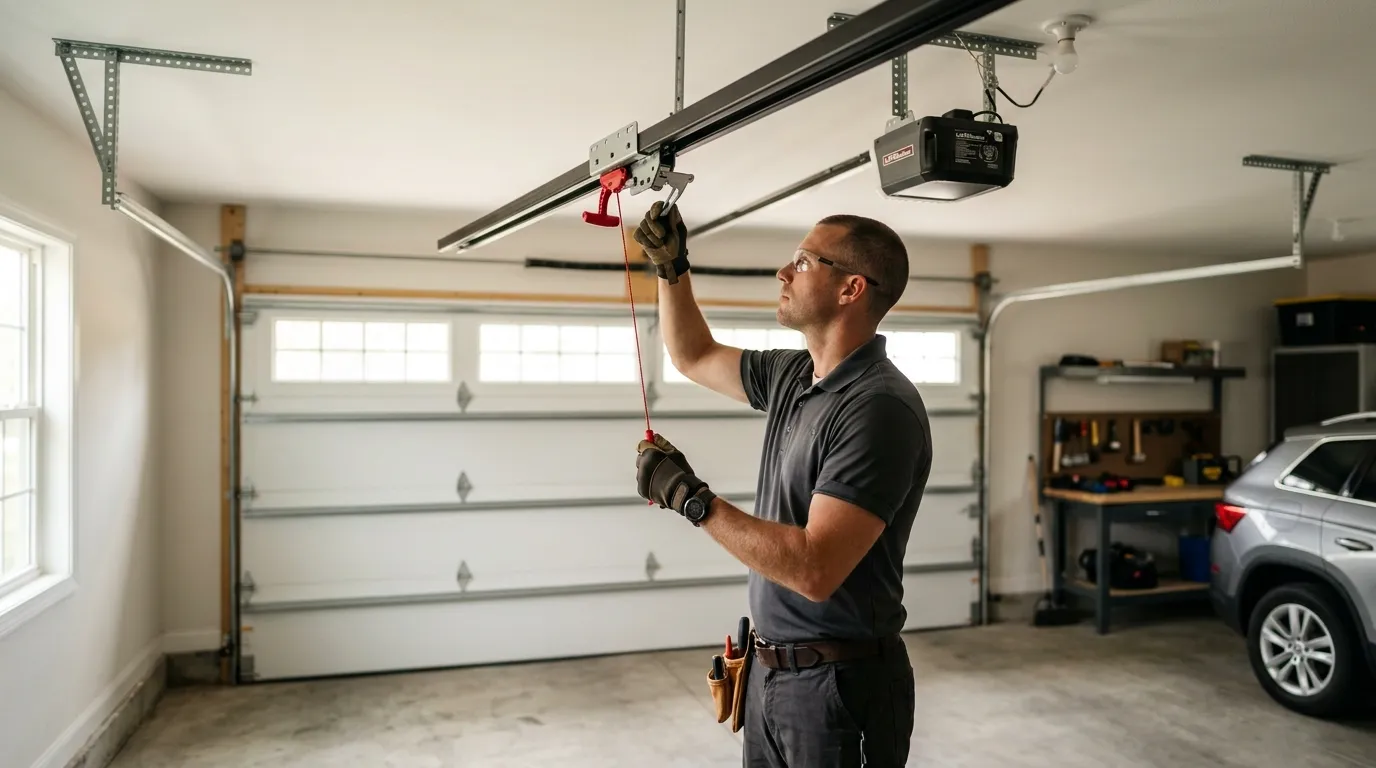
On a steel door this old, the panel is rarely the whole story. Pull one damaged section and you often find the roller bracket behind it has worn an oval hole where the roller stem sat for twenty-plus years, or the hinge between panels has stretched enough that the new panel won't sit flush without a hinge swap too. Torsion springs from the original install are also near the end of their rated cycle count by this age - not a reason to avoid the panel job, but worth a look while the door's apart, since replacing a spring after the fact means pulling the door open again.
The other failure mode specific to builder-grade steel from this period: the factory finish doesn't always match modern paint codes exactly, even when the panel profile is right. We'll tell you up front if a color seam will be visible rather than promise an invisible match we can't deliver.
The Cost of This Job
Patton Village is a small area - about 454 households - so we don't see a high volume of this exact job here, which means pricing depends more on sourcing the right panel than on labor. A single steel panel swap on a standard double door runs less than most people expect once the part is in hand; the cost driver is almost always how close we can get to the original profile without a full custom order. Given the area's median household income sits above the wider service area's $70,478 figure, most homeowners here are replacing a panel to keep a functional door looking right, not because the budget forces a patch job - which is part of why we're upfront when replacement beats repair rather than upselling a fix that won't hold.