How It Shows Up
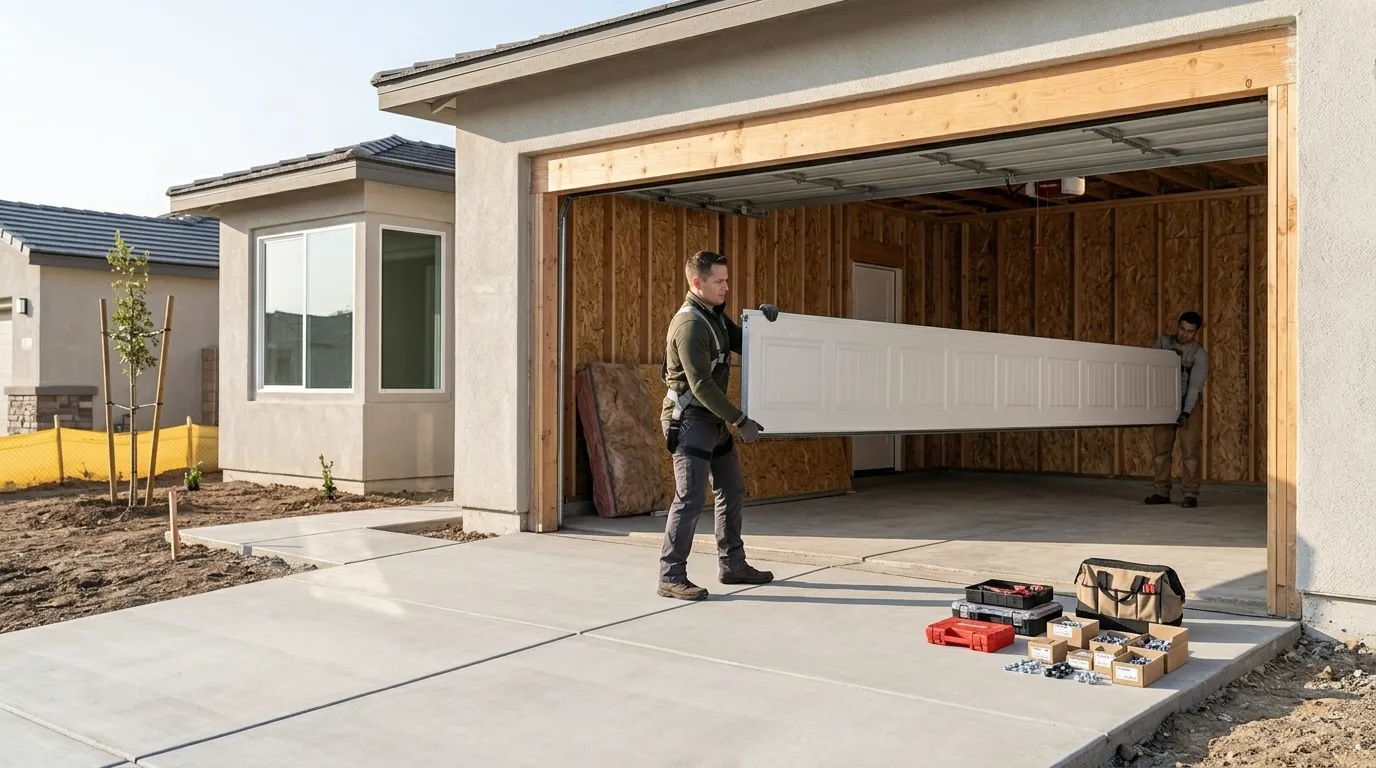
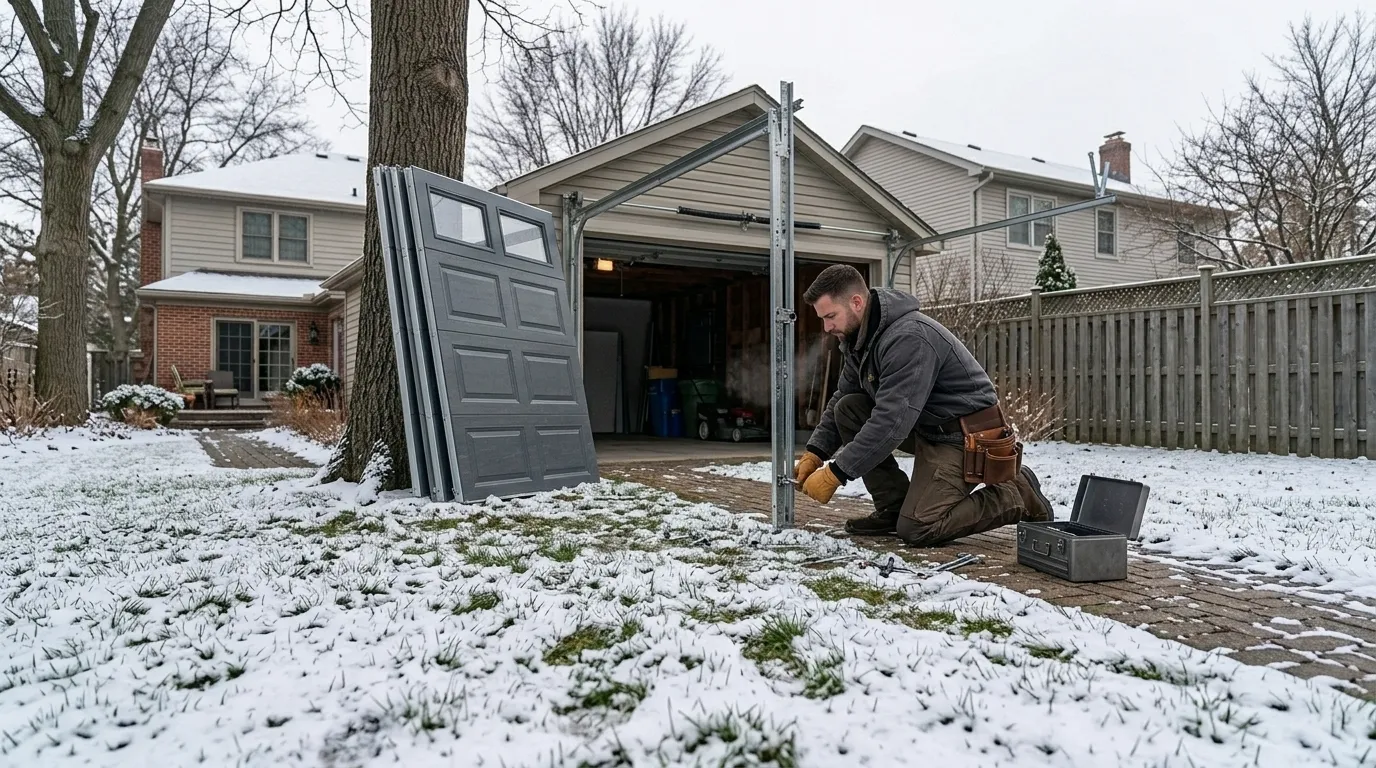
Most houses in Patton Village went up around 1996, well after the shift from extension springs to torsion springs became standard on steel garage doors. That means the failure you're dealing with is almost always a torsion spring wound tight over a center support bracket above the door, not the older side-mounted extension coils you'd find on a house from the 1960s or 70s. When it goes, you'll usually hear a bang from the garage, and the door either won't lift past a few inches or the opener strains and reverses itself. Sometimes one spring on a double door snaps while the other holds, so the door tries to lift crooked and binds in the tracks. The service area overall spans housing built anywhere from 1956 to 2011, with a median around 1981, so Patton Village sits noticeably newer than that midpoint. That matters for parts: a torsion spring sized for a 1996 door isn't interchangeable with the heavier-gauge coils on an older, less-insulated slab. Guessing at wind and wire size is how a repair job turns into a second call two weeks later.
What the Repair Takes
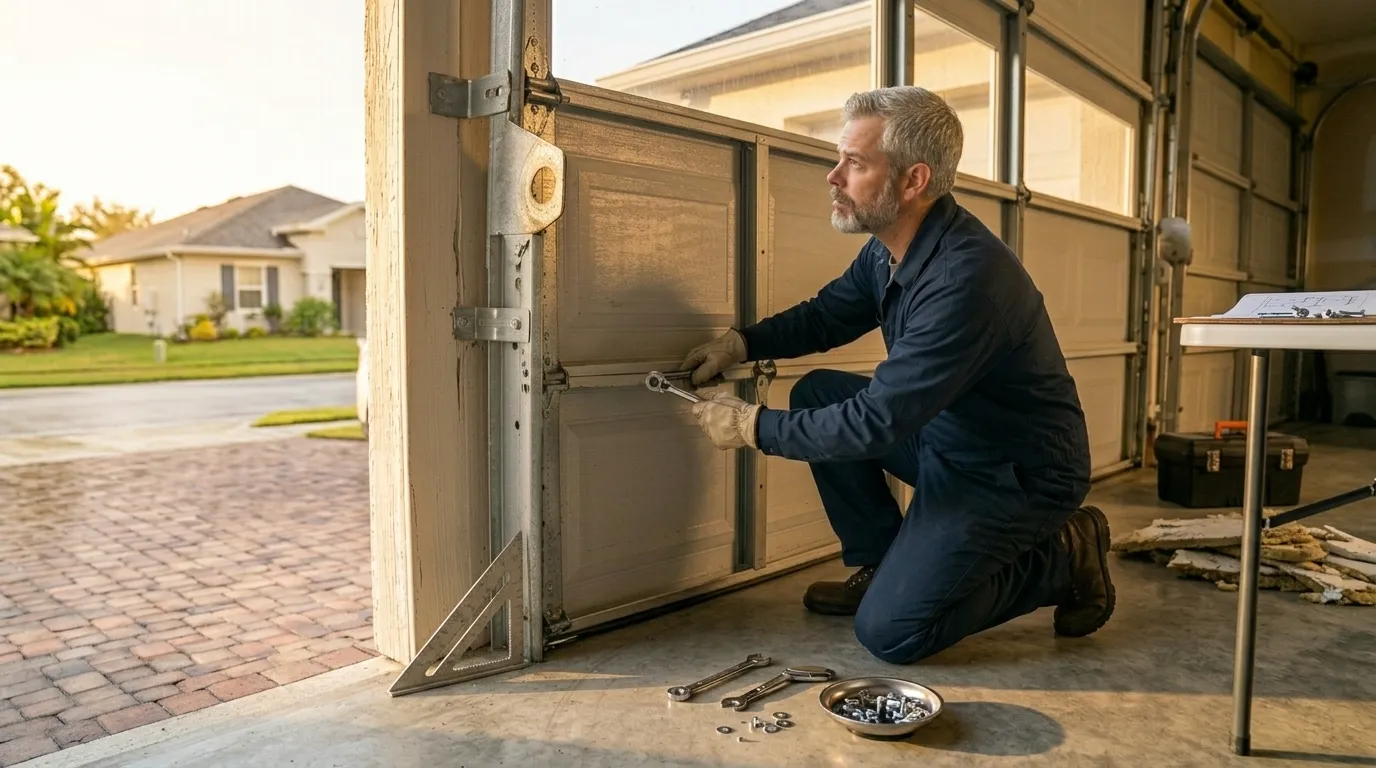
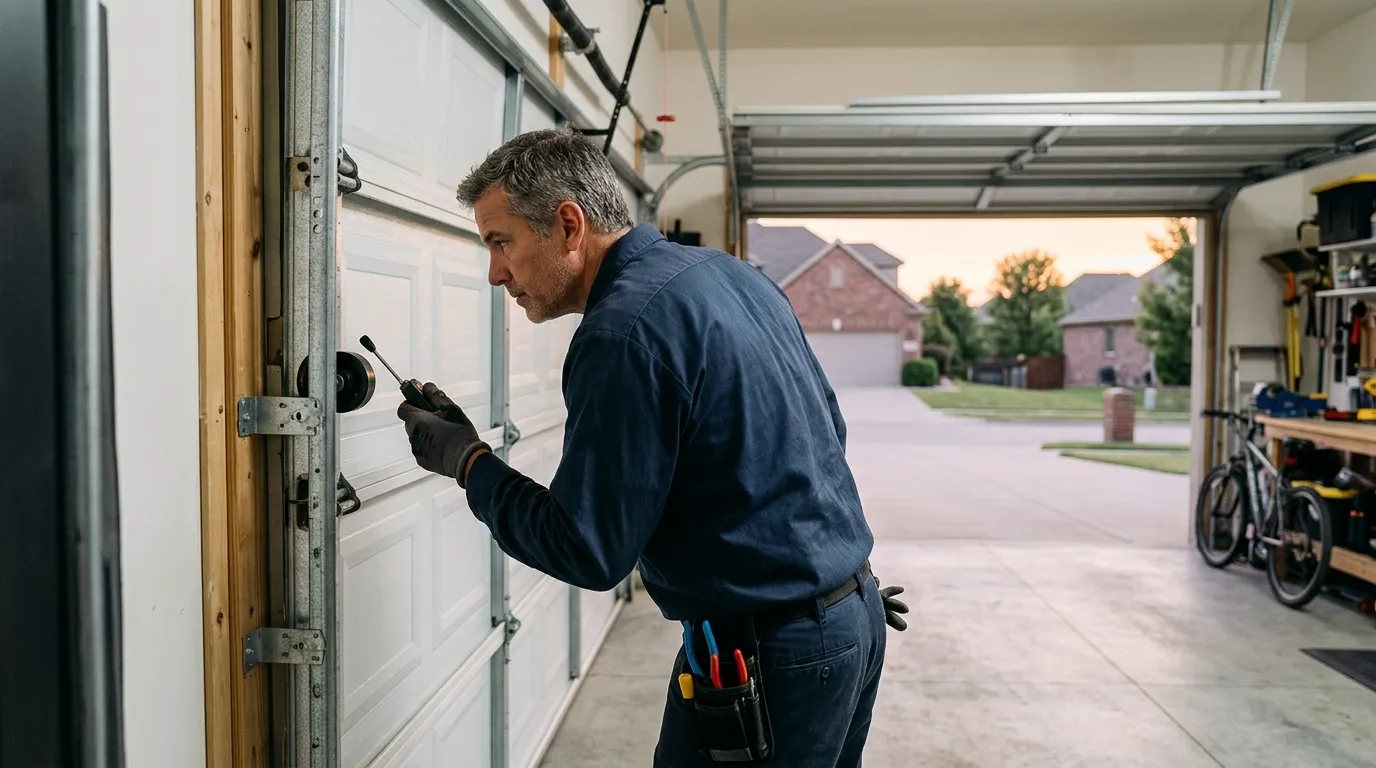
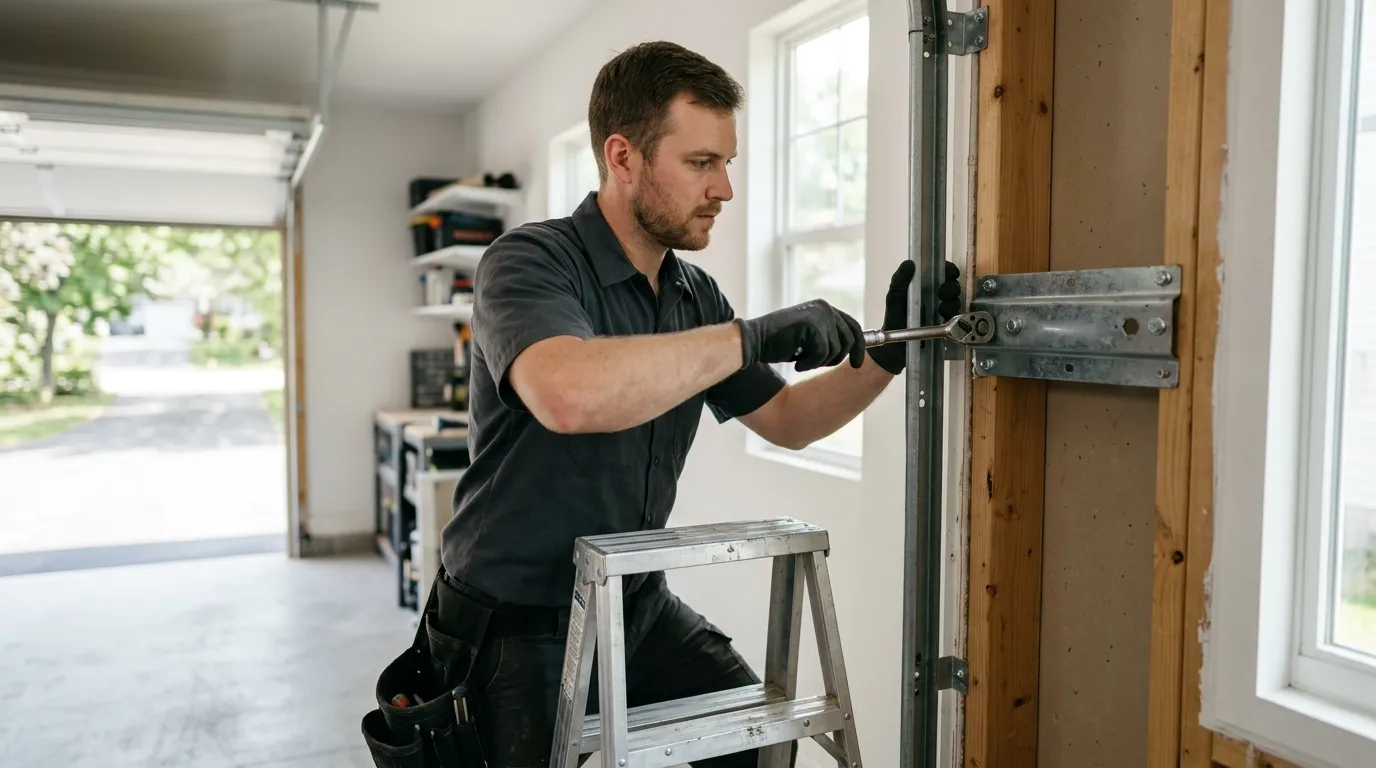
A torsion spring job on a door from this era starts with measuring the existing spring - wire diameter, coil length, and inside diameter - because a mismatch means the door either won't hold its weight or over-tensions and slams down. We check the center bracket and the shaft for wear, since a spring that's failed under load sometimes bends the shaft slightly at the bearing point. Cables get inspected too; a snapped spring can whip a cable off its drum if the door was in motion. Climate here is mild with occasional freeze, which is easier on spring coating than a harsher winter climate would be, but it doesn't stop normal fatigue - torsion springs are rated for a cycle count, not a calendar, and a door that's been opened a few times a day for close to thirty years has simply used its coil up. We replace in pairs on double springs even if only one broke, because the second one is close behind on cycle life.
What Can Go Wrong
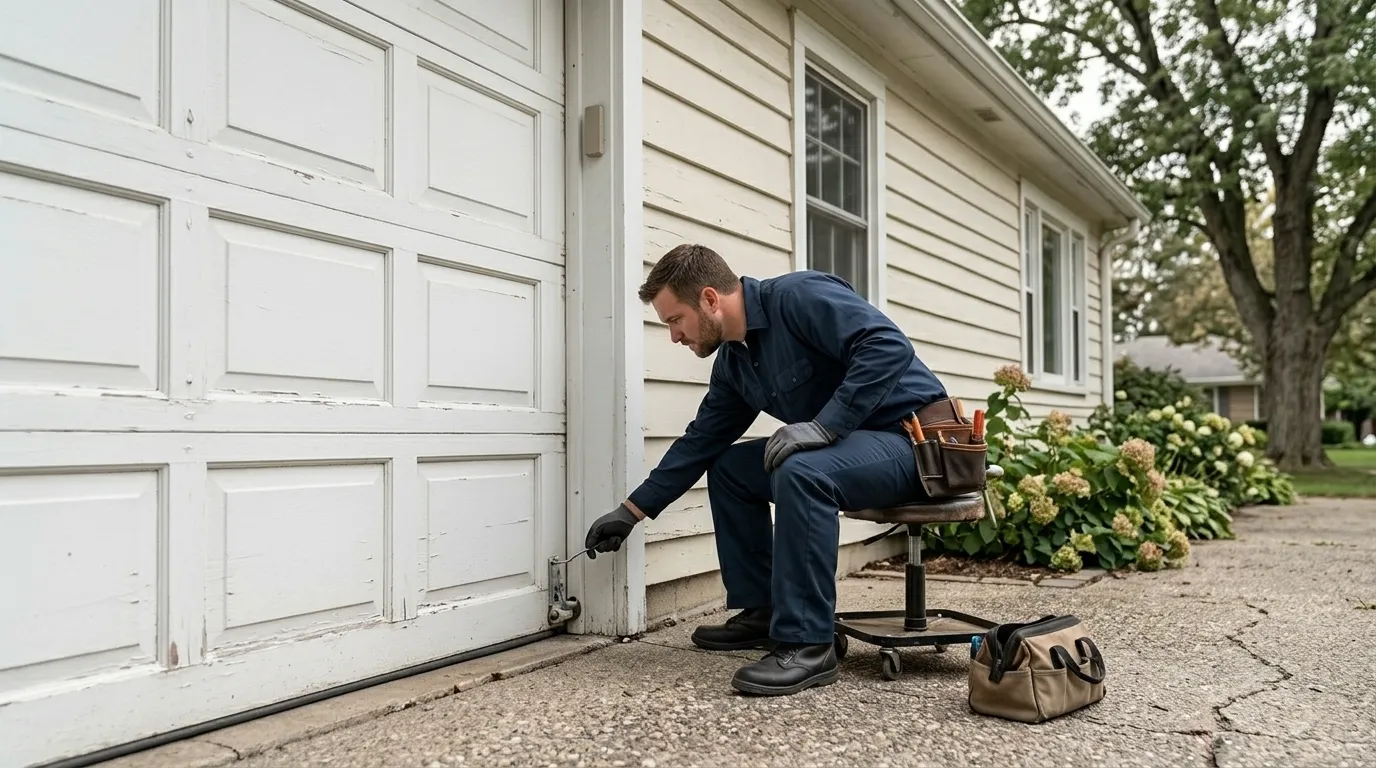
The most common misstep on a mid-90s door is treating the spring failure as the whole problem when it's actually a symptom. If the door has been struggling to close square for a while before the spring finally gave out, the tracks may be out of alignment or a roller may have been binding, and that uneven load is often what pushed the spring past its rated cycles early. We'll flag that rather than just hang a new spring and send you on your way. One honest limit: if the torsion shaft or the center bracket is bent from the spring failure, that's a same-visit fix in most cases, but if the door panel itself took damage from slamming down unsupported, that's a separate repair and sometimes a replacement conversation, not a spring job.
The Cost of This Job
Patton Village households run a bit ahead of the service area's median income of $70,478 - closer to $78,621 - which doesn't change what a torsion spring costs, but it does mean most owners here are choosing between a proper matched-spring repair and a cheap single-spring patch, and the patch is usually the false economy. A mismatched or single spring on a double door throws the load unevenly onto the opener and the second spring, and you'll be back to square one within a year or two. We don't quote a number here without seeing the door - wire gauge and coil length vary enough on 1990s doors that a phone estimate isn't reliable - but we'll give you a firm price on site before any work starts.