The Cost of This Job
Roman Forest is a small place - about 1,017 households - sitting 15 miles from our shop in Humble. That size shapes the job more than people expect. We're not driving out to a subdivision with a thousand identical doors from the same builder year; we're driving out to a smaller cluster of houses, most of them built after 2001, so the doors and openers we run into tend to be newer than what we see on the older streets closer to Humble.
What drives the price on any call here isn't the town, it's the door in front of us: torsion spring versus extension spring, steel panel versus insulated composite, an opener with a circuit board that's still supported versus one that isn't. Newer openers sometimes mean pricier logic boards rather than cheaper mechanical parts. Median household income in Roman Forest runs well above the average across the rest of the area we cover, but that doesn't change what a broken spring costs to fix - it just means the houses attached to those springs tend to be a bit newer and better maintained. We quote after we look at the door, not before.
Doing It Yourself
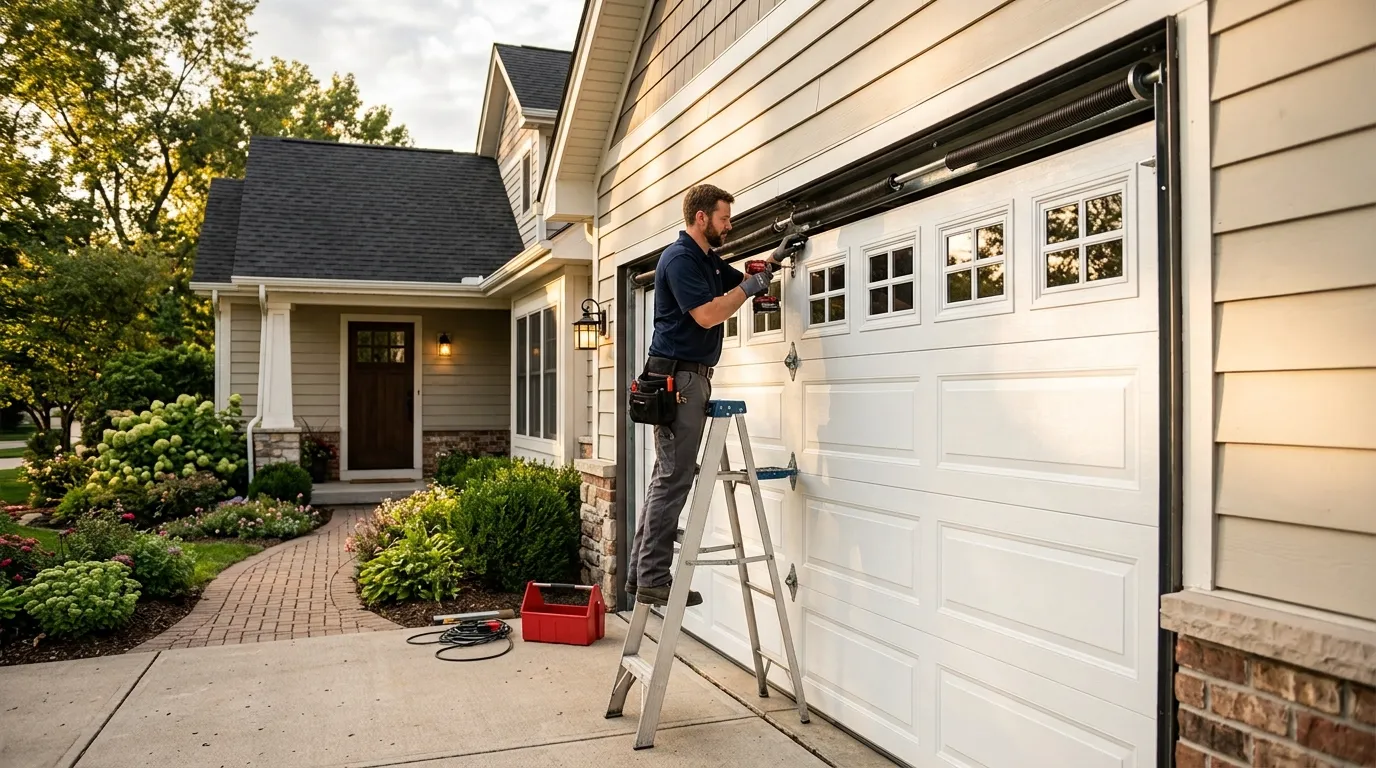
A lot of Roman Forest houses are twenty years old or less, which means fewer of the original one-piece doors and old side-mounted torsion setups you'd find on 1980s stock elsewhere in the service area. What you're more likely dealing with here is a sectional steel or composite door on a factory torsion spring, paired with a belt or chain-drive opener with a circuit board.
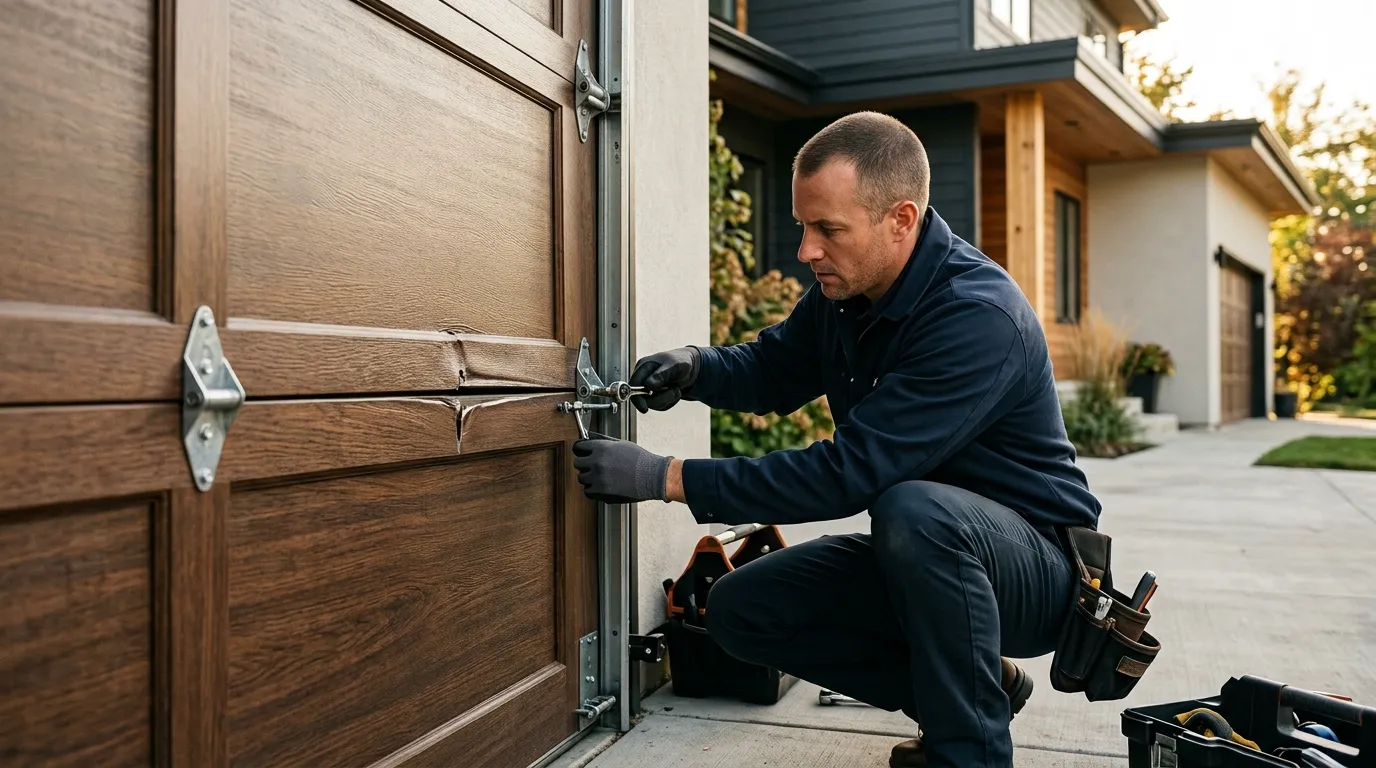
That's actually a harder DIY category, not an easier one. Torsion springs are under real tension regardless of the house's age, and a spring that lets go while you're adjusting it can break a hand or worse. Openers built in the 2000s and later often have safety reversal sensors and circuit logic that don't forgive a wrong wire or a misaligned eye - you can end up with a door that won't close at all instead of the squeak you started with.
Replacing a remote battery, tightening a loose bracket bolt, or clearing debris off the photo-eye sensors - fine, do those yourself. Springs, cables, and anything involving the torsion bar or the opener's motor housing, call it in. We'd rather talk you through what's safe over the phone than patch up a DIY attempt gone wrong.
What Can Go Wrong
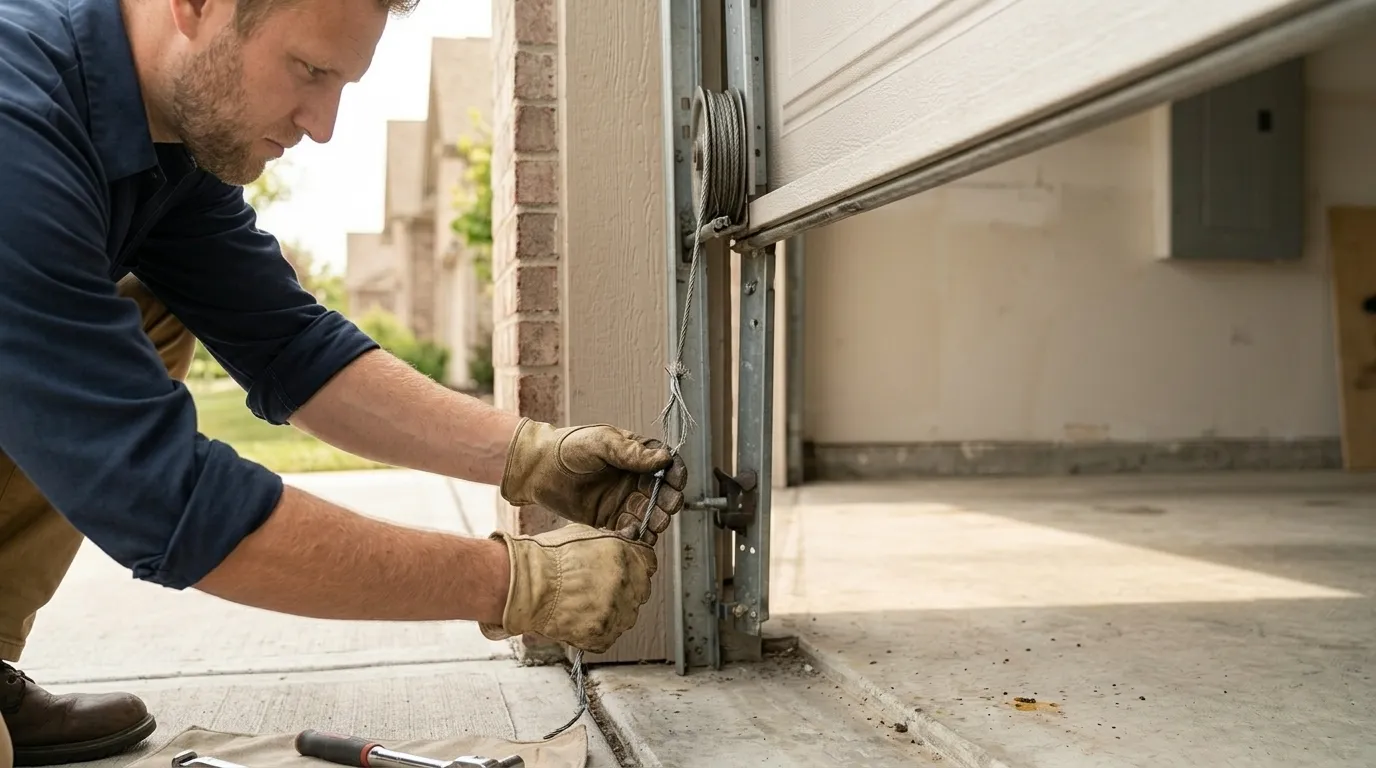
The service area sits in a mild climate with only occasional freezes, and Roman Forest is no exception - but 'occasional' still means a cold snap once or twice a winter that stiffens grease in a torsion spring or tightens a cable enough to fray it at the drum. On a door that's only 10 to 20 years old, that's usually the first real failure point, not rust or rot.
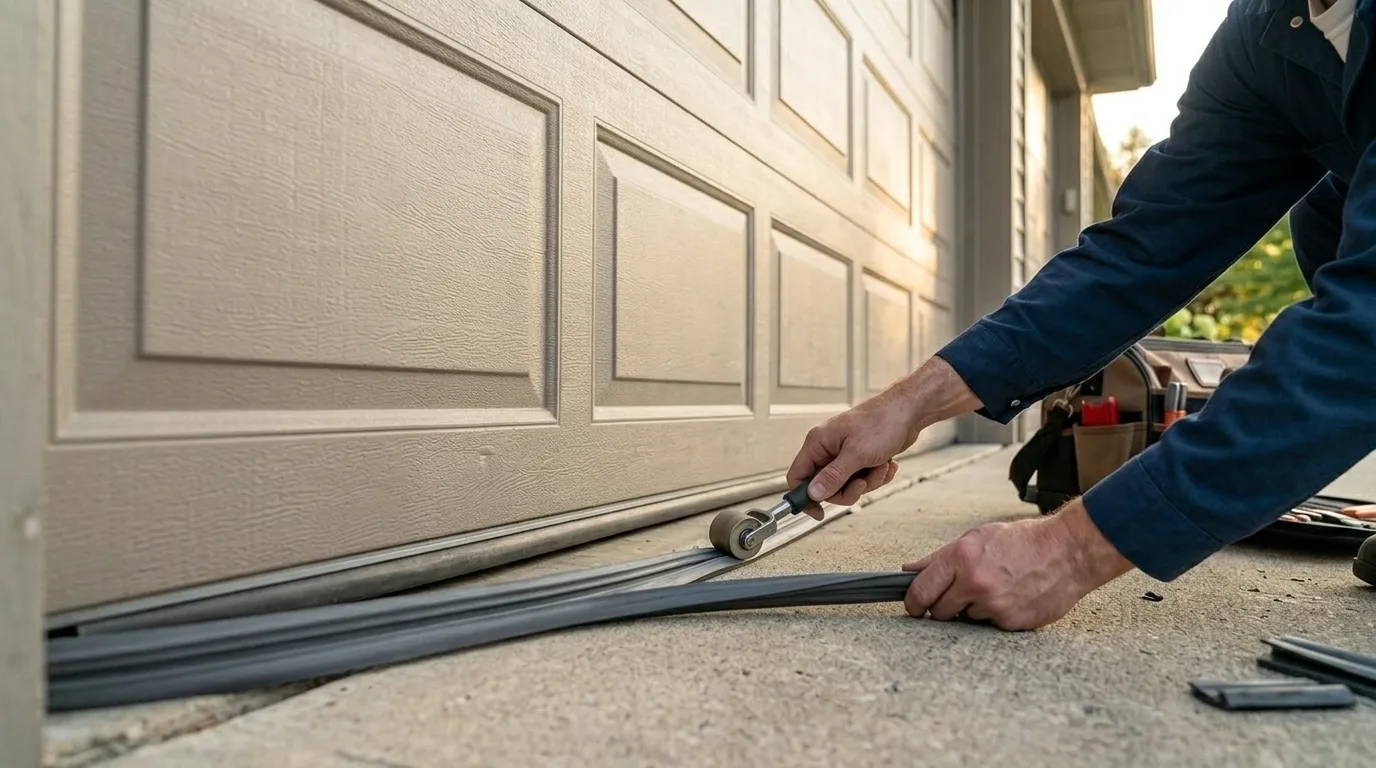
Because the housing stock here runs newer, the other common call is opener-side: a photo-eye knocked out of alignment by a bumped car or a stored bike, a wall button with worn contacts, or a circuit board that's finally reached the end of its run after two decades of daily openings. Weatherstripping on newer doors also tends to fail at the bottom seal first, letting in enough weather to matter even without hard freezes.
What we don't see much of here, compared to older parts of the service area, is the original one-piece door on side-mount hardware - that's largely a problem for houses built well before 2001, and Roman Forest's stock is younger than that median build year across the wider area.