The Cost of This Job
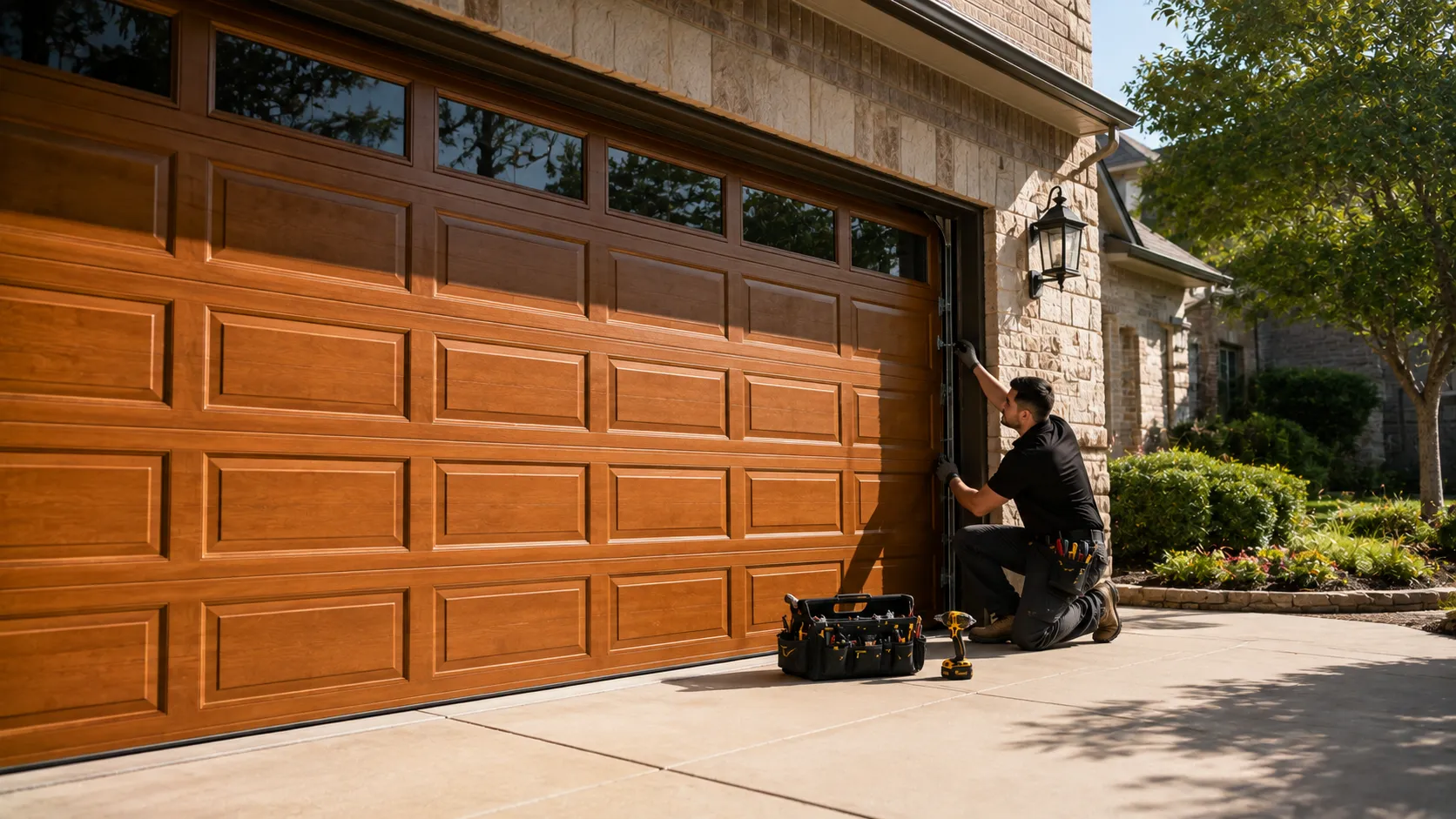
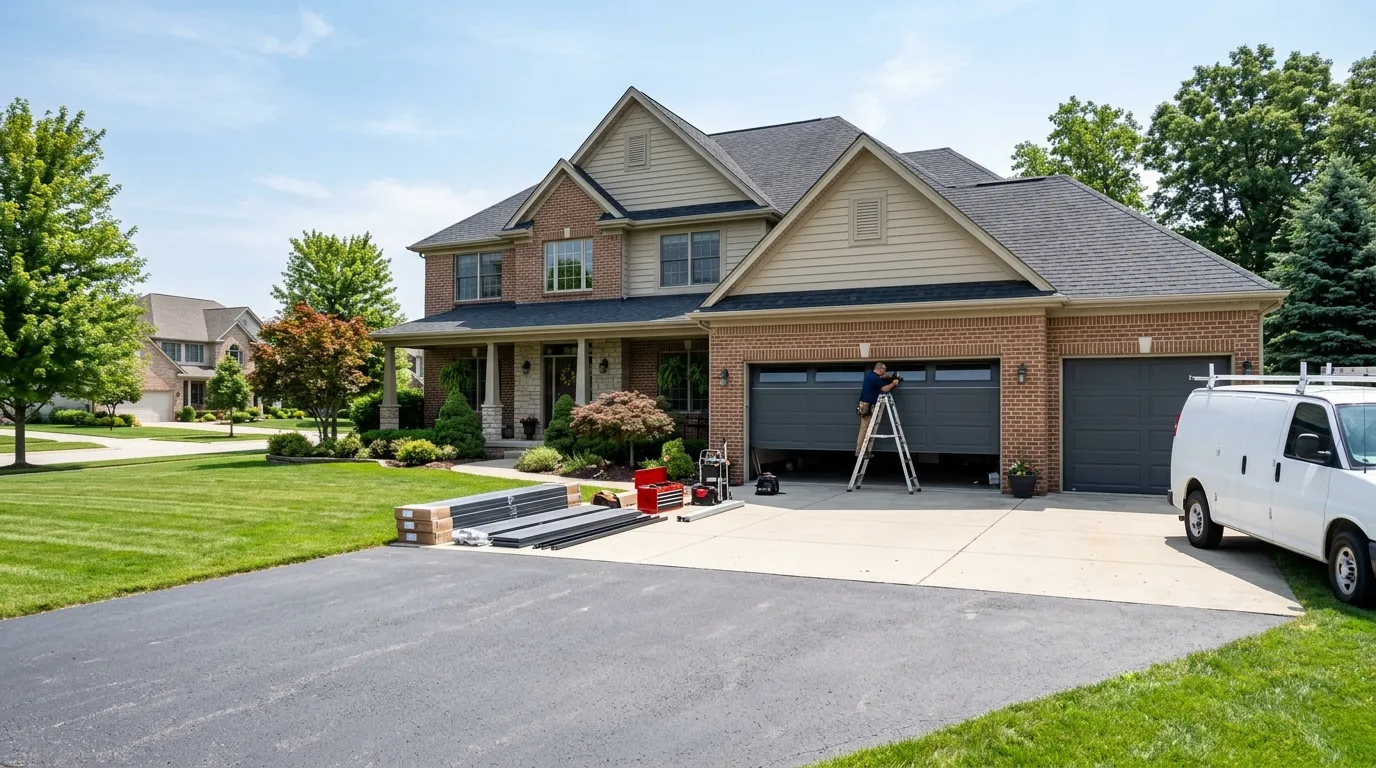
Most houses in Roman Forest went up around 2001, well after the older single-door construction you'll find closer to Humble. That means two-car garages with wider steel sectional doors, and the openers sized to lift them are usually 3/4 horsepower or better, often belt-drive rather than the chain units common on older single doors. A belt-drive opener repair runs different than a chain unit repair - different logic board, different drive components, sometimes a different trolley assembly entirely. We quote the job after we've looked at the unit, not before, because a burnt circuit board and a stripped drive gear are not the same repair even on the same model. What we won't do is quote a number over the phone without knowing which opener you have and what's actually failed on it. That's not us stalling - it's the only honest way to price this kind of work.
Doing It Yourself
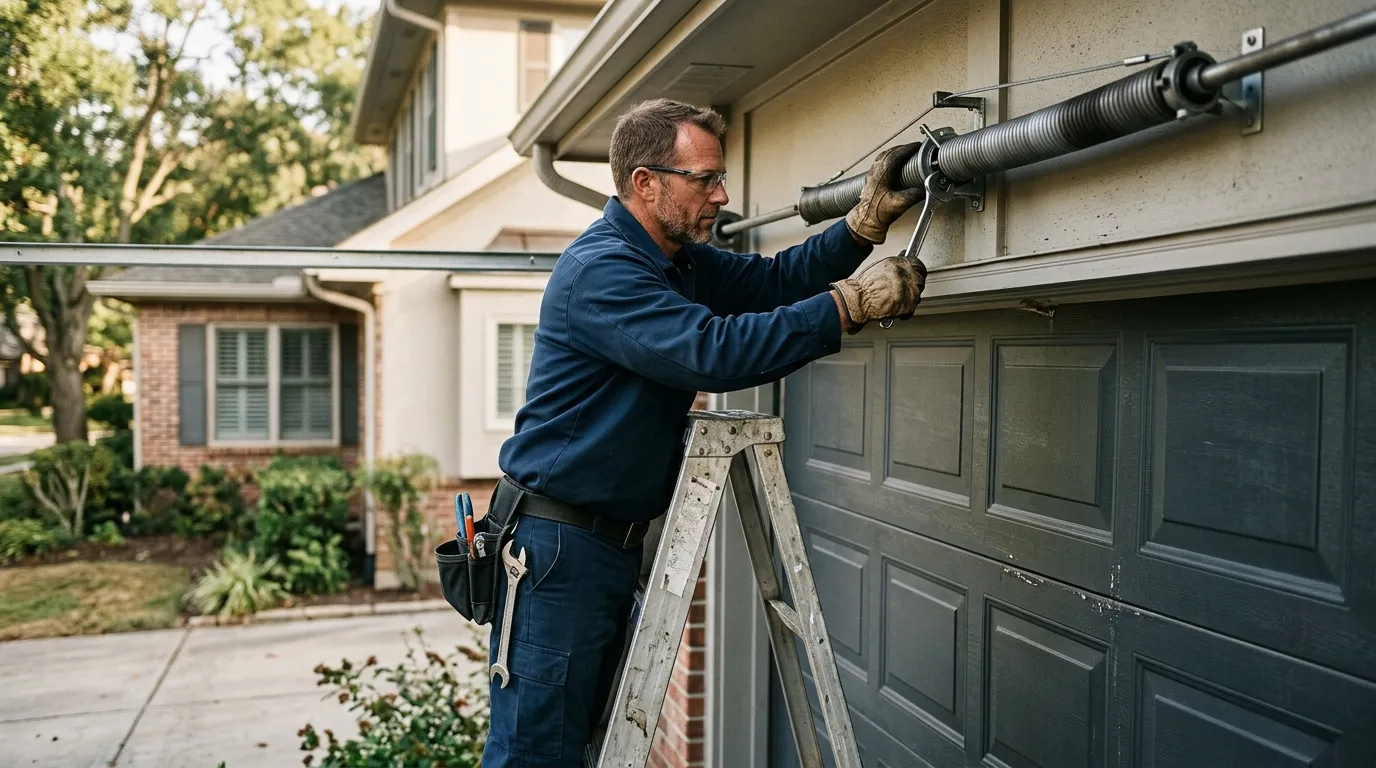
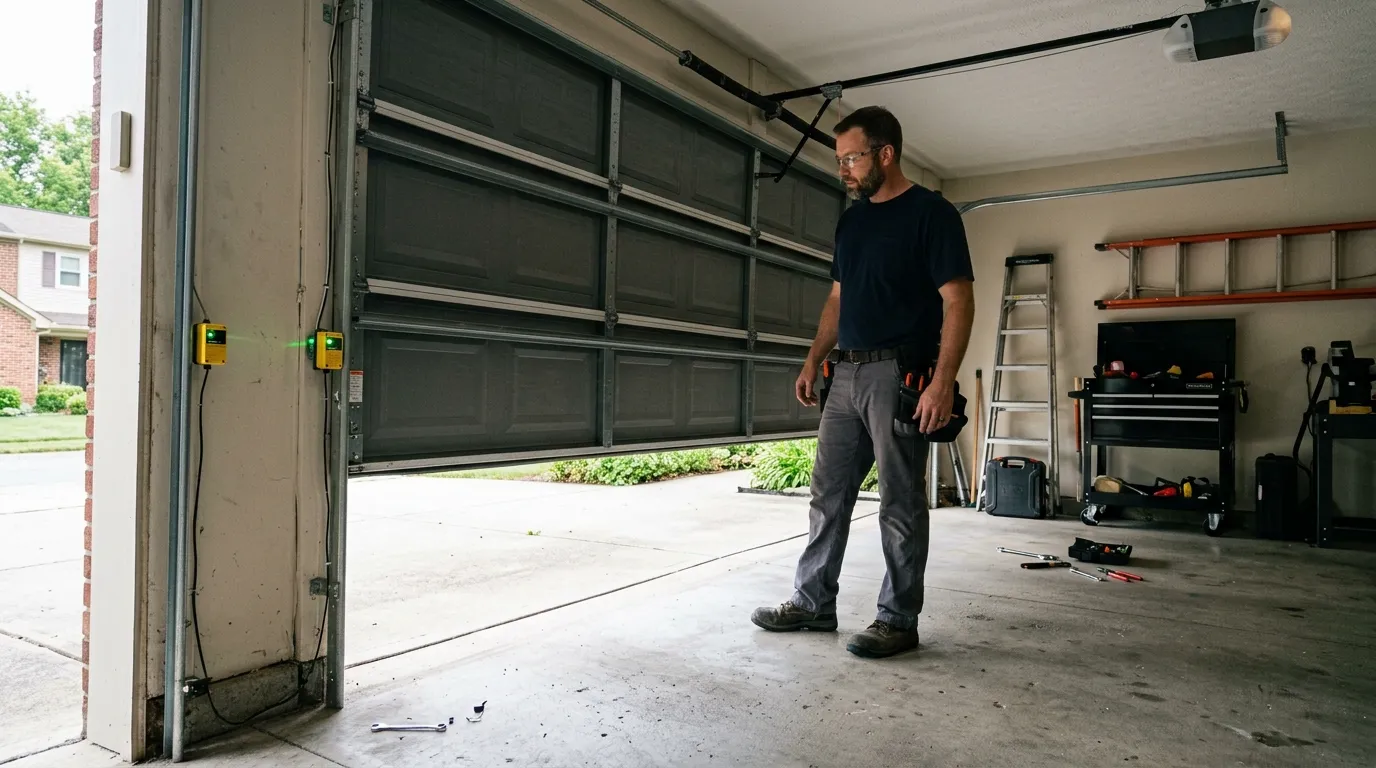
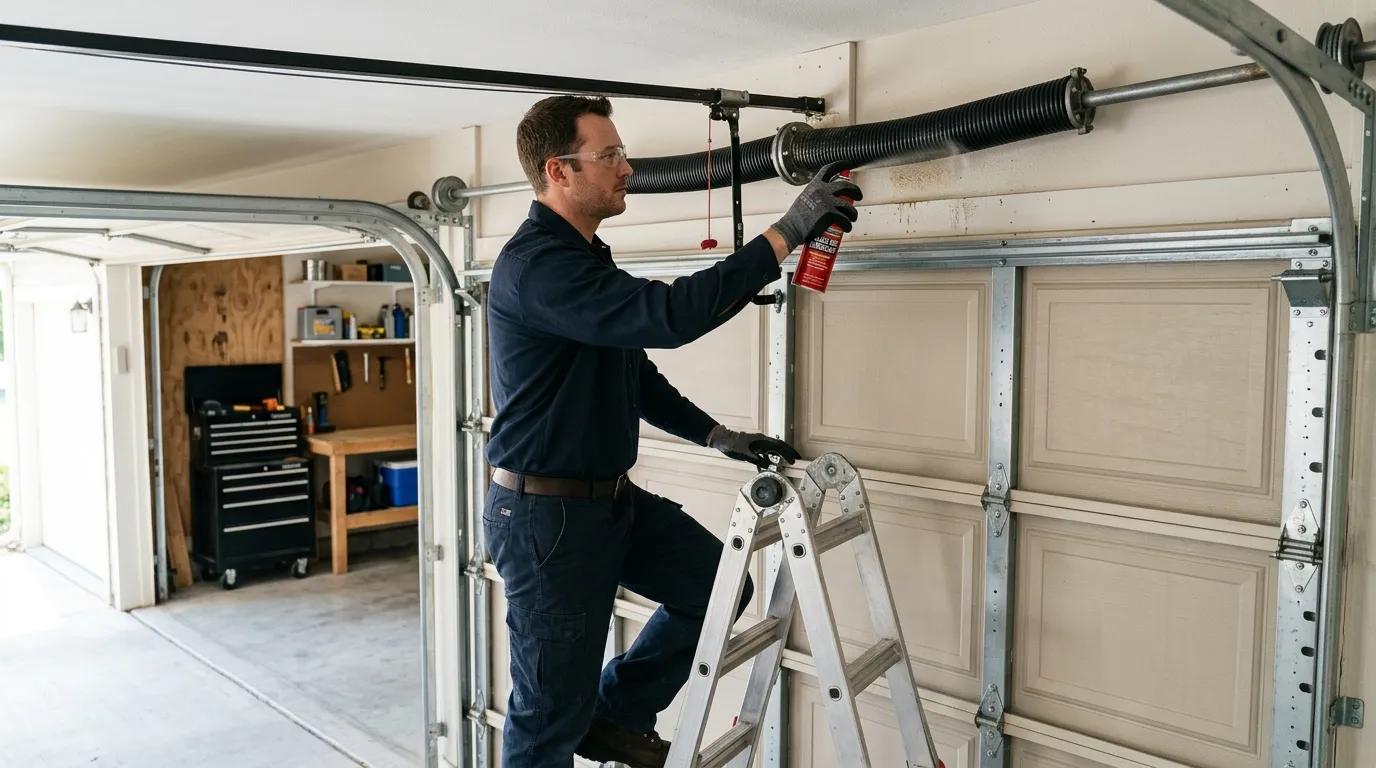
A homeowner can usually reprogram a remote or swap a battery in the wall control without trouble. Where it gets risky is the safety sensor alignment and the travel limit settings, especially on the heavier belt-drive units common in this part of the service area. Those units carry more spring tension to counterbalance a wider double door, and a limit switch set wrong can slam the door down on a car roof or a kid's bike before the sensor has a chance to react. If your opener reverses randomly, grinds on the way up, or the light blinks but the motor won't engage, that's a logic board or drive issue, not a settings problem - stop trying to fix it yourself at that point and call it in.
What Can Go Wrong
The climate here runs mild with the occasional freeze, which isn't hard on openers the way real cold is, but it does mean condensation inside a garage that isn't fully sealed, and that moisture finds its way into circuit boards and sensor eyes over a few winters. On the newer builds in Roman Forest, the more common failure we see is a worn drive belt or a stripped gear on the trolley, simply from the extra load of lifting a wider double door thousands of times over two decades. Safety sensor misalignment is the other frequent call - a bumped sensor eye that throws the door into reverse every time, which looks like a bigger problem than it usually is.