The Cost of This Job
Roman Forest sits about 15 miles from our shop in Humble, and the median home here was built around 2001 - newer than a lot of the neighborhoods we cover. That matters for openers, because a unit installed when the house went up is now old enough to be on its last gear set or last capacitor. Most owners calling us aren't guessing whether they need a new opener; the chain is grinding, the remote range has shrunk to the driveway, or the unit just won't reverse cleanly anymore.
With household income in Roman Forest running well above the wider service area - median around $120,313 - we see more owners opt for a belt-drive unit with a Wi-Fi module and battery backup rather than the cheapest chain-drive replacement. That's a choice, not a requirement; a basic chain-drive still opens the door fine. We don't post a price list here because the job varies with your door weight, whether we're adding a keypad or smart controls, and whether the old rail and bracket need replacing along with the motor head. We'll give you a number on-site before anything gets unbolted.
With only about 1,017 households in Roman Forest, this isn't a market where every model shows up on every truck - we bring the unit that matches what you need, based on what you tell us on the call.
Doing It Yourself
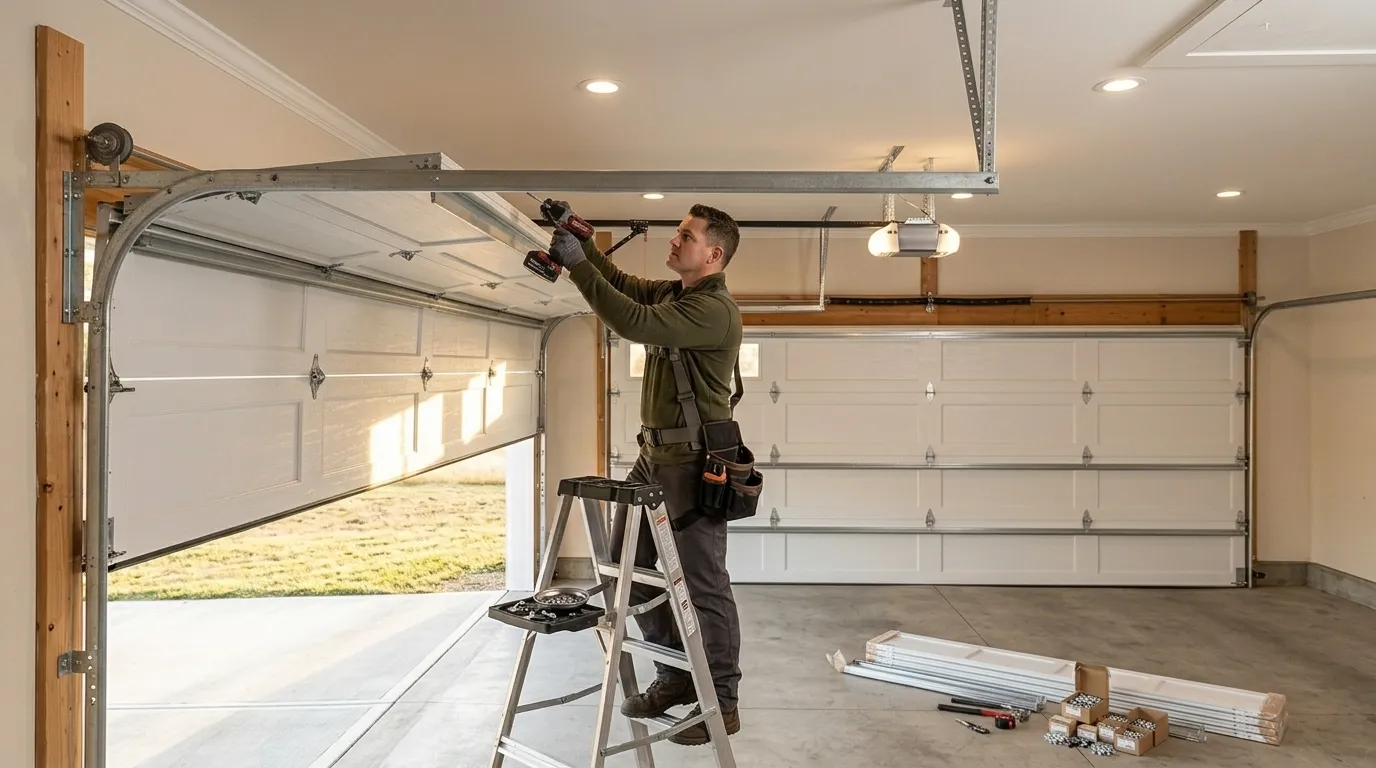
A DIY opener swap is doable if the door itself is in good shape - springs balanced, tracks straight, no cracked panels. Where people get hurt is the travel and force settings, and on a door with an opener original to a 2001-era build, the mounting bracket in the ceiling framing is often not where a new unit's install template expects it. You end up either drilling new lag points into a joist you can't see clearly, or hanging the rail off blocking that was never meant to carry a motor.
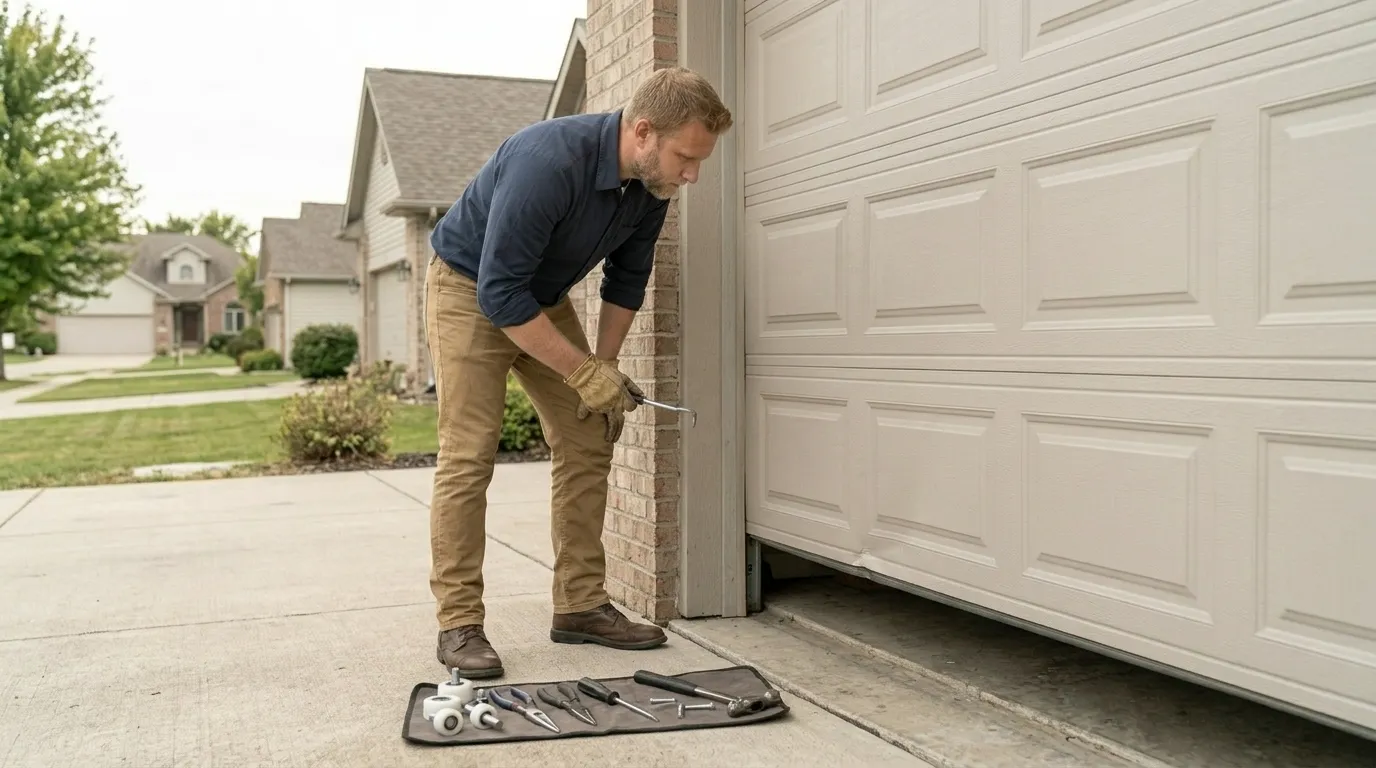
The other spot we see DIY jobs go sideways is the safety reversal sensors. Code requires them to be aligned and functioning, and on an older door the mounting brackets have usually shifted or rusted slightly at the base, which throws off the beam. If you're comfortable on a ladder and patient with wiring, a straightforward swap of a working chain-drive for another chain-drive is a weekend project. If you're adding smart home wiring, a keypad, or dealing with a bent rail from the old unit, that's where we'd tell you to call - not because it's impossible, but because a misaligned sensor is a door that comes down on something.
What Can Go Wrong
An opener original to a Roman Forest home built around 2001 is now over two decades into a motor and gear set rated for maybe 10,000 to 15,000 cycles - most units are well past that by year 20. The failure isn't always dramatic. Sometimes it's the drive gear stripping quietly inside the housing, so the motor runs but the door doesn't move. Sometimes it's the logic board losing the ability to hold a rolling code, so the remote works one day and not the next.
During the occasional freeze night this area gets, an aging opener with a worn capacitor can fail to start cold, which owners sometimes mistake for a dead spring. It's worth checking both before assuming the worse repair. And a battery backup unit, if the household relies on the garage as a secondary entry, is worth asking about - houses in this price range often want the redundancy, but it's not something every opener includes standard.
One limitation worth saying plainly: if your torsion springs are original and undersized for a heavier insulated door added later, a new opener alone won't fix a door that struggles to lift. We'll flag that during the visit rather than sell you a motor that's fighting a spring problem.