The Cost of This Job
Roman Forest's median household income sits at $120,313, well above the $70,478 median across the broader Humble service area we cover. That number matters more than most homeowners think when a spring breaks or an opener quits. On a house in this income bracket, the repair-or-replace math tips toward replacement sooner than it would elsewhere - a $120K-median household can absorb a full door swap on a 20-year-old unit rather than nurse it along with patch repairs, especially once the opener and the door itself are both showing age at the same time.
But most Roman Forest doors aren't old. The area's homes were built with a median year of 2001, decades newer than the 1981 median across the wider territory we serve out of Humble. That means fewer of the worn-out, original 1980s hardware setups we see elsewhere, and more doors still on their first or second opener. When we quote a job here, we're usually pricing a targeted repair - a cable, a roller set, a logic board - not a full hardware overhaul. We travel the 15 miles from Humble for the call, and that's factored into scheduling, not into what the door itself needs.
Doing It Yourself
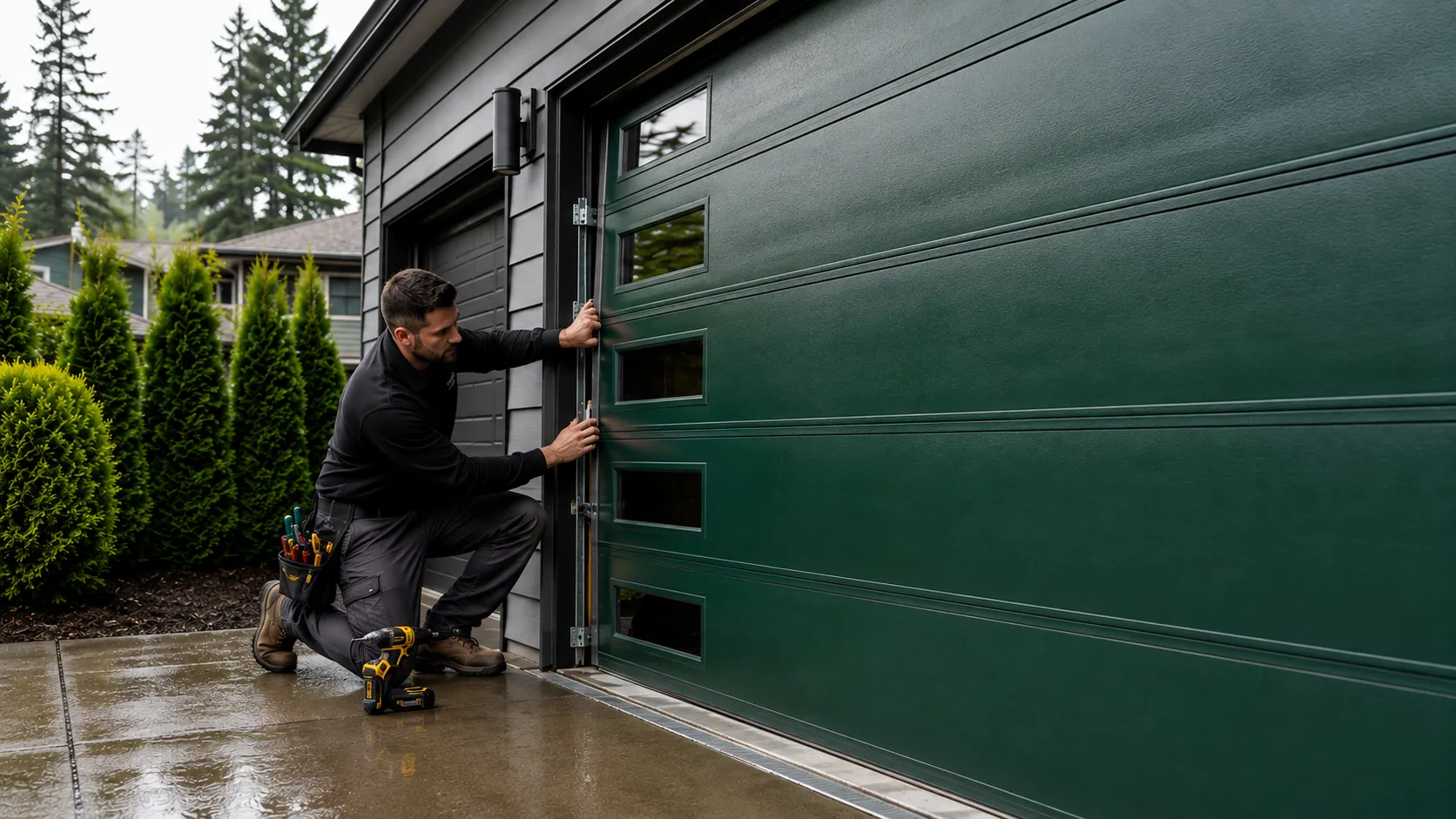
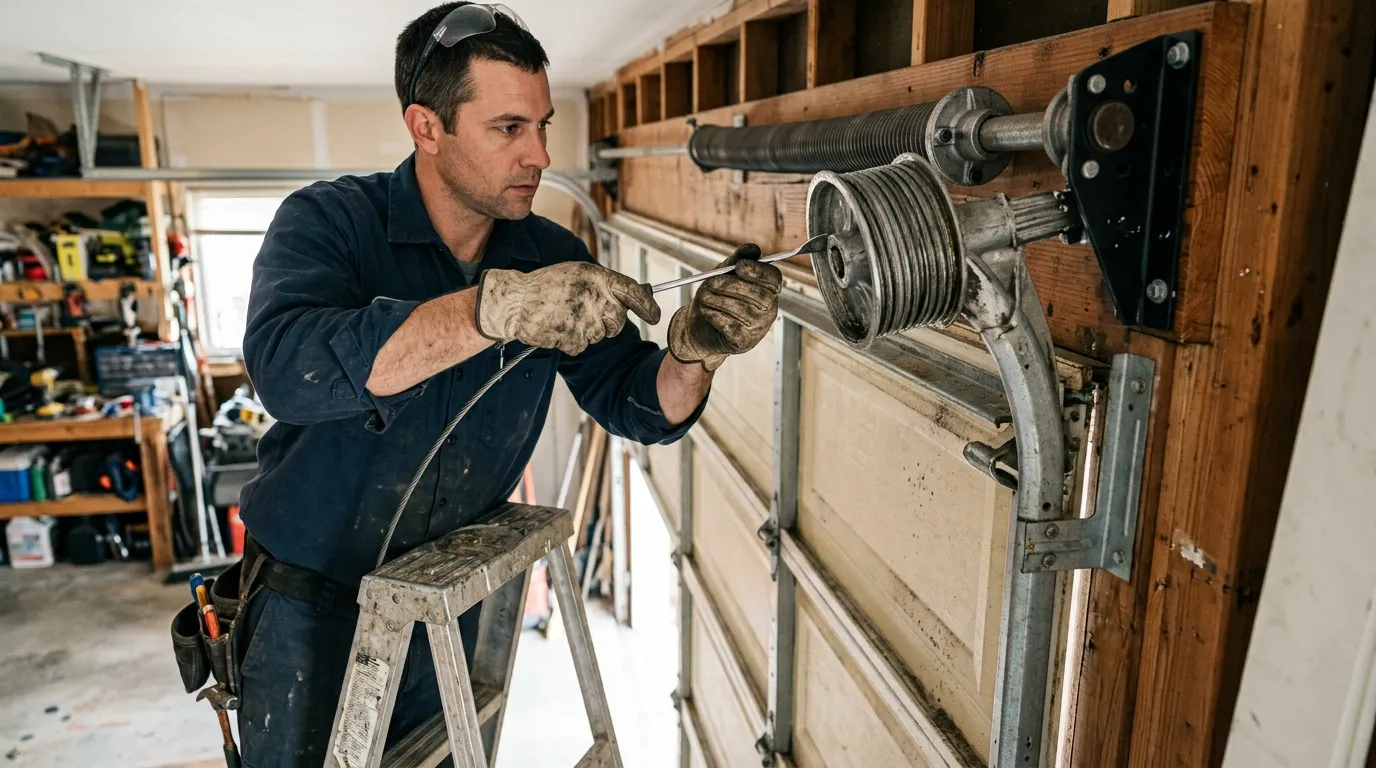
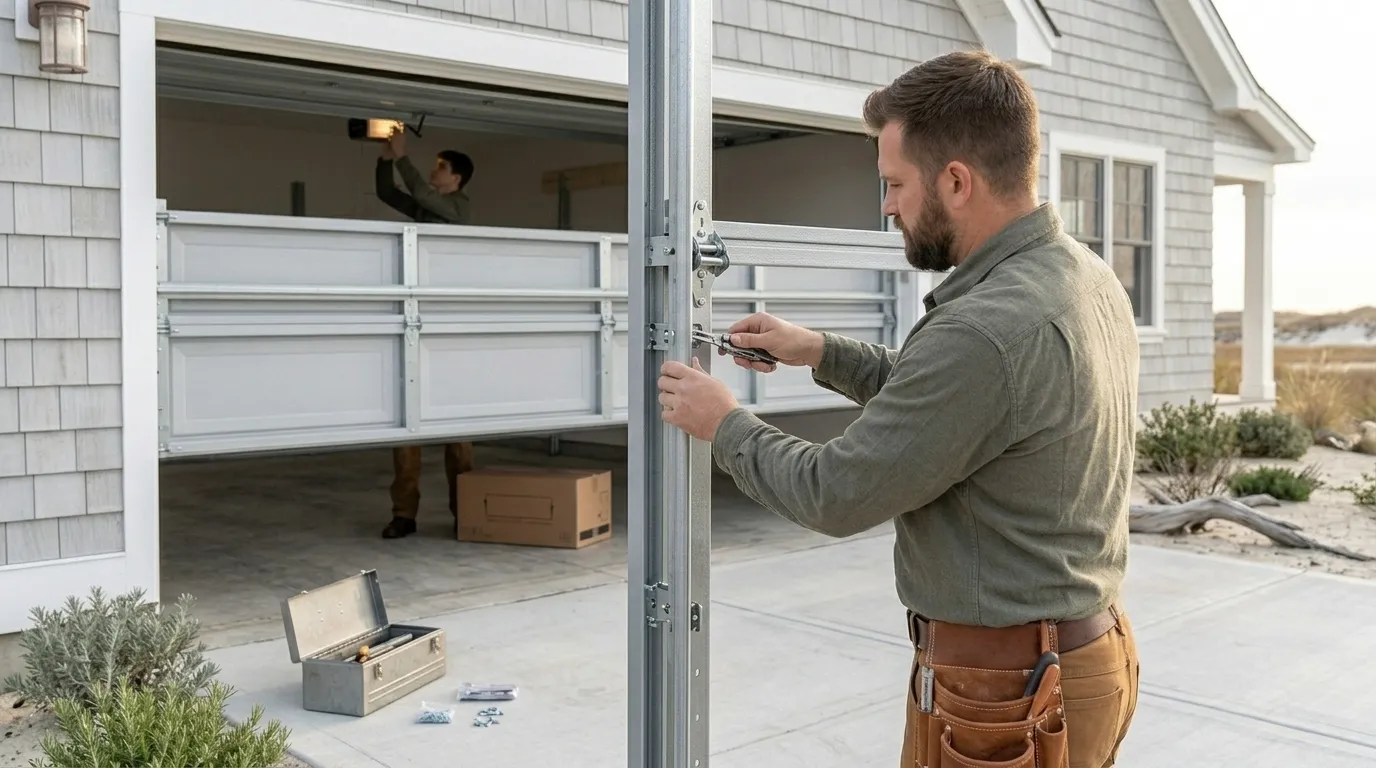
A door built around 2001 is old enough that DIY on the wrong part can turn a $150 fix into a $600 one. Torsion springs on doors from this era are still wound to real tension - enough to break a finger or drop a door on a foot if you're guessing at the winding bars. Anything involving the spring, the cable, or the torsion tube on a Roman Forest door built in that window is not a weekend project, full stop.
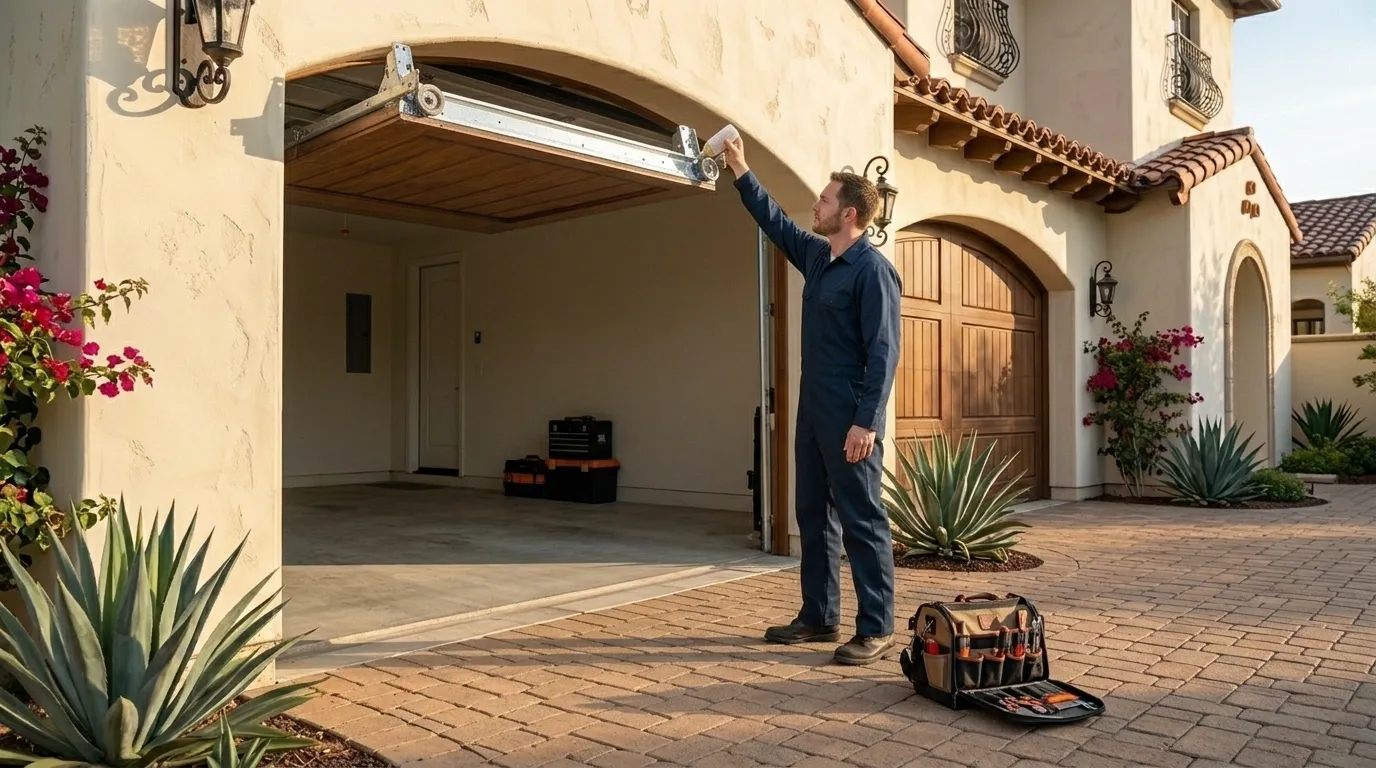
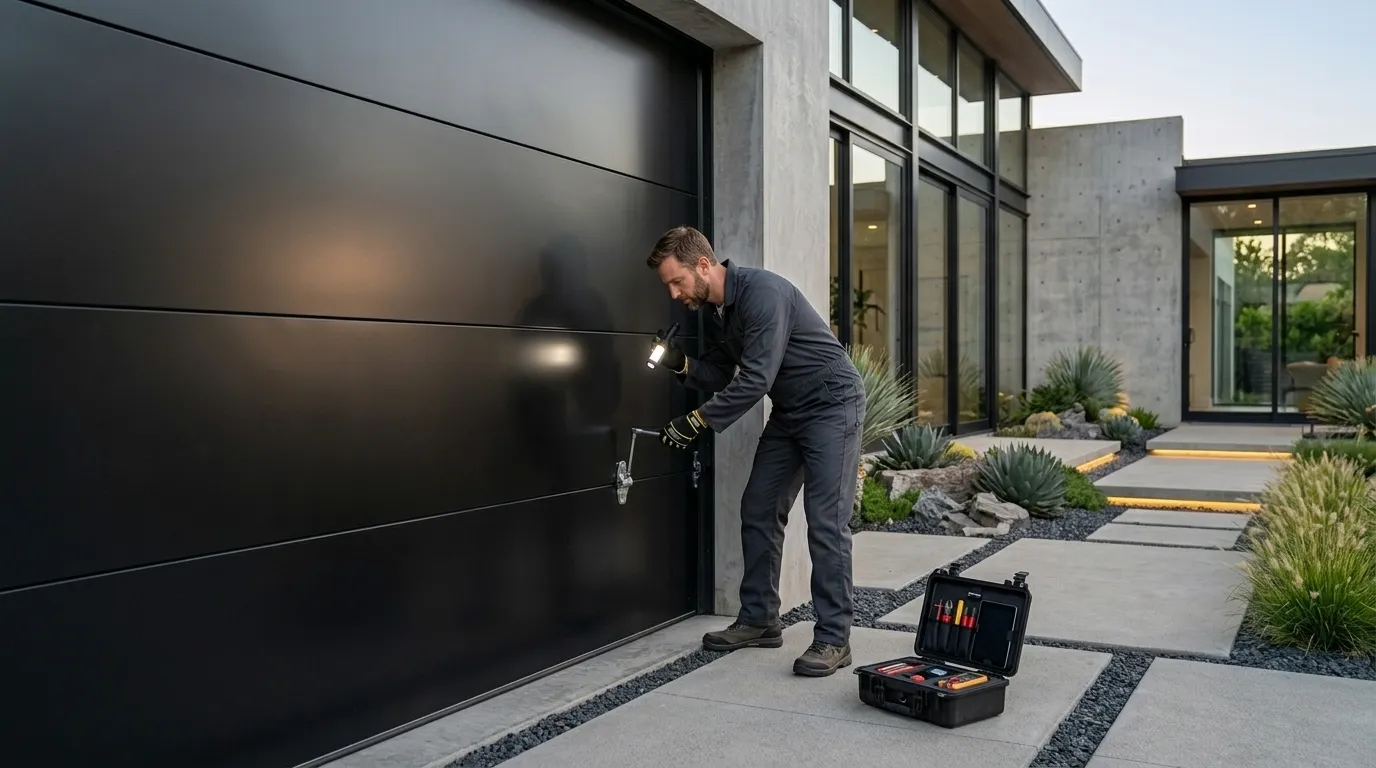
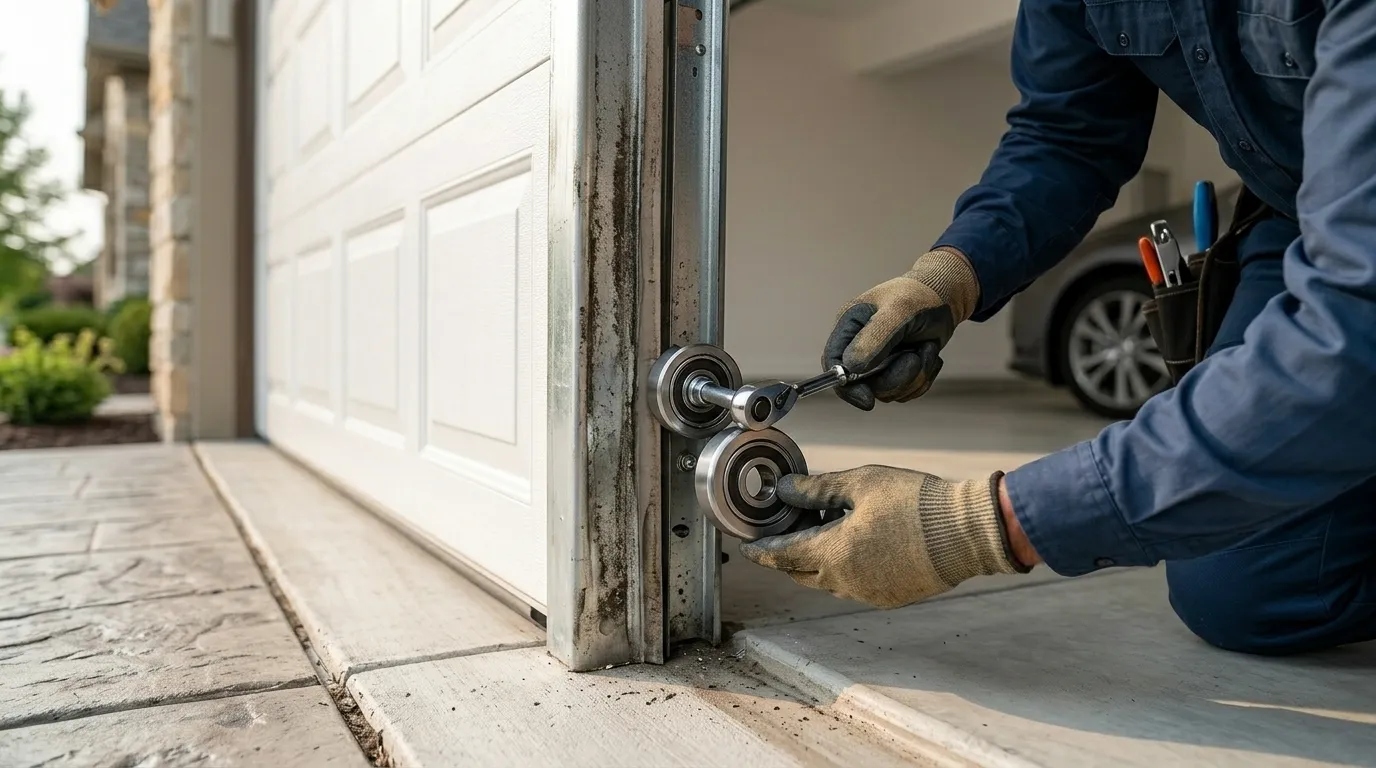
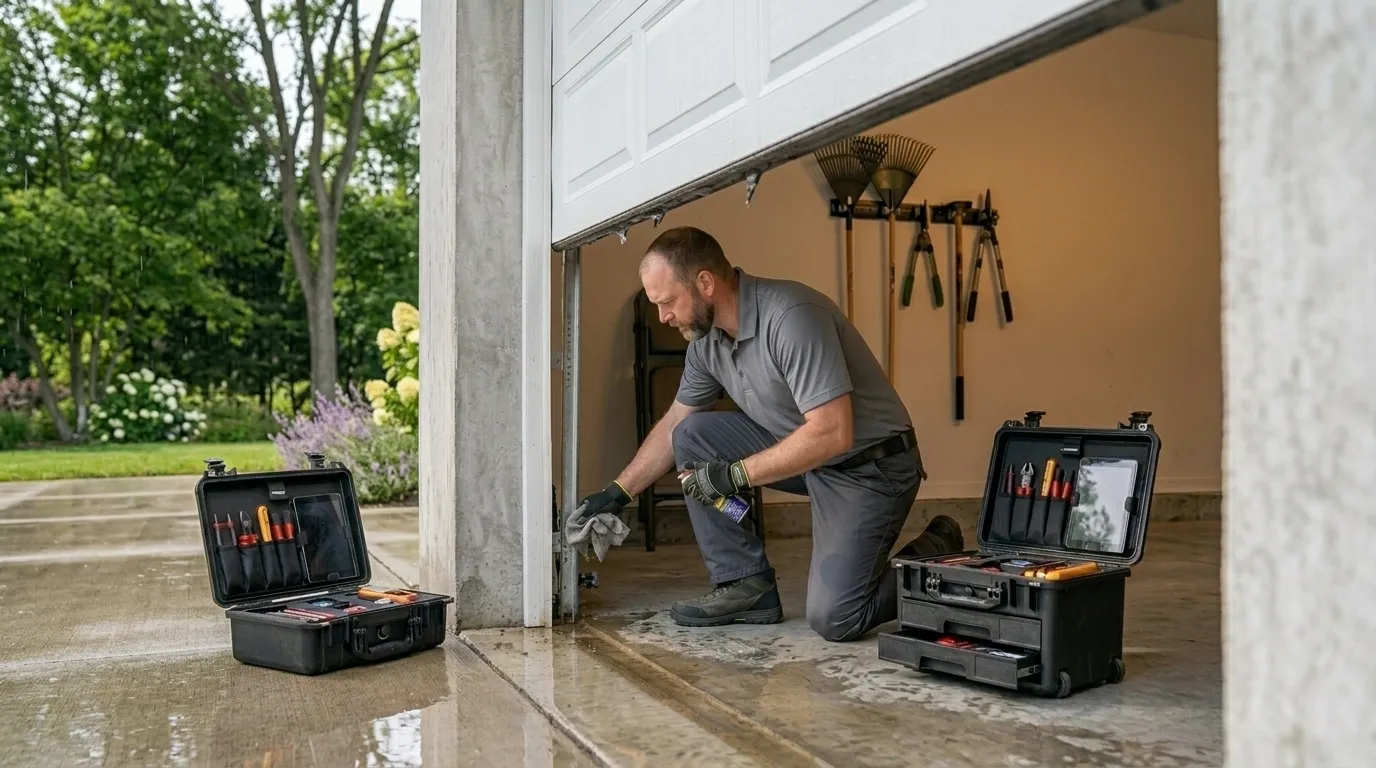
What you can safely do yourself: check the photo-eye sensors are aligned and clean, listen for a grinding or popping sound (that's usually a roller or bearing, not the motor), and test the auto-reverse by putting a 2x4 flat under the door and closing it. If it doesn't bounce back, stop using the opener until it's looked at. Lubricating hinges and rollers with a garage-door-specific lubricant twice a year keeps 2001-era hardware running longer - WD-40 is not that lubricant, and using it on tracks does more harm than good over time.
What Can Go Wrong
Roman Forest sits in a mild climate band with occasional freeze days, which is gentler on garage door hardware than true freeze-thaw regions but not nothing. A hard freeze a few times a winter can stiffen torsion springs and thicken old lubricant, which shows up as a door that's suddenly slow or noisy on the first cold morning of the season. That's usually a lubrication and tension check, not a broken part.
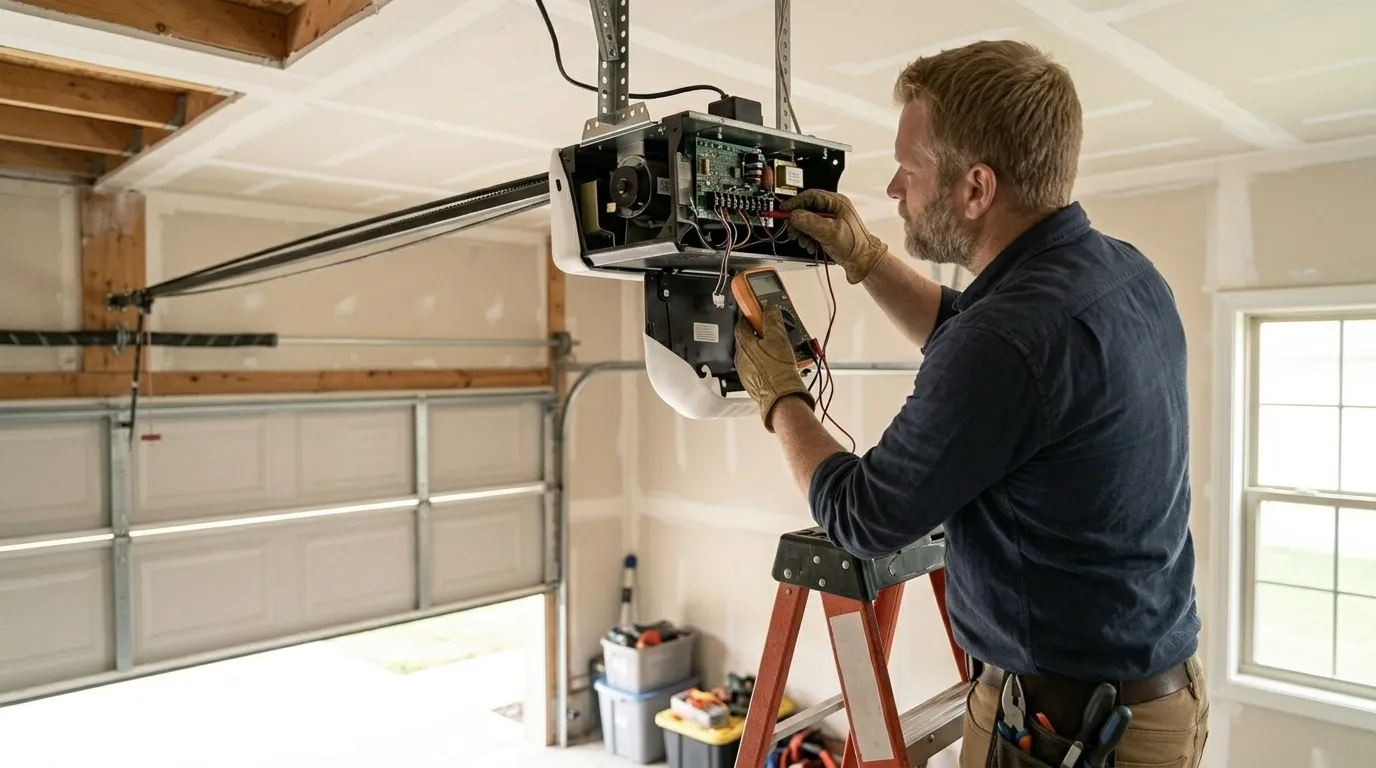
On 2001-era doors specifically, the failure we see most is the opener's original circuit board or logic unit reaching end of life - these openers are old enough now that the electronics, not the door hardware, are the weak point. Springs on a door this age are also approaching the tail end of their cycle count if the household runs the door multiple times a day. Neither of those is an emergency the moment it happens, but a spring that's visibly stretched or gapped at one coil should get looked at before it snaps under load.