Stocked Parts
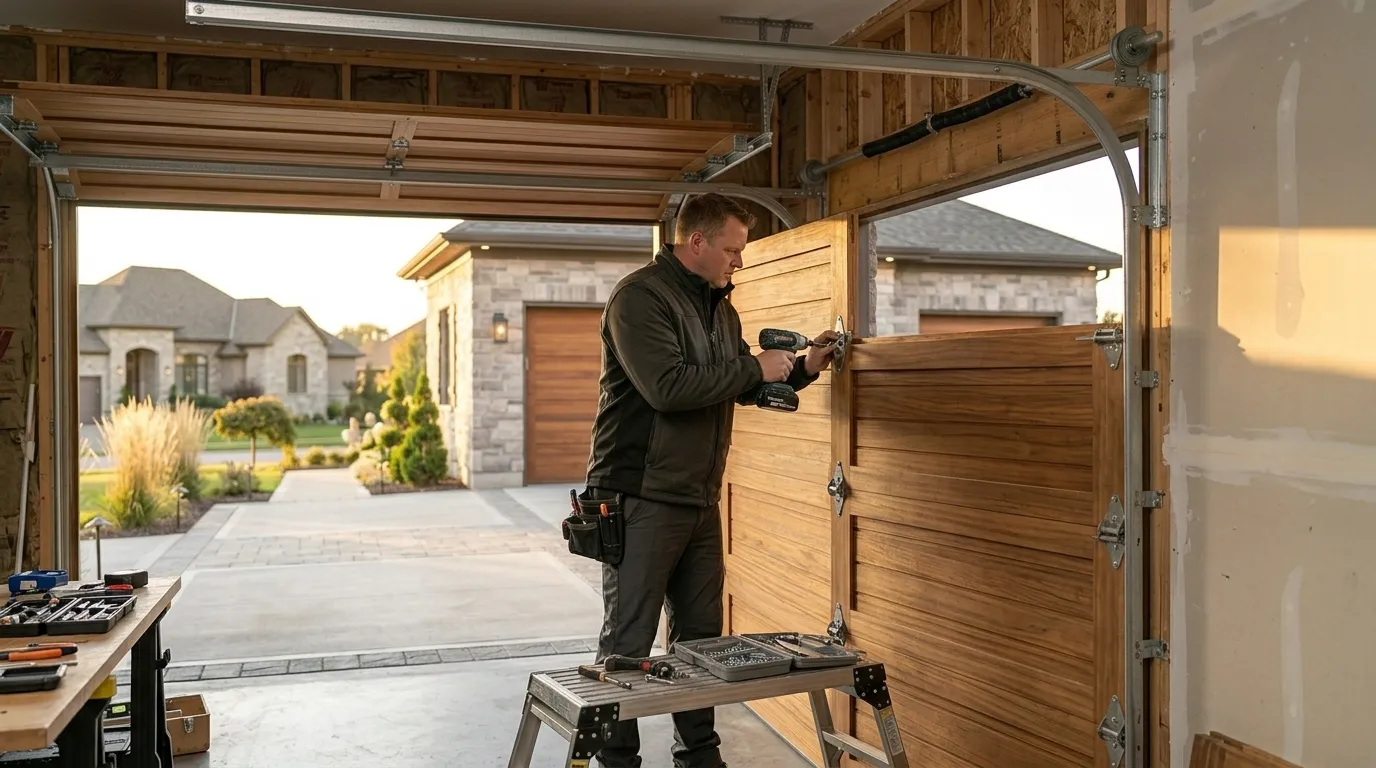
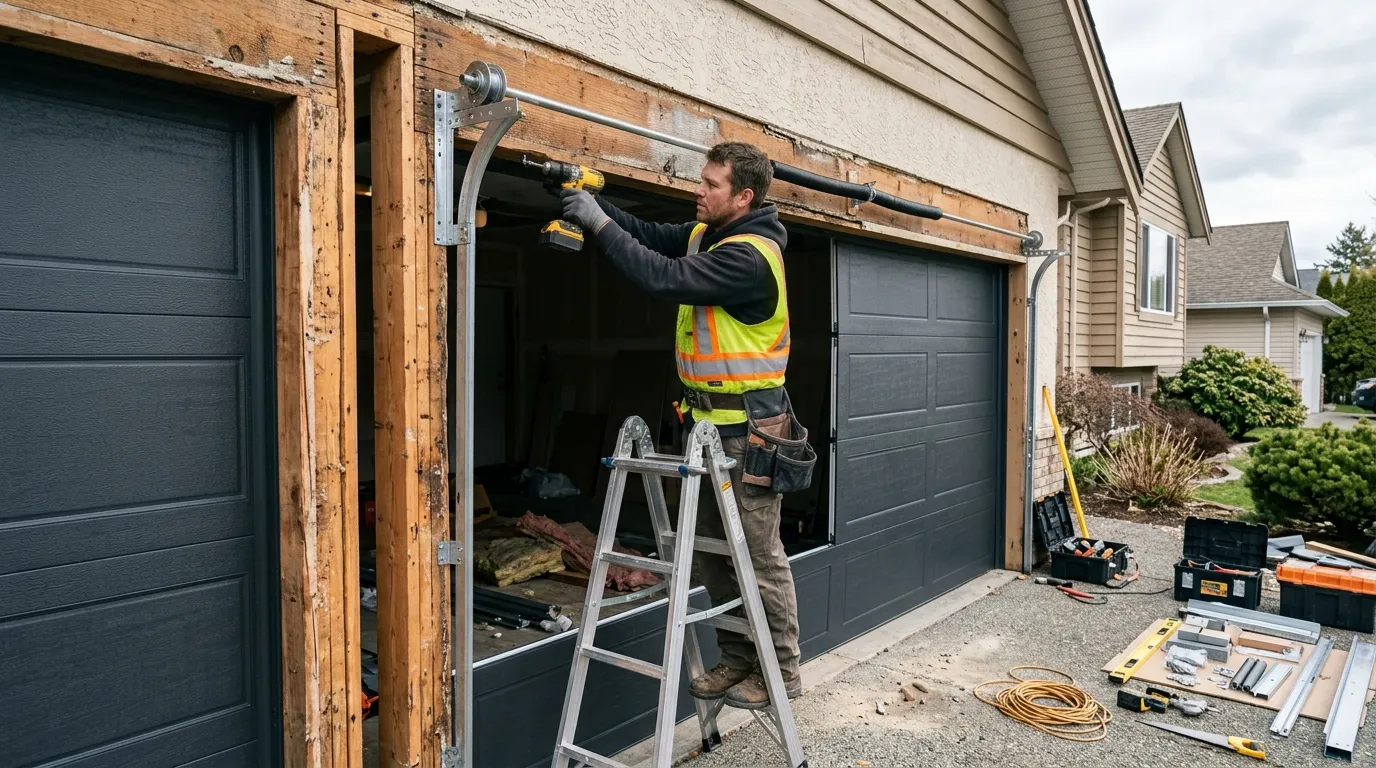
Most of the doors we see in Sheldon date back to construction around 1977, which puts them in that stretch of steel raised-panel doors built before insulation was standard and before torsion springs became the default on every size. A lot of these are single-layer 26-gauge steel, 16x7 for the two-car openings, hung on extension springs with a center pulley rather than a torsion bar overhead. That hardware is old enough now that the springs have usually gone through at least one full replacement cycle, and the rollers on the originals are often the plain steel kind that scream through their last few hundred cycles before they seize. We carry extension spring pairs sized for this era, the pulley and cable hardware that goes with them, and steel hinges to match the panel gauge, because that stamped panel doesn't hold a mismatched hinge well. What we don't stock on the truck is anything custom-width - insulated retrofit panels or torsion conversion kits get ordered once we've measured the opening, and that adds a day or two before the second visit.
Doing It Yourself
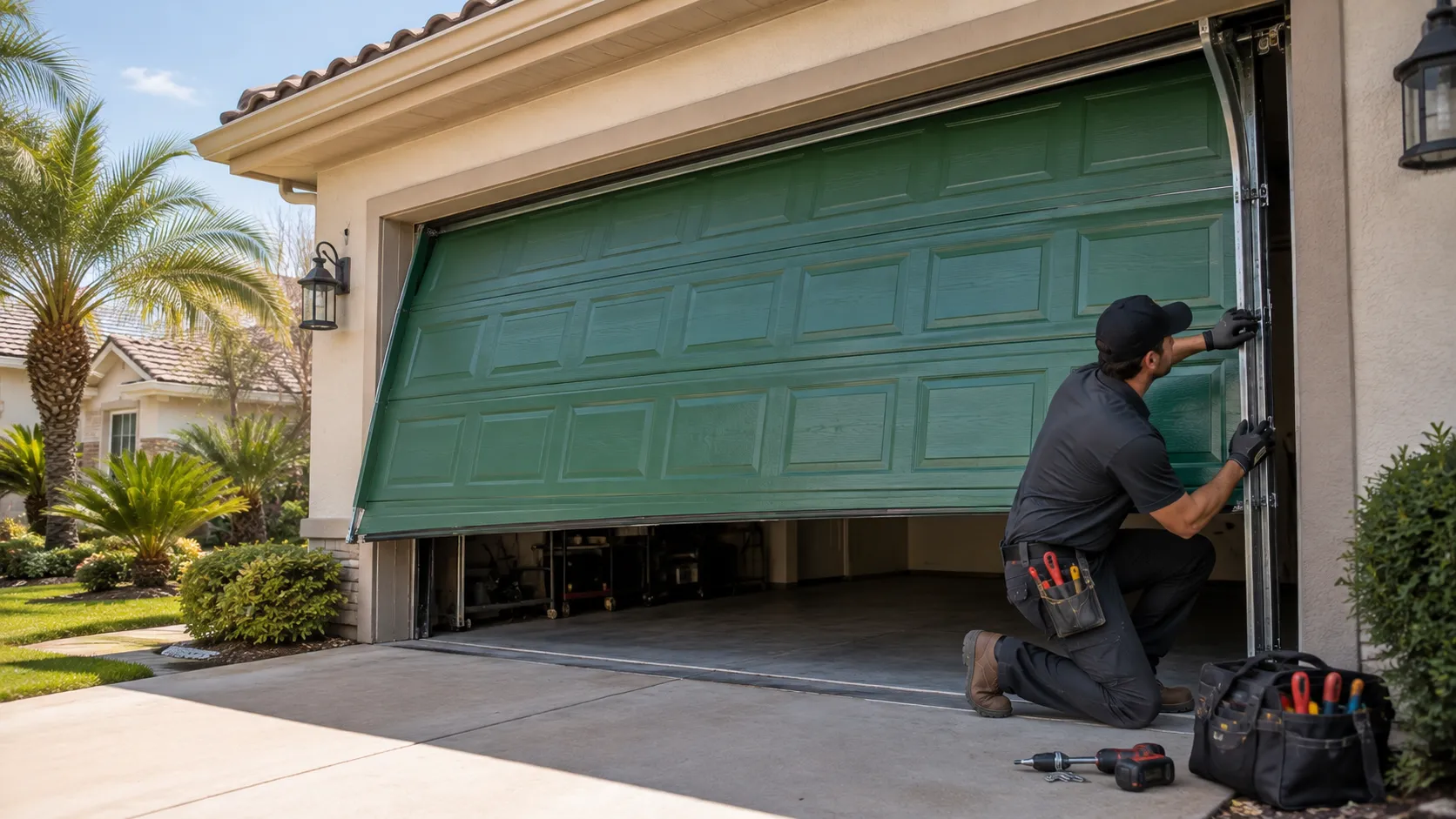
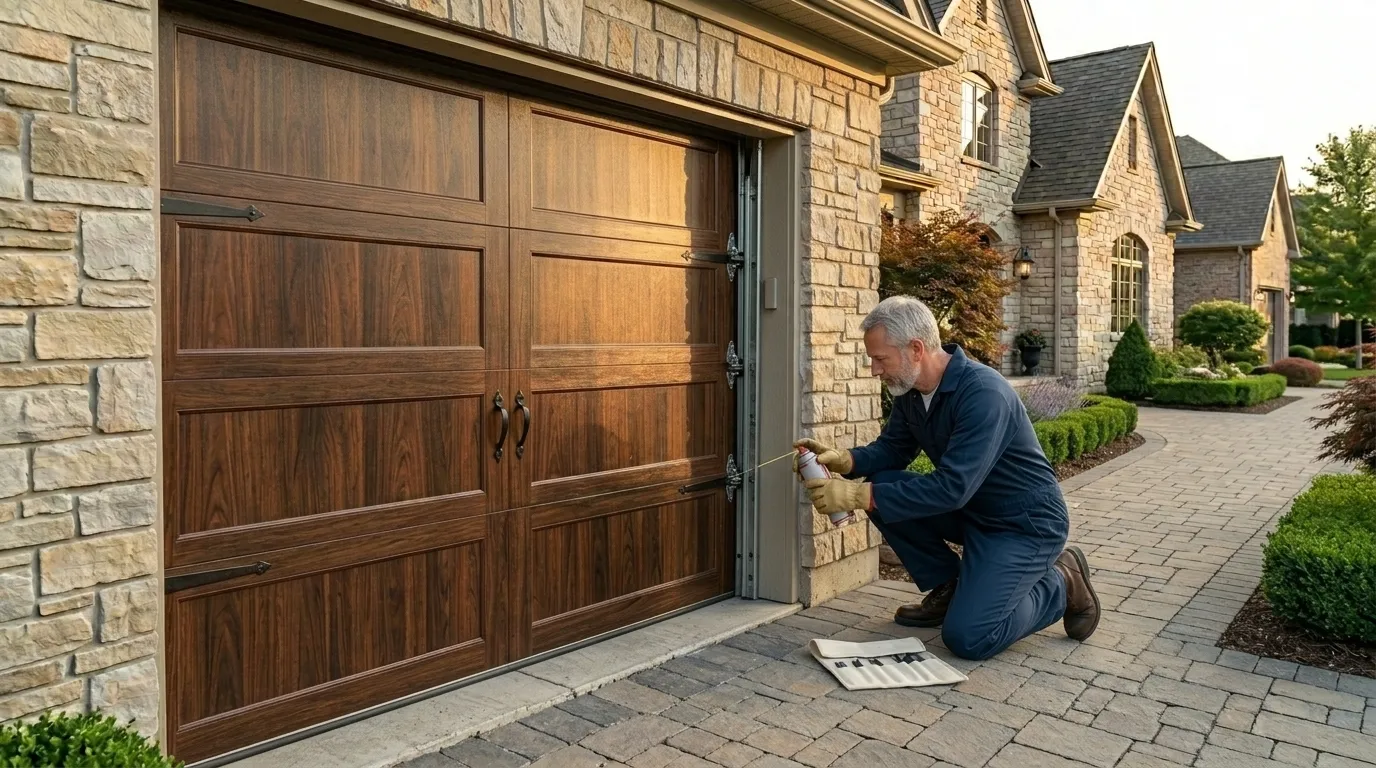
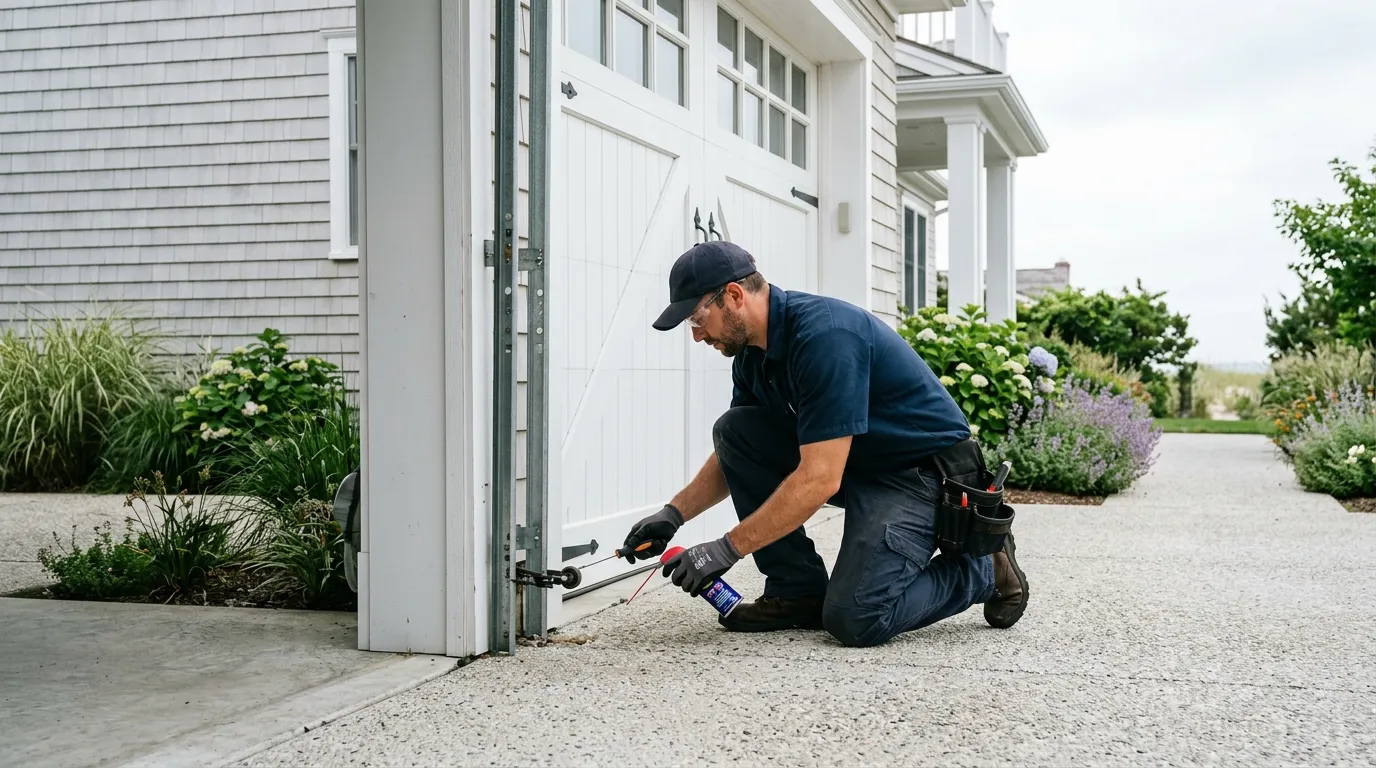
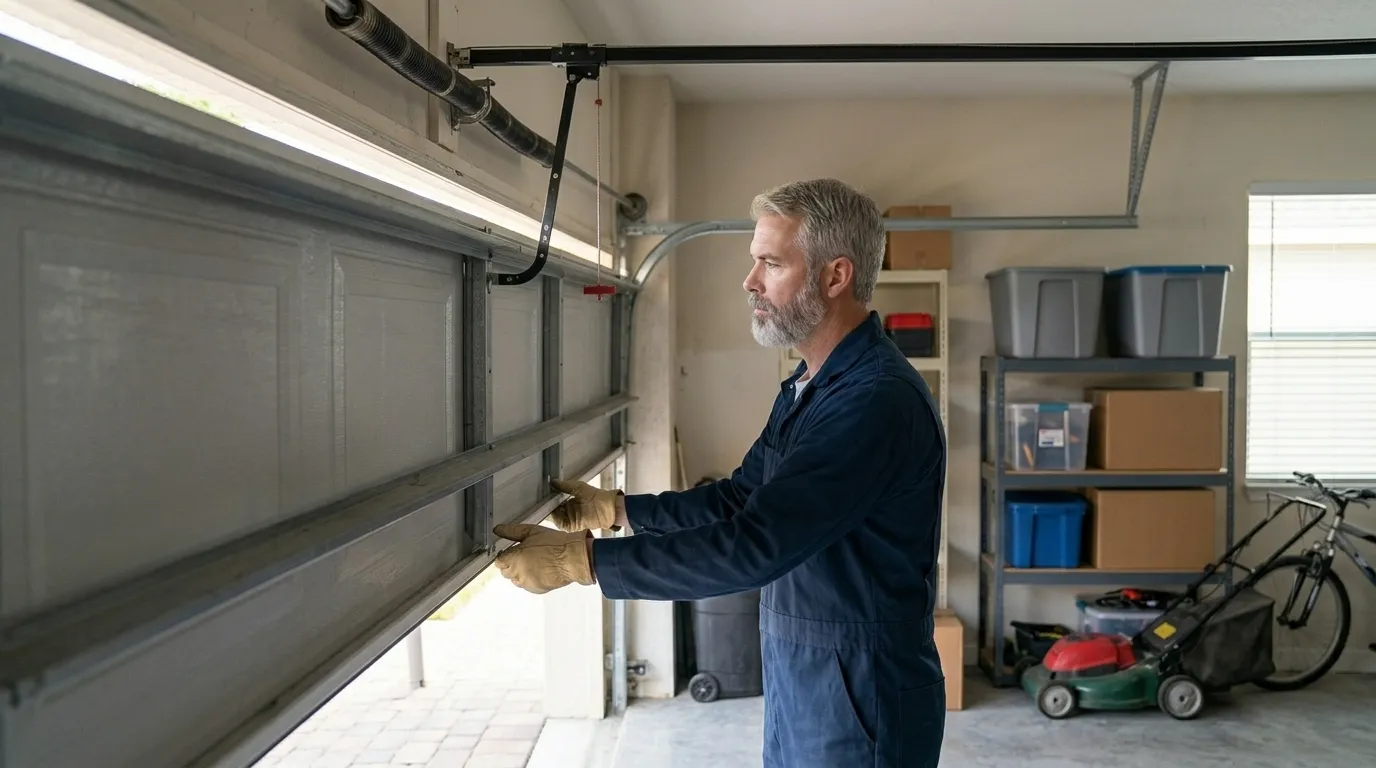
An extension spring job on one of these older doors is not the same risk as a torsion spring job, but it's still not a great DIY project. The spring itself carries less stored energy than a torsion spring, which is why homeowners sometimes attempt it, but the cable that runs to the bottom bracket is under real tension and a slipped cable under a door that's half raised will drop the whole panel fast. If your door is one of the 1970s-era single-layer steel doors common around here, the panels are also thin enough to dent or bow if you crank down a bolt unevenly while swapping a hinge. Where DIY makes sense: lubricating hinges and rollers, tightening loose bracket bolts, clearing the track of debris. Where it doesn't: springs, cables, or anything involving the bottom bracket while the door is off the floor.
Time on the Job
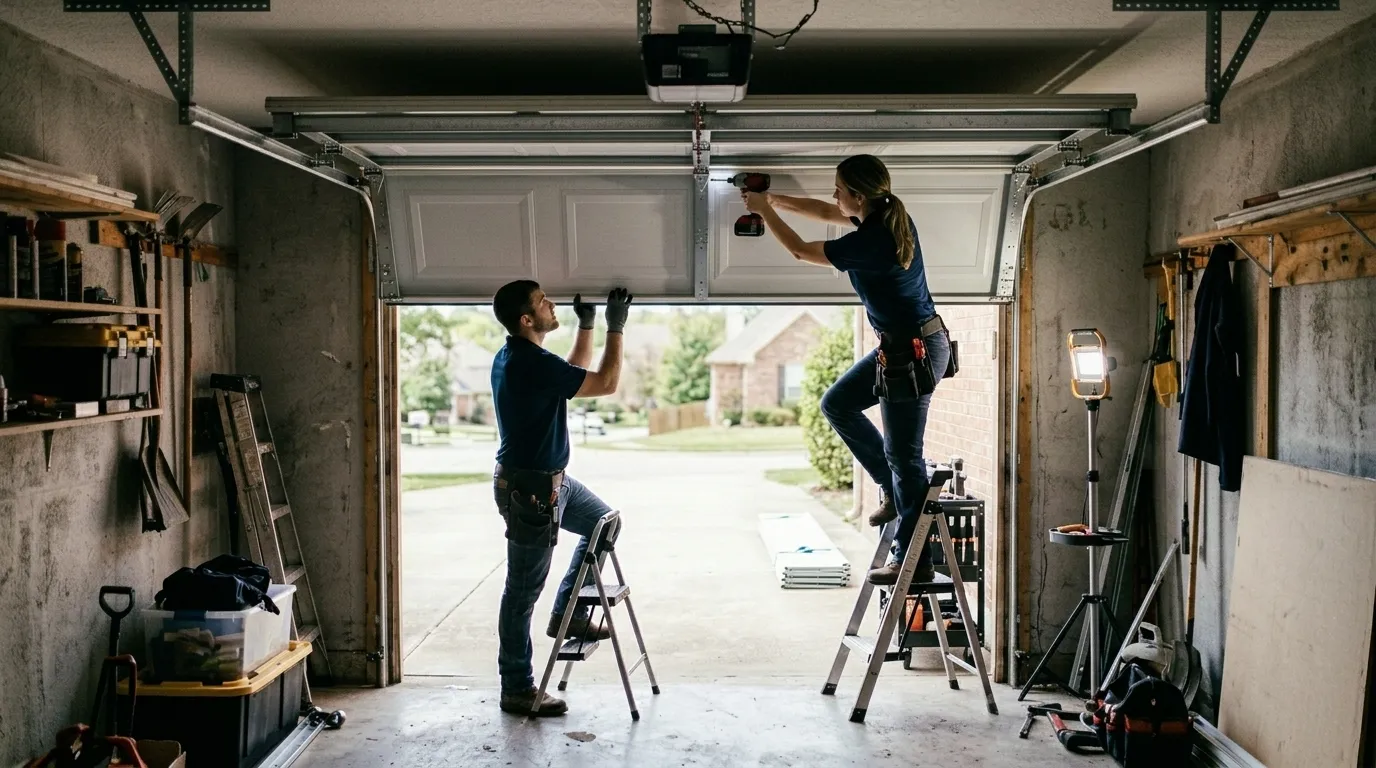
A straight extension spring and cable swap on a door like the ones common in Sheldon usually finishes in a single visit. Where it stretches to two visits is when the panel itself needs replacing - a dented or bowed 26-gauge panel from this era isn't always a stock size we carry on the truck, so we measure, order, and come back. The climate here is mild with occasional freezes, not the kind of extreme swing that cracks panels on its own, but forty-plus years of thermal cycling on original steel hinges does eventually work the screw holes loose, and that's a same-visit fix once we're already there for the spring.
What the Repair Takes
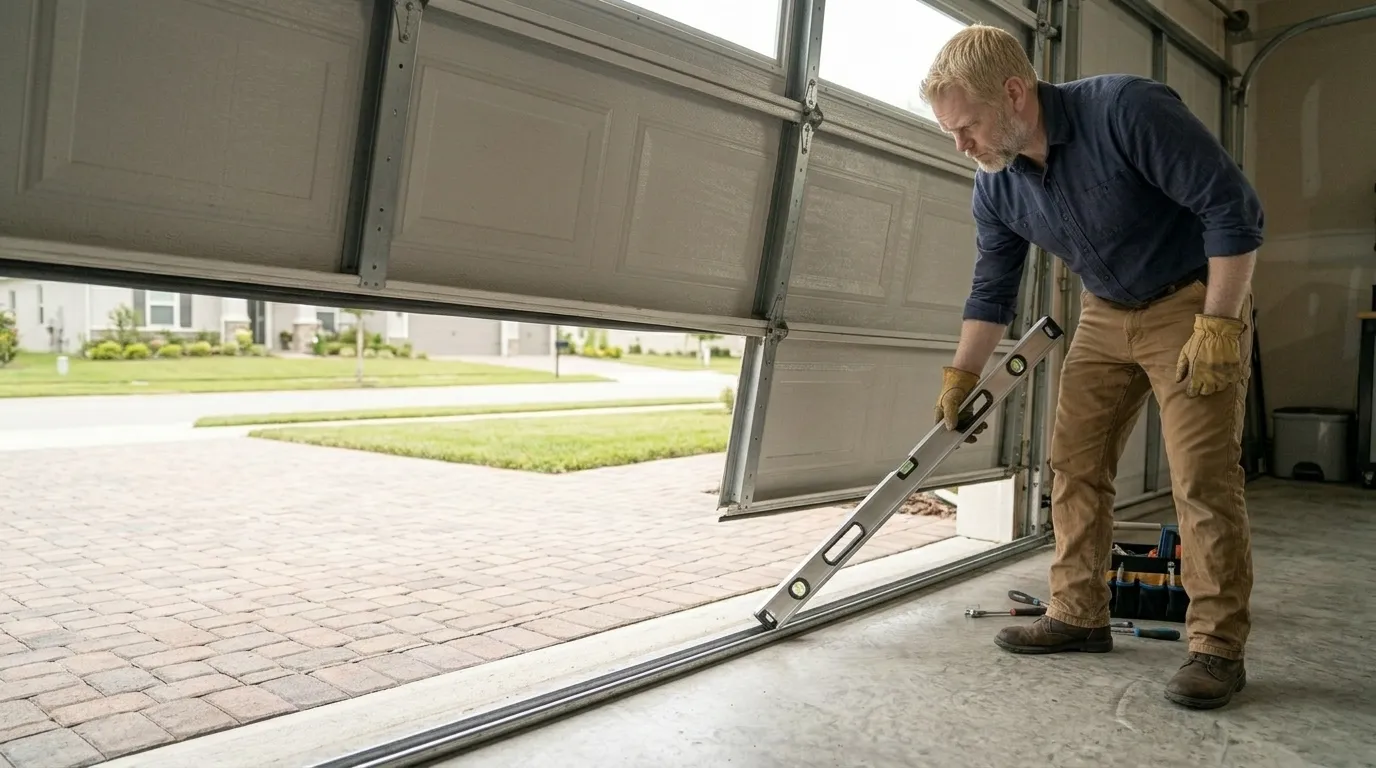
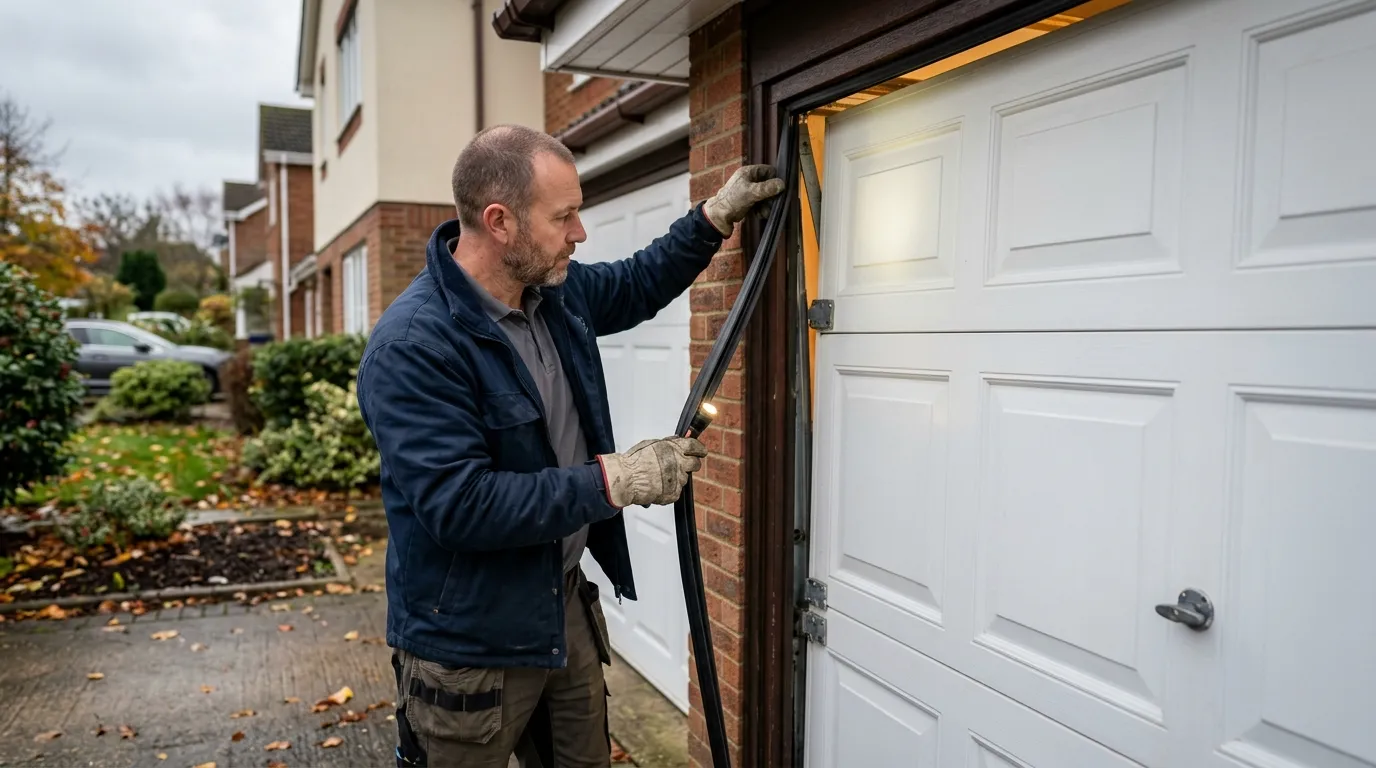
Coming from Humble, it's a 12-mile drive out to Sheldon, so we plan the parts before we leave rather than guessing on site. For a door built around 1977, that means bringing extension springs sized to the panel weight, matching cable, and steel hinges in the older gauge, plus the pulley hardware if the original center pulley has worn its bearing surface - which on original hardware this age, it usually has. The one thing we won't do is force a torsion conversion onto a door frame that wasn't built for it just because torsion is the newer standard; if the extension setup is sound, we fix what's there instead of upselling a rebuild the door doesn't need.