Stocked Parts
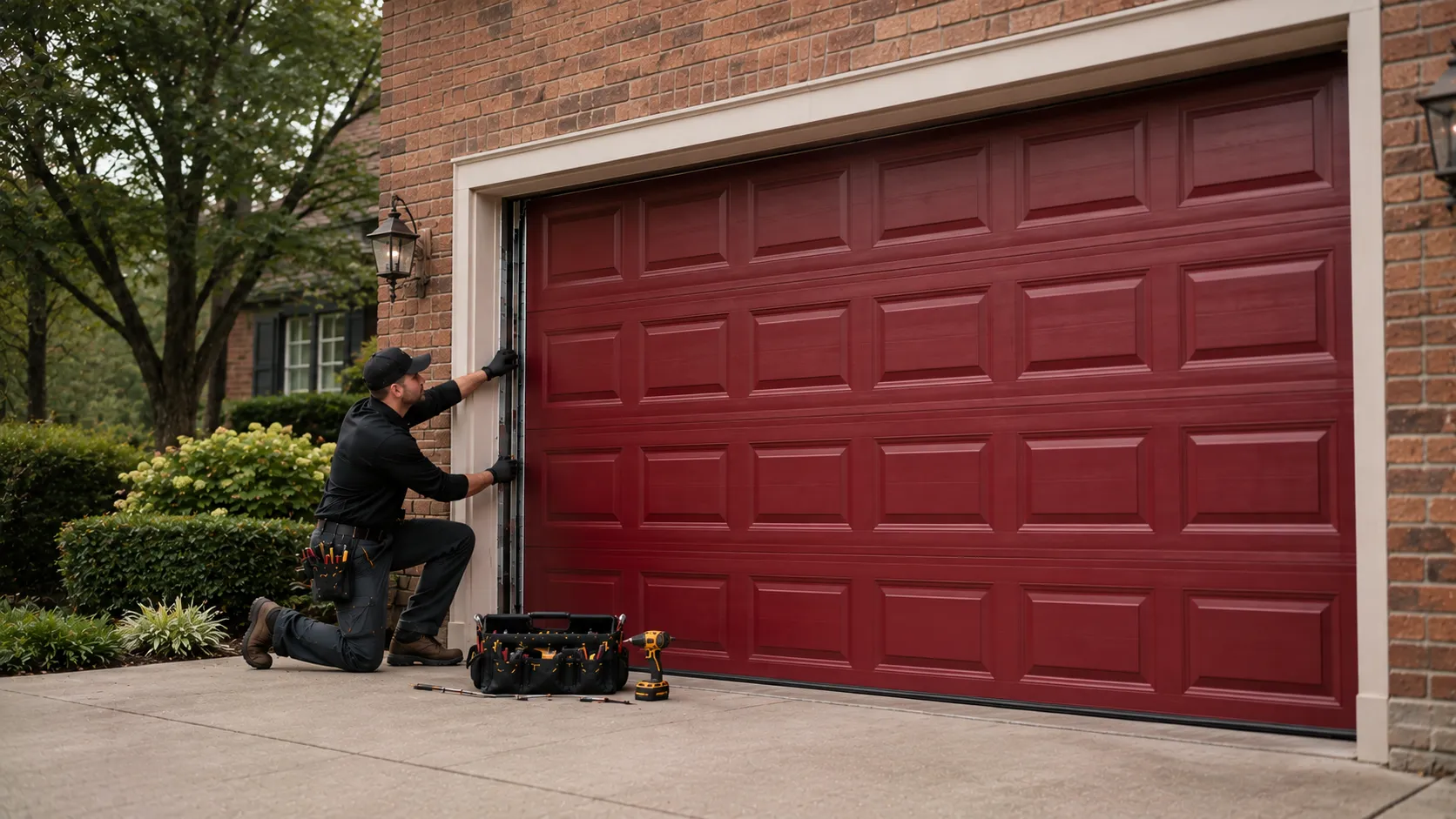
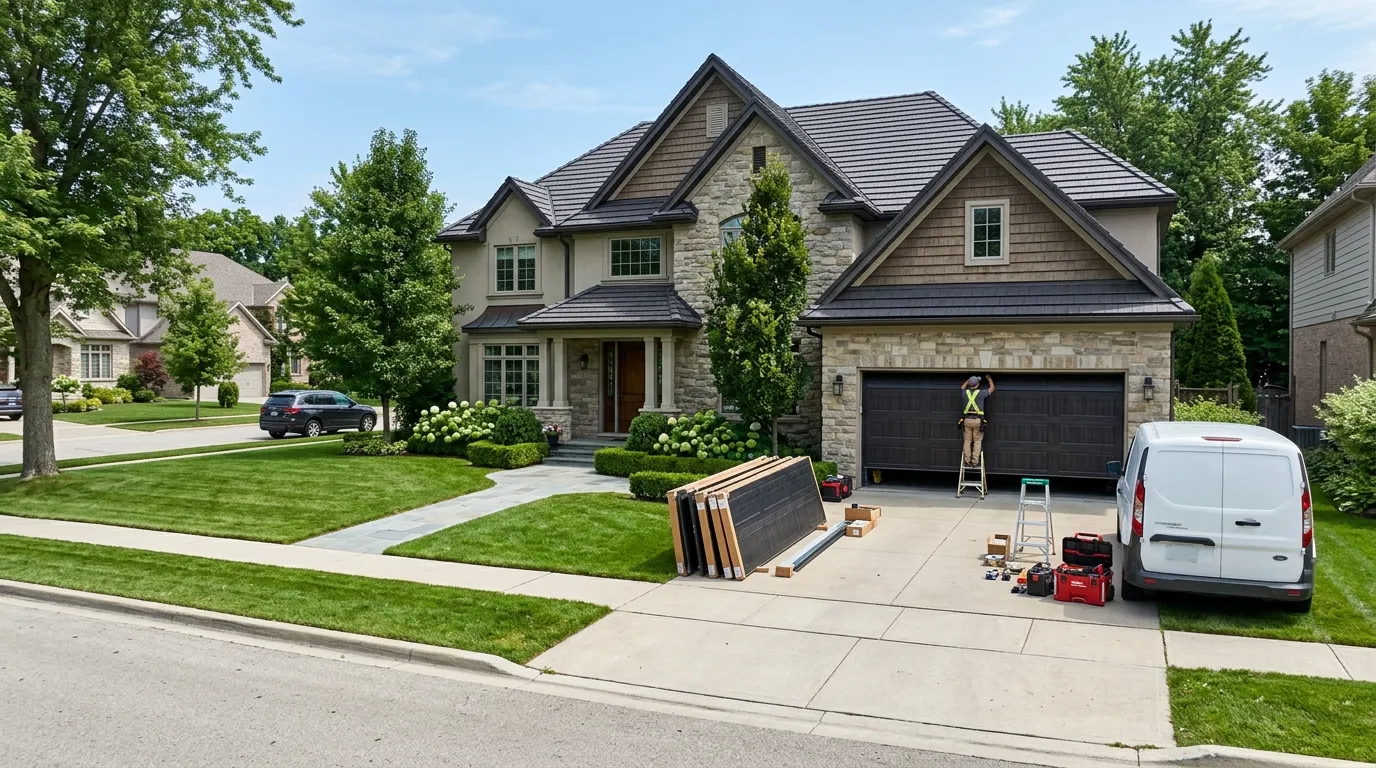
The median house in Sheldon went up in 1977, and that year matters more than most homeowners realize. A door from that era usually came with extension springs riding on pulleys above the track, not the torsion setup that took over most new construction by the late 1980s and 90s. We carry extension spring kits, pulleys, and the older-style non-insulated steel panel hardware that this stretch of homes still needs, because it's a different repair than what we pull for a house built in 2005.
We also stock rollers, cables, and standard torsion springs for the newer builds mixed into the area, since Sheldon isn't uniform - some lots got rebuilt or added onto over the decades and picked up newer doors along the way. What we don't carry on the truck is a replacement panel matched to a discontinued 1970s door profile. Those sometimes have to be special-ordered, and that's the one honest gap here: if your door is old enough that the manufacturer doesn't make the panel anymore, we're looking at a full replacement, not a patch.
Most of what breaks on a house this age is spring or pulley related, and that's exactly what rides on the truck.
Doing It Yourself
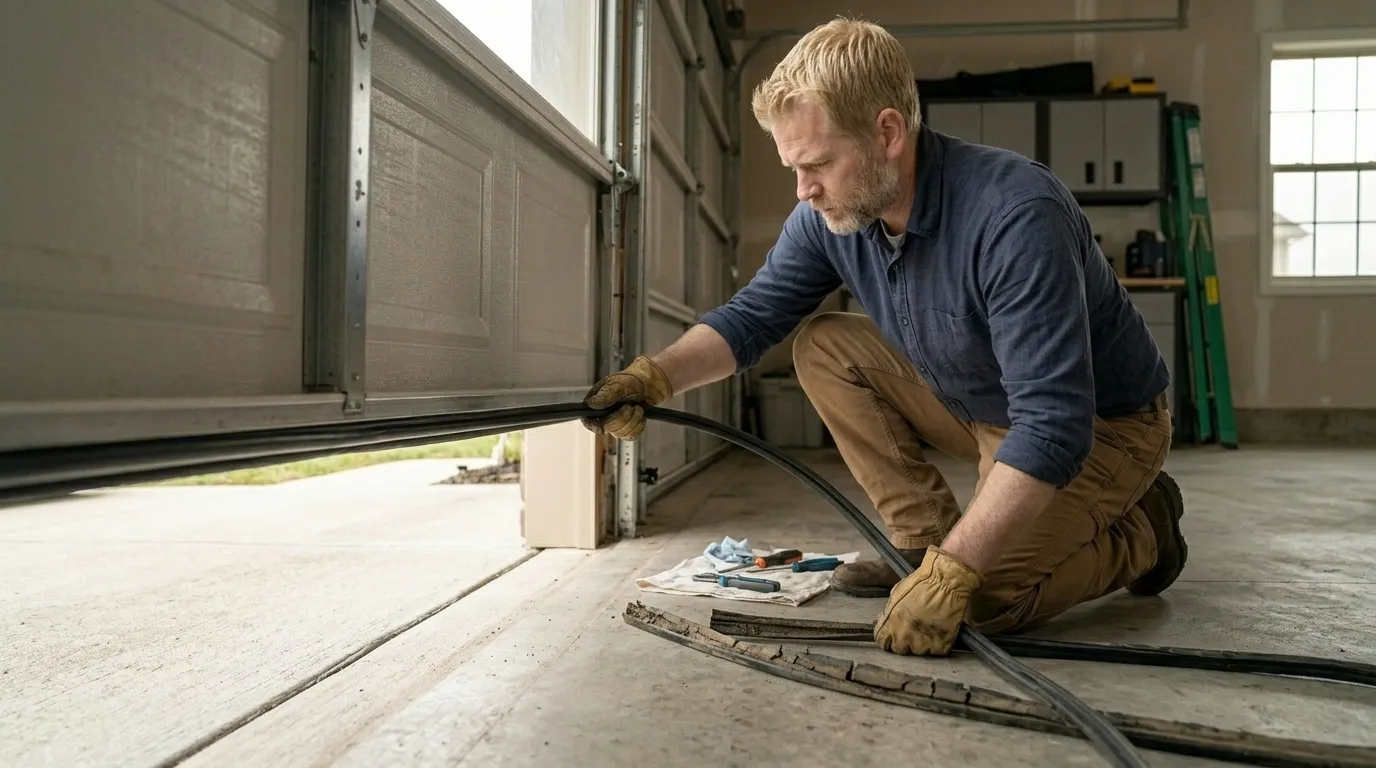
Lubricating hinges and rollers, tightening loose bolts on the track brackets, and swapping worn weatherstripping are all fine to do yourself, on any door regardless of age. None of that needs a call.
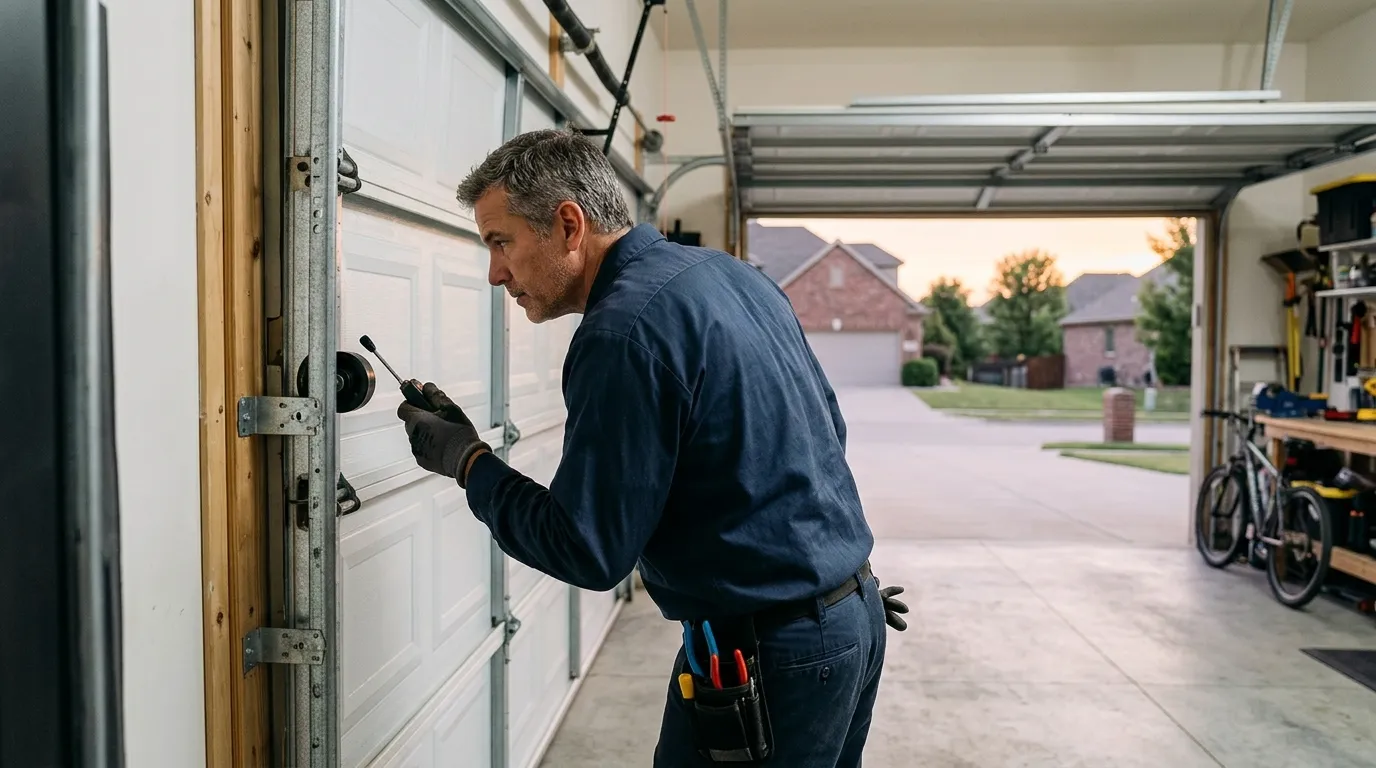
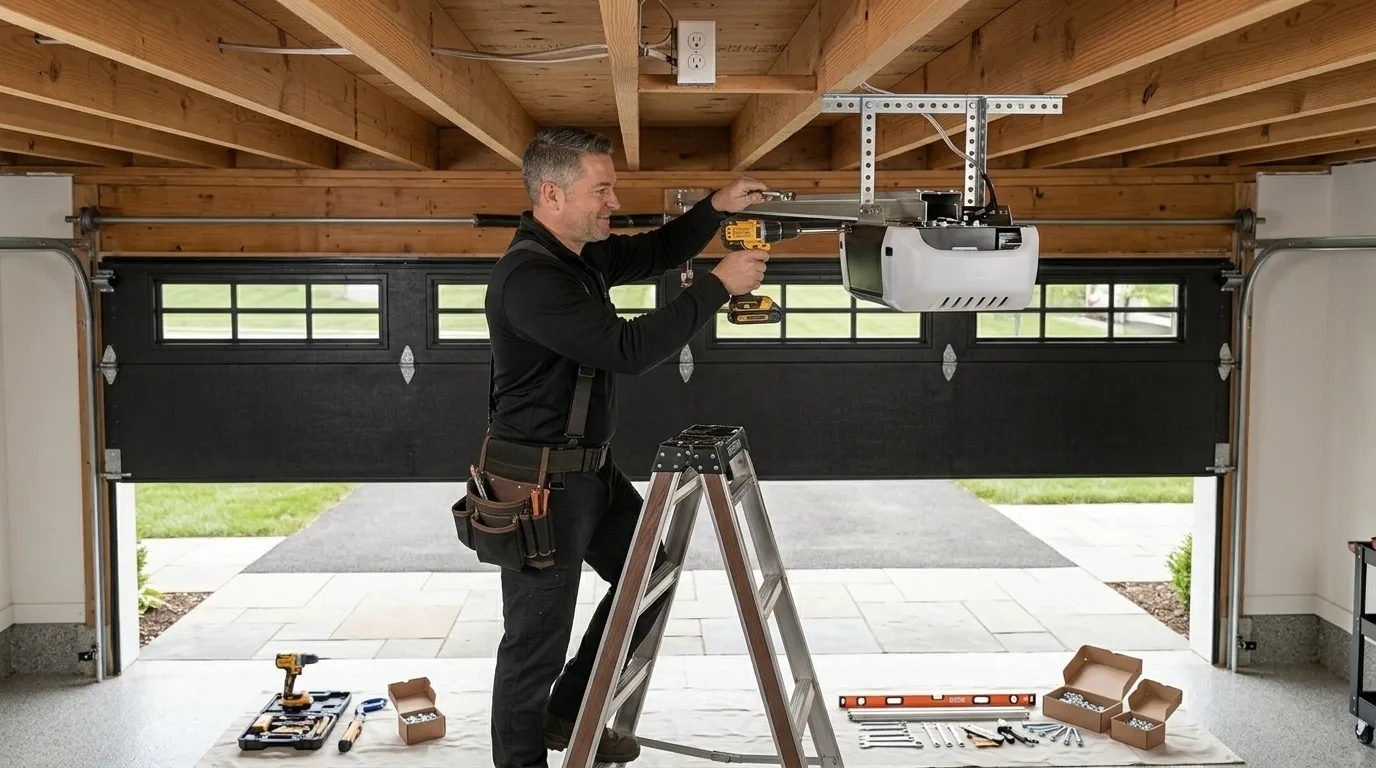
What you shouldn't touch is the spring system, especially on a door old enough to still be running the extension-spring-and-pulley setup common on houses built around 1977. Those springs store a lot of tension, and the pulley hardware on an older system wears in ways that aren't obvious from the garage floor - a frayed cable under load is worse than one that's visibly broken. If the opener is original to the house, the wiring and mounting brackets are also often past the point where a DIY swap is worth the risk versus just calling it in.
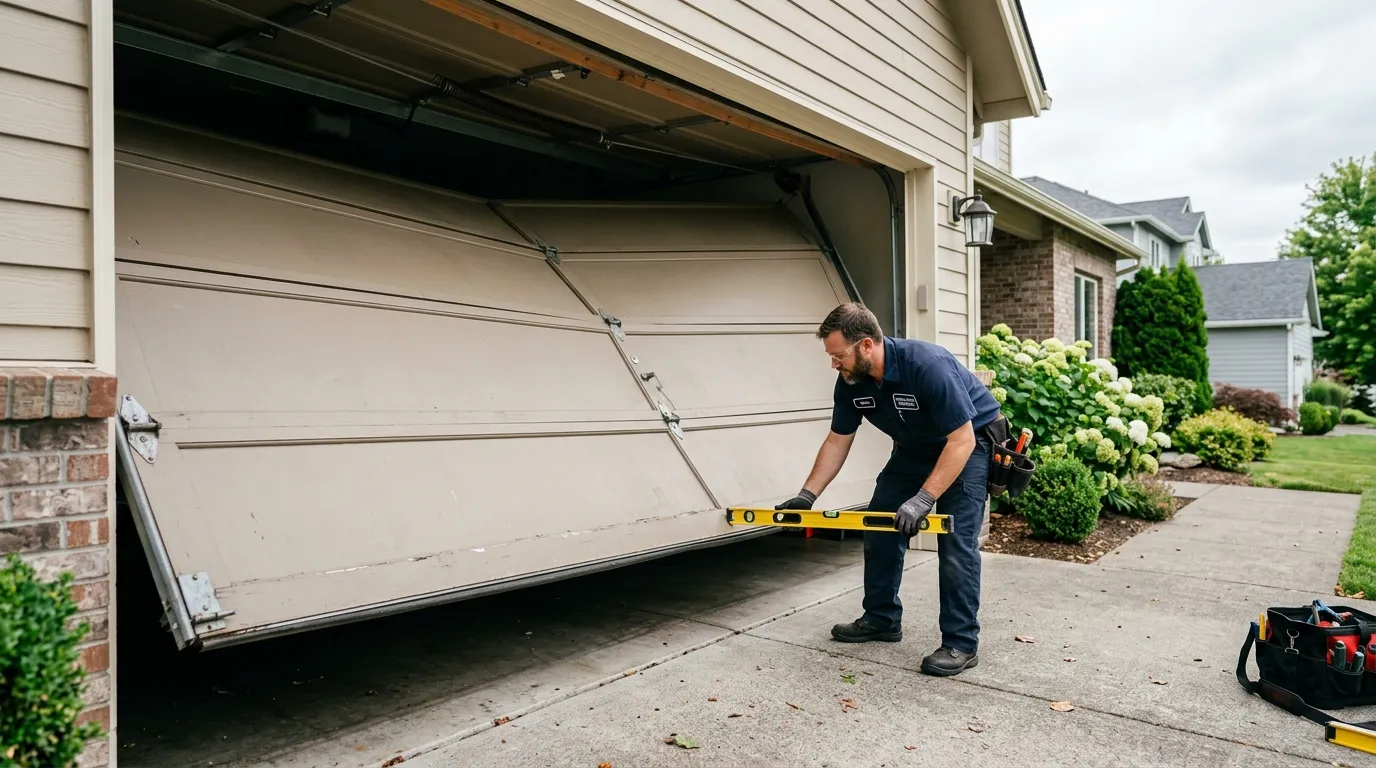
One thing we'll say plainly: if your door is sagging on one side and you're tempted to just add a bungee cord or extra bracket to hold it level, don't. That's a symptom of a spring or cable problem, and forcing it level with a workaround usually just moves the strain somewhere else in the track.
Time on the Job
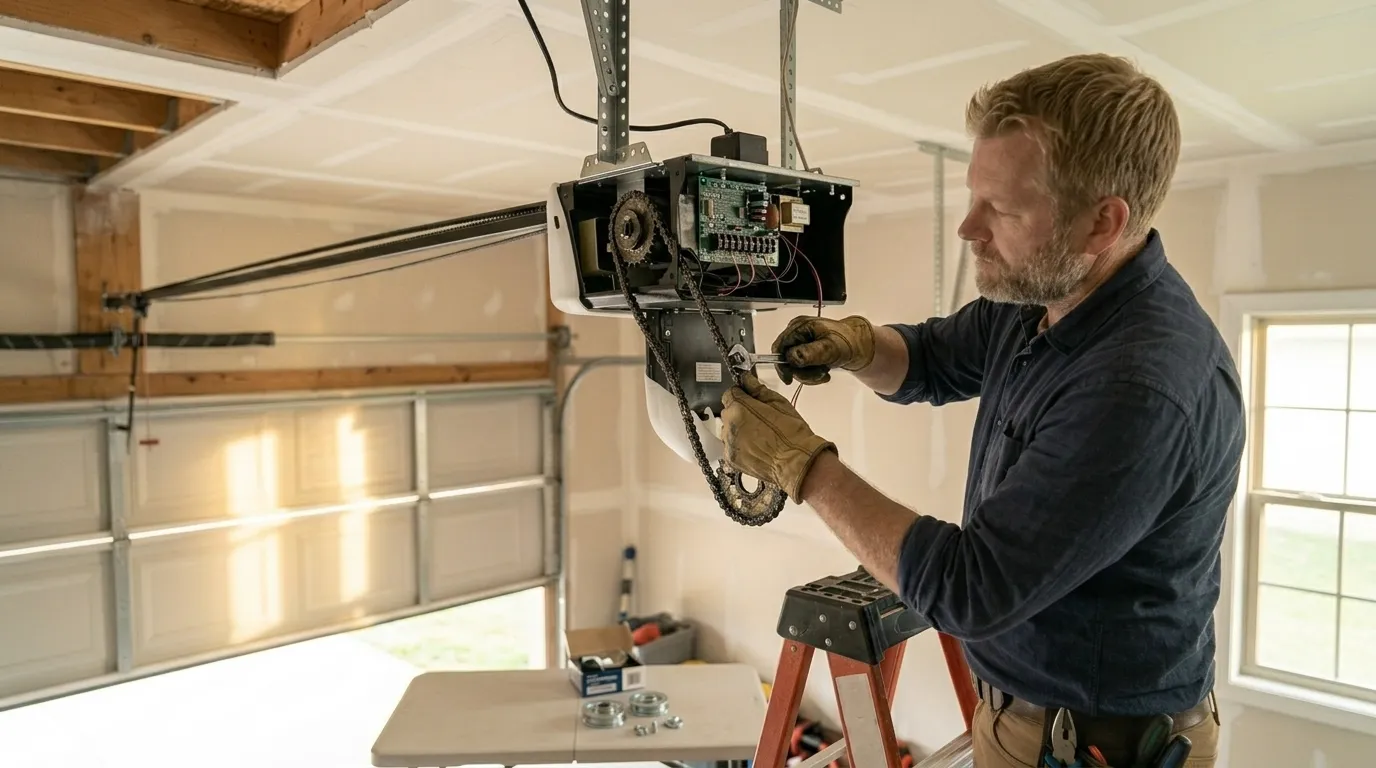
A straight spring or cable swap on a door built around the 1977 median for this area usually takes less time than diagnosing and fixing an opener that's original to the house, since older openers often have wiring and mounting quirks that newer models don't. If the door needs a full torsion conversion from an old extension-spring setup, that's a longer job - we're not just swapping a part, we're changing how the door is engineered to hold its weight.
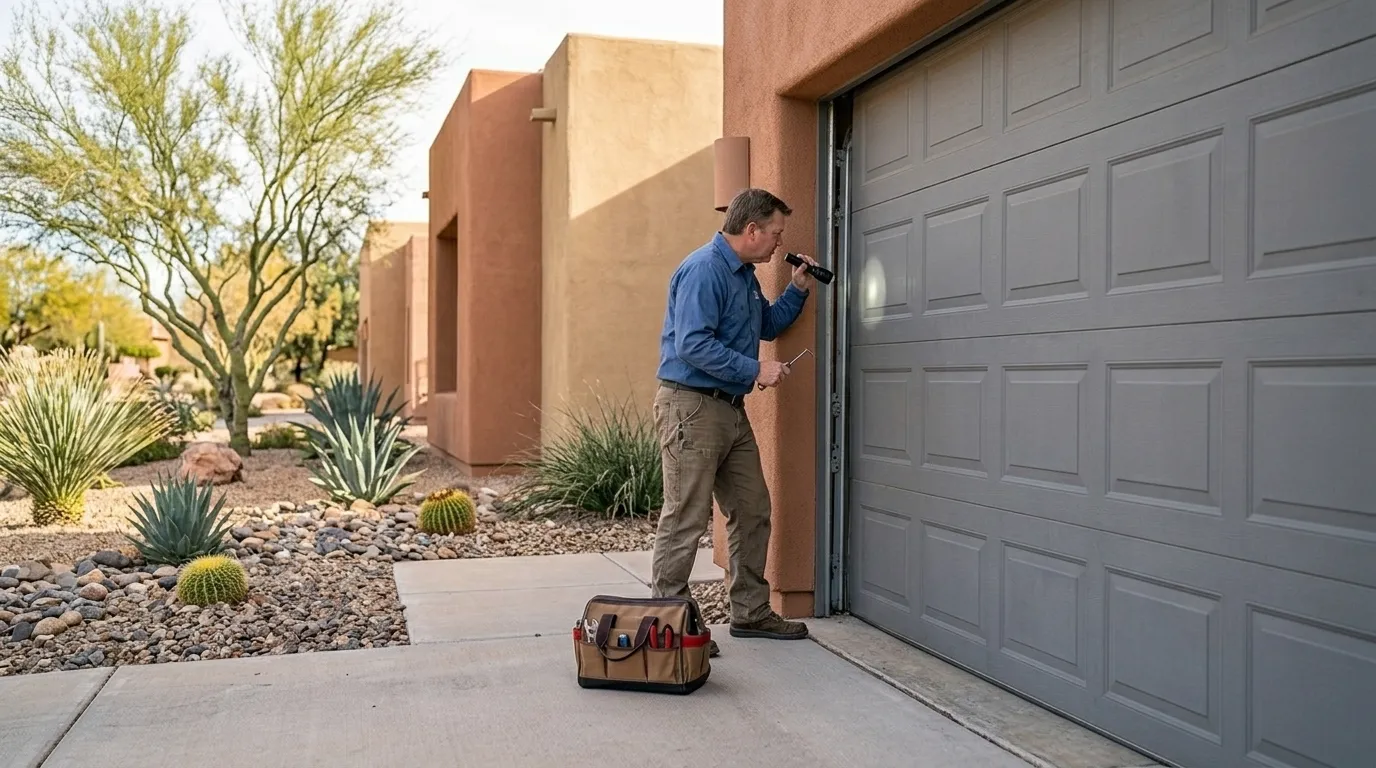
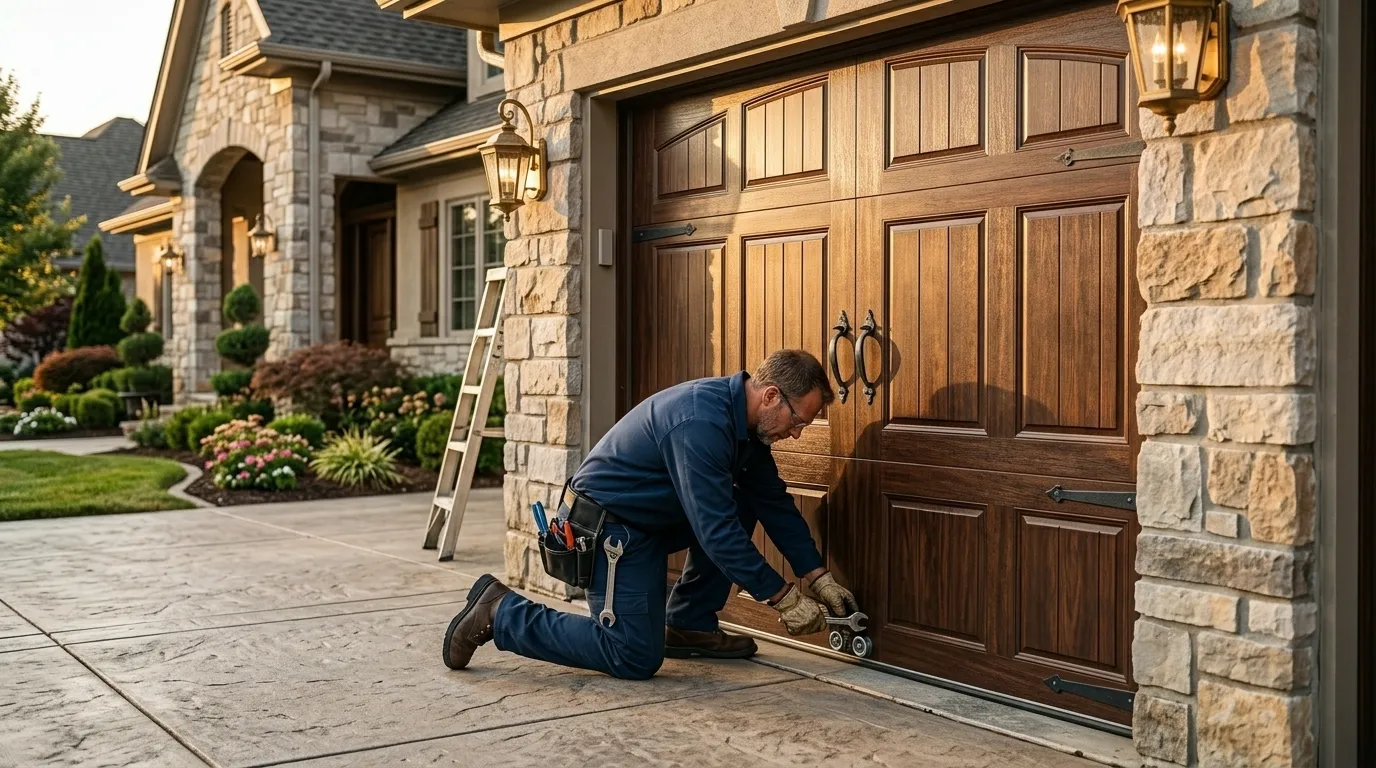
The mild climate with occasional freeze here doesn't create the kind of seasonal ice-jam callouts you'd see further north, but decades of humidity does its own slow damage to steel hardware, and that shows up as extra time spent freeing rusted pulleys or corroded brackets rather than a quick bolt swap. We come out from Humble for the job, so travel is part of the day, but the repair itself is what determines how long we're on site once we're there.
What the Repair Takes
On a house from the 1977 median build year, the repair usually comes down to one of two paths: replace the extension springs and pulley hardware in kind, or convert the whole system over to torsion springs mounted on a shaft above the door. Conversion costs more up front in parts, but it's a more serviceable system going forward, since torsion hardware is what most new doors use and what most techs stock without a special order.
We also check the cable drums, the track alignment, and the opener mounting while we're in there, because a door that old has usually had more than one thing wear out even if only one thing failed today. With 662 households in Sheldon and 17,400 owner-occupied houses across the broader area we cover, we see this same fork - repair in kind versus convert - often enough that it's not a guessing game by the time we're standing in front of the door.