Stocked Parts
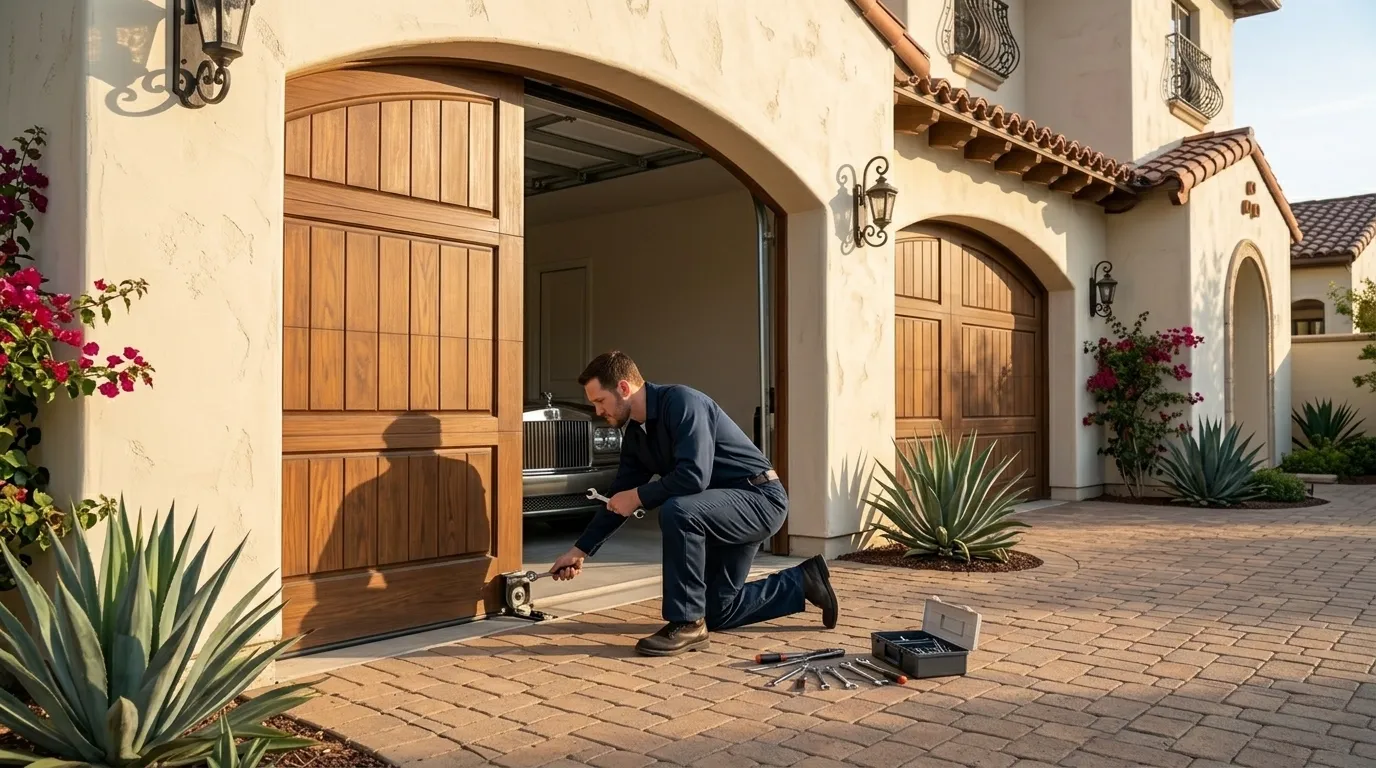
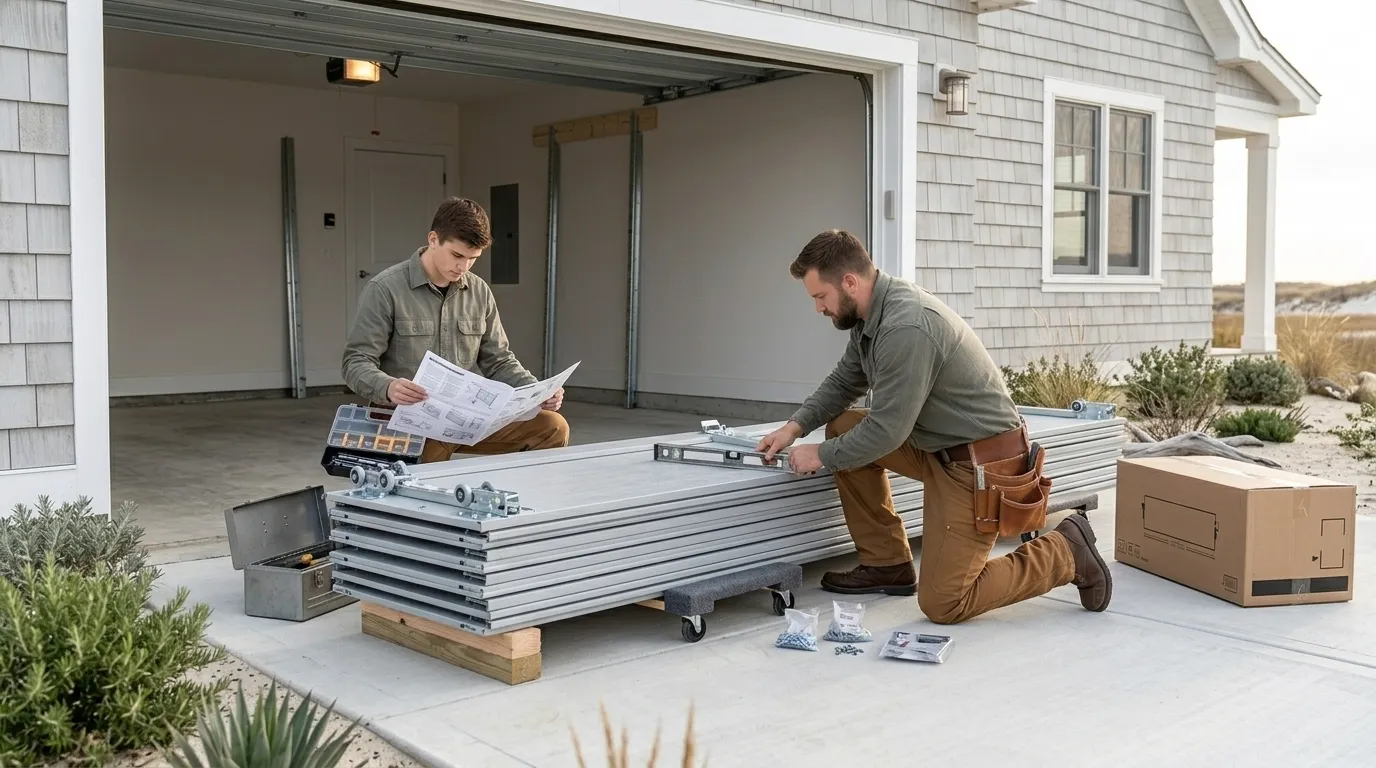
The truck that comes out to Sheldon carries the sizes that fit houses built around 1977, not the wider range you'd stock for a mixed-era subdivision closer to Humble. That means standard 16x7 and 9x7 door panels, torsion springs sized for the lighter, non-insulated steel doors that were common when this area was built, and track hardware that matches a rough opening that's had over forty years to settle. We don't load the truck for insulated triple-layer doors as the default here the way we might for newer construction - if a homeowner wants that upgrade we order it, but it isn't what's sitting on the shelf for a same-week Sheldon job. The climate here is mild with occasional freeze, so we do carry basic weatherstrip and bottom seal kits rated for that swing, not the heavy cold-climate seals some northern installers stock. Matching the door to the opening matters more than matching it to a catalog page - an opening framed in 1977 rarely takes a modern door without some adjustment at the jamb.
Doing It Yourself
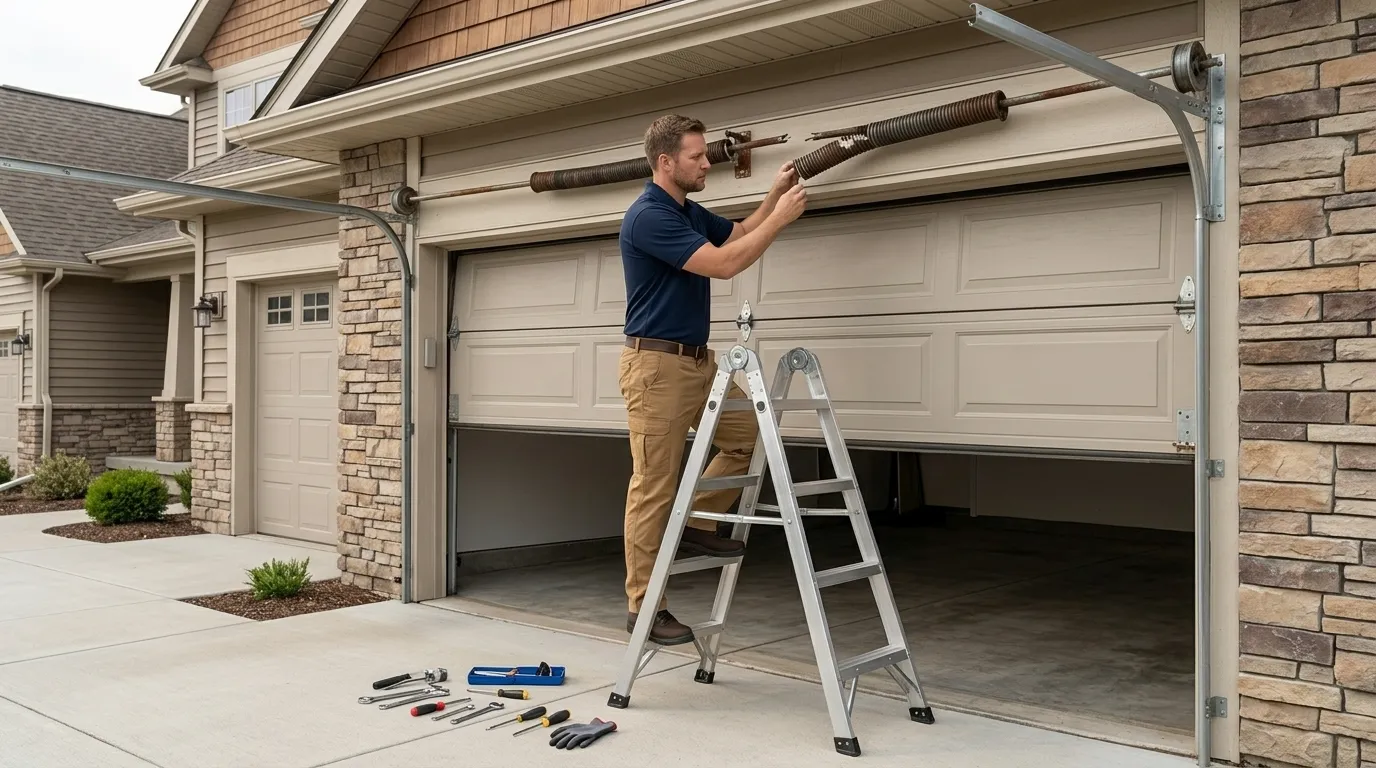
A new garage door is not a weekend panel swap, and it's a worse first DIY project on a house this age than on new construction. Framing from 1977 has moved. Floors settle, jambs rack a little, and what looks square to the eye rarely is square to a level. Installing a new door on an opening that's off by even half an inch means the door binds on one side or the seal never sits flat - and you won't know which until it's hung. Add a torsion spring wound to the wrong tension for the door's actual weight, and you've got a coil that can put someone in the hospital if it lets go while you're on the ladder. We're not going to pretend every install is complicated - a straightforward swap on a square, unmodified opening is a real job but not a mysterious one. Where it gets expensive to DIY is redoing a bad first attempt: pulling a door back off, reframing the jamb, and starting over costs more than paying for the measurement and the shimming the first time.
Time on the Job
Sheldon sits twelve miles from Humble, so a new door install here doesn't get squeezed in as a quick stop between two other calls - it's booked as its own trip. That drive shapes the schedule more than the install itself does. The actual work, once the door and opener are on site, is usually a single visit: old door off, frame checked and shimmed if needed, new door and track set, opener paired and tested. What can add a second visit is a special-order door - if a homeowner wants a size or style we don't carry standard for a 1977-era opening, that door has to arrive before we can install it, and the trip out becomes two: one to measure, one to install. We tell people up front which of those two situations they're in before we ever load the truck, rather than promise a same-day turnaround we can't back up from twelve miles out.
What the Repair Takes
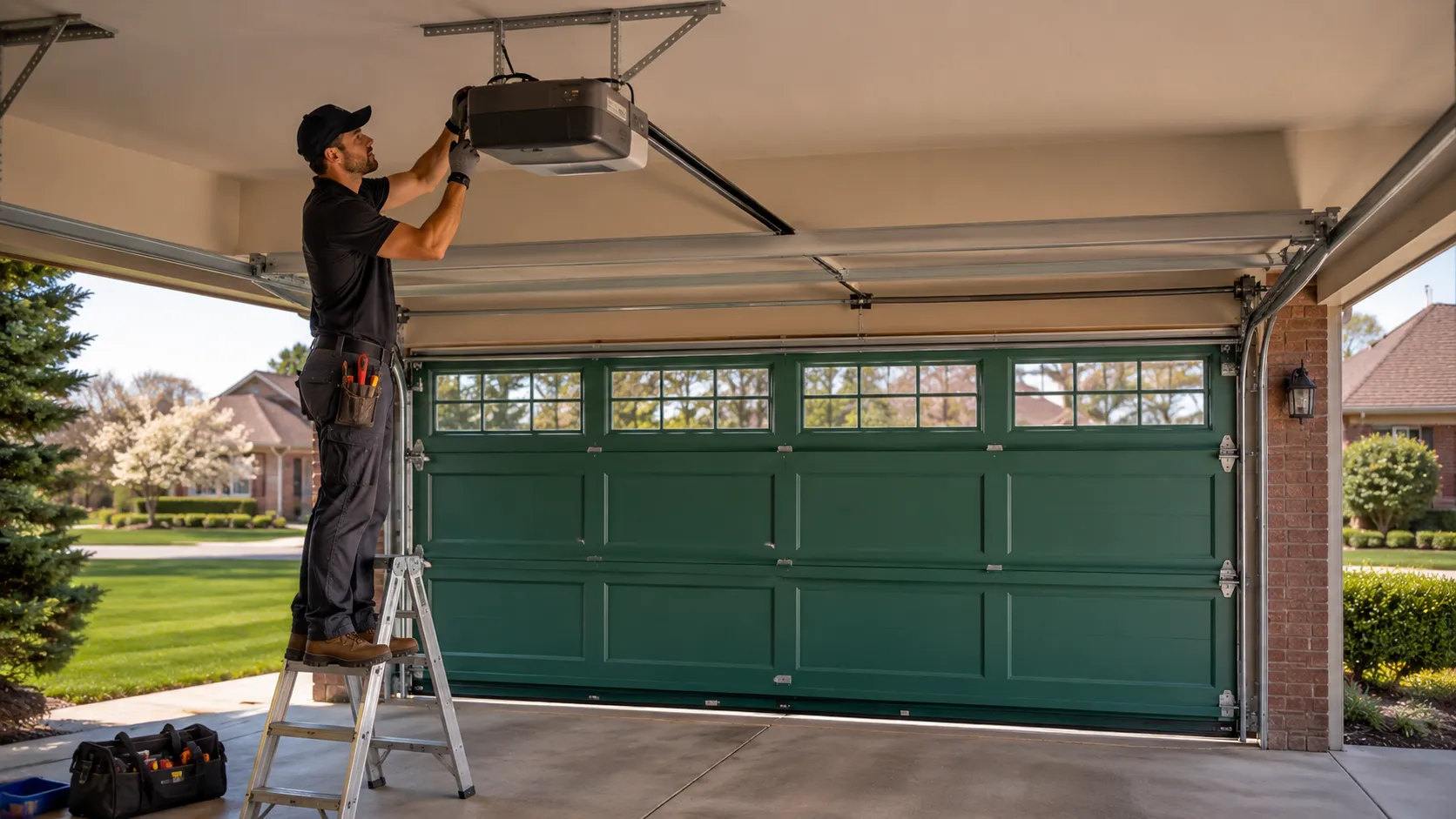
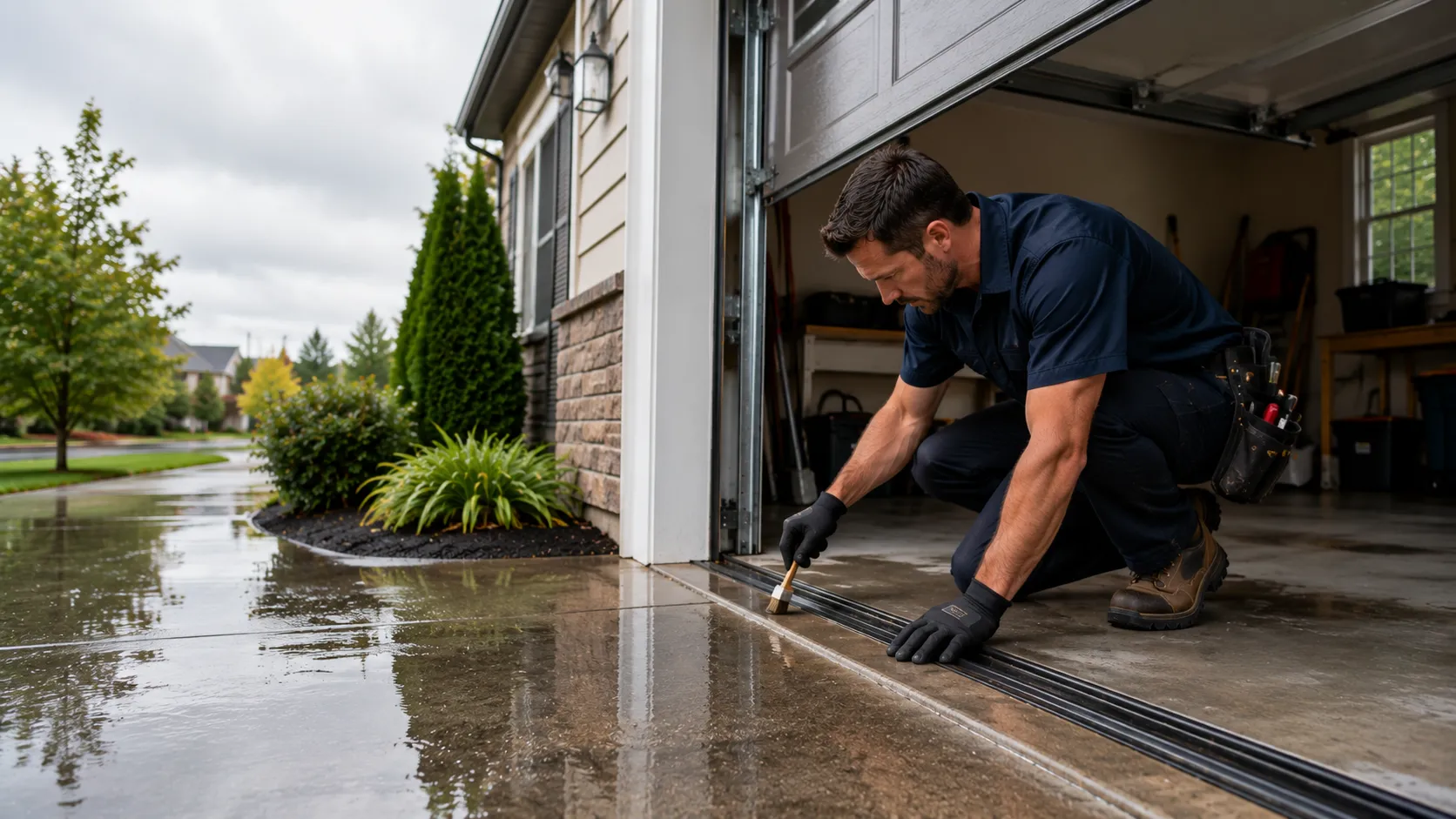
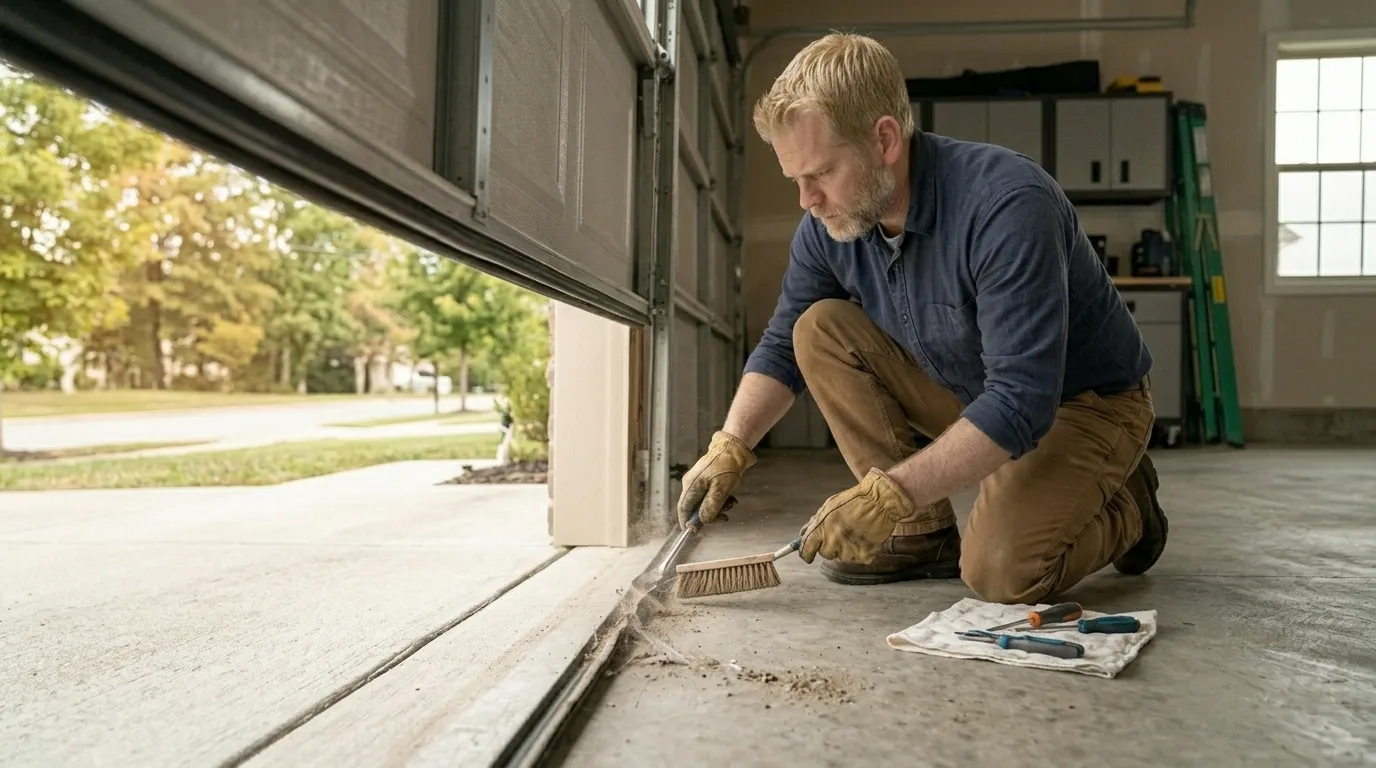
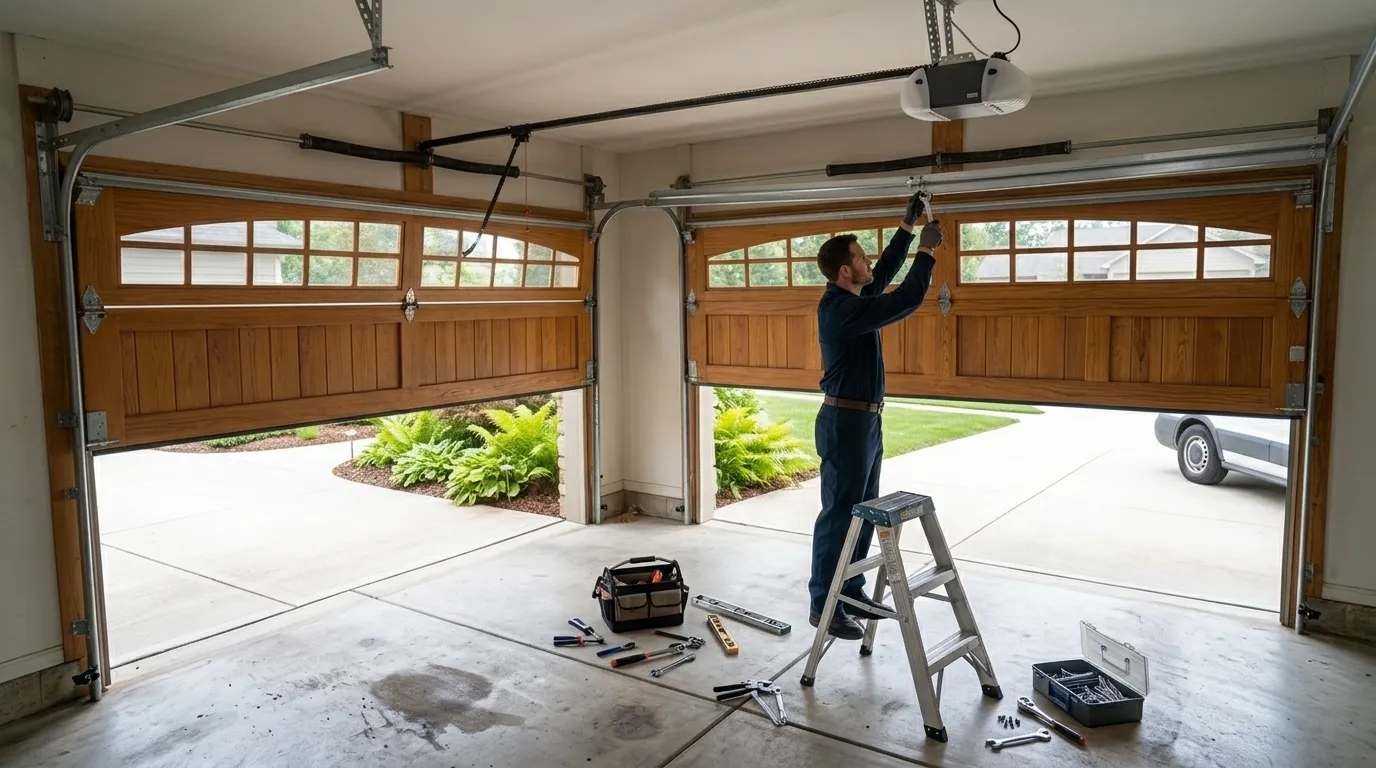
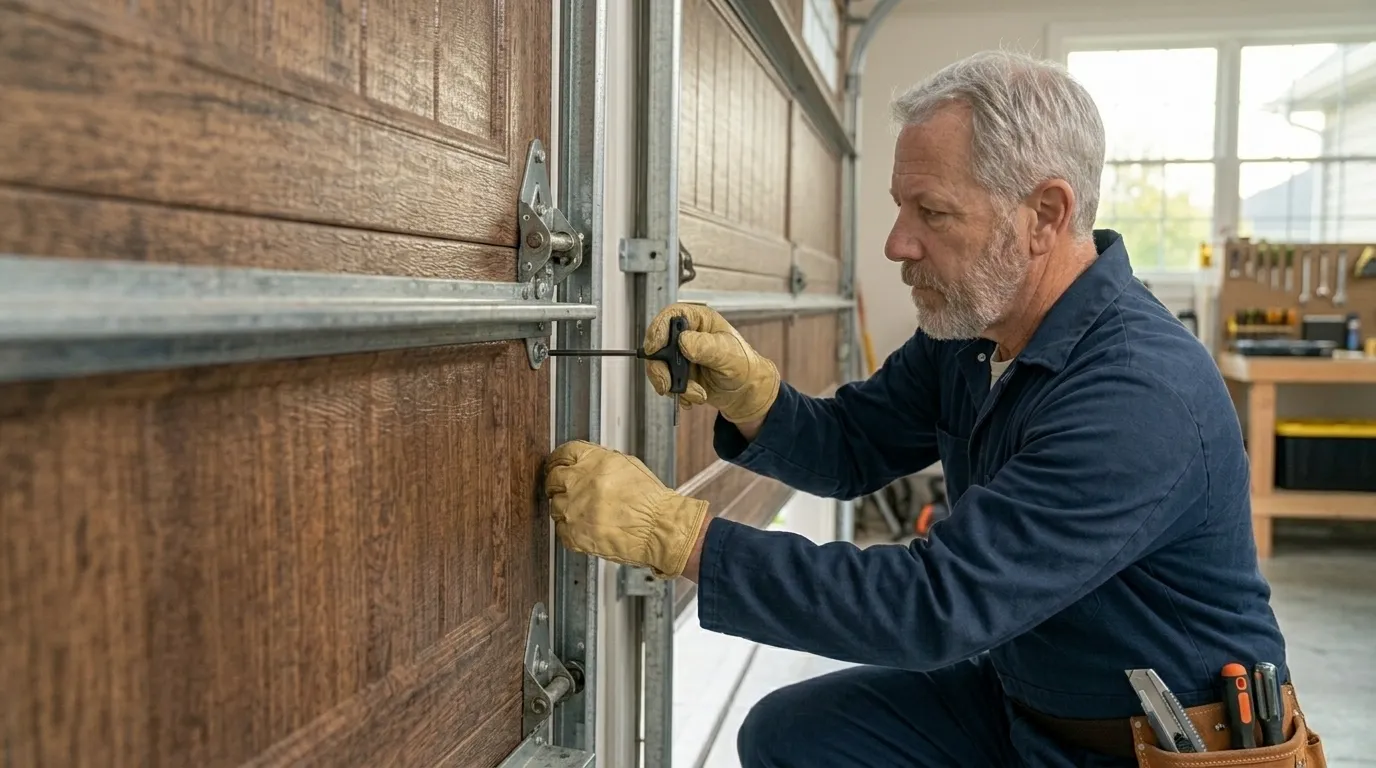
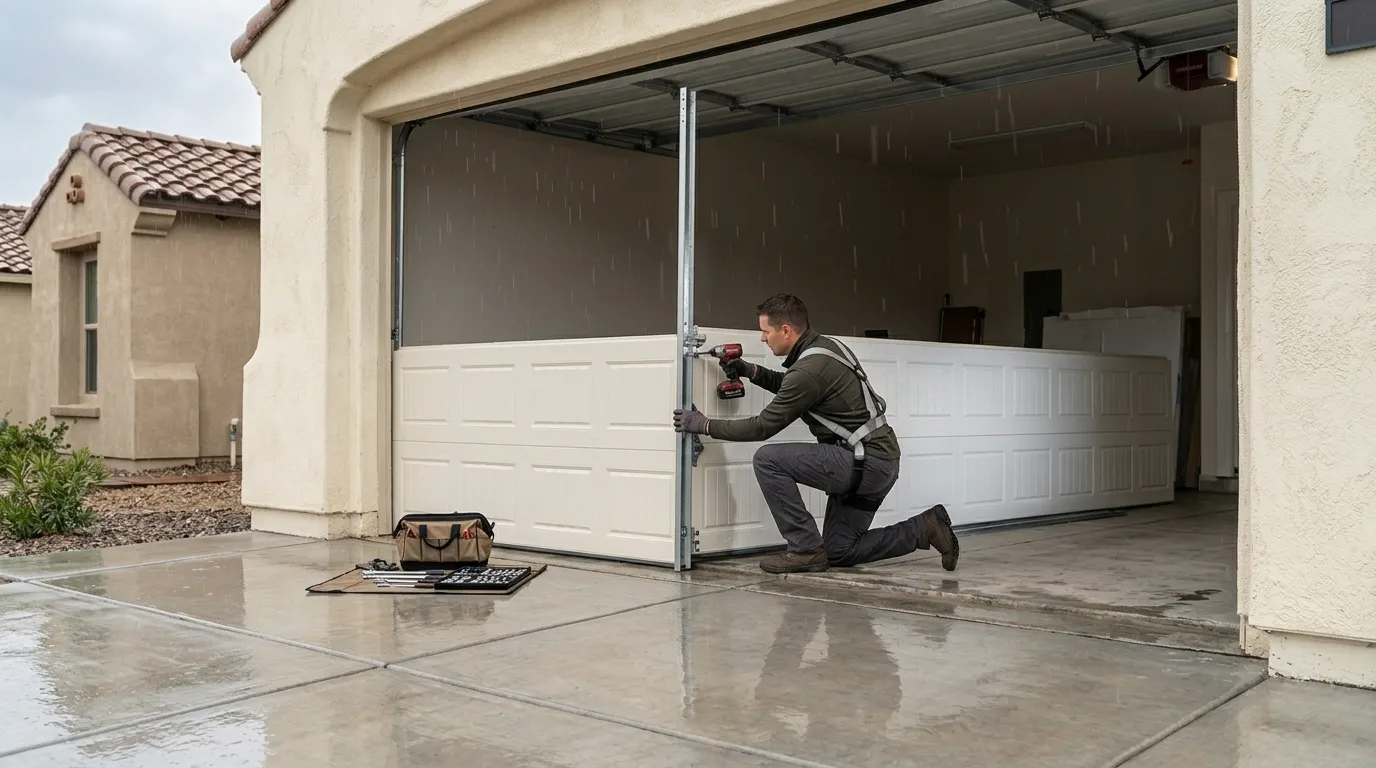
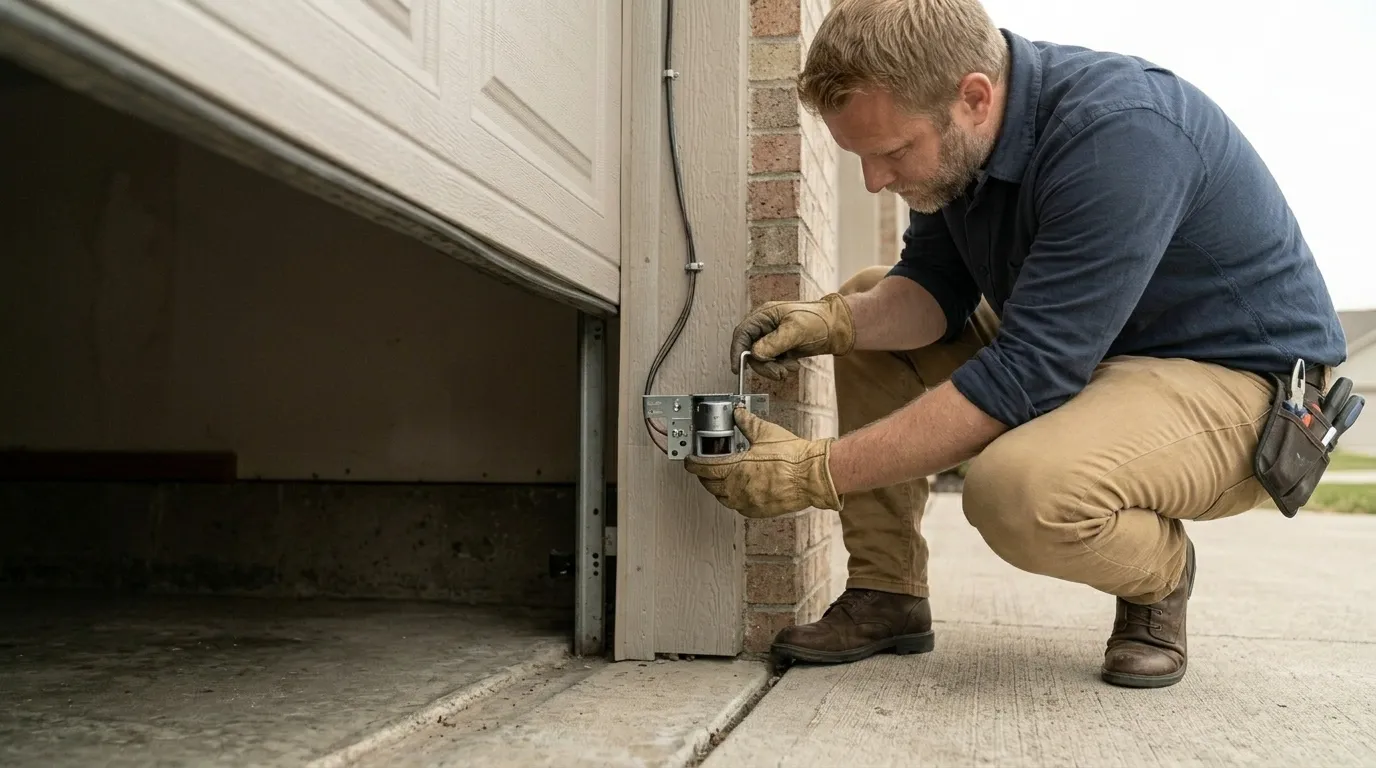
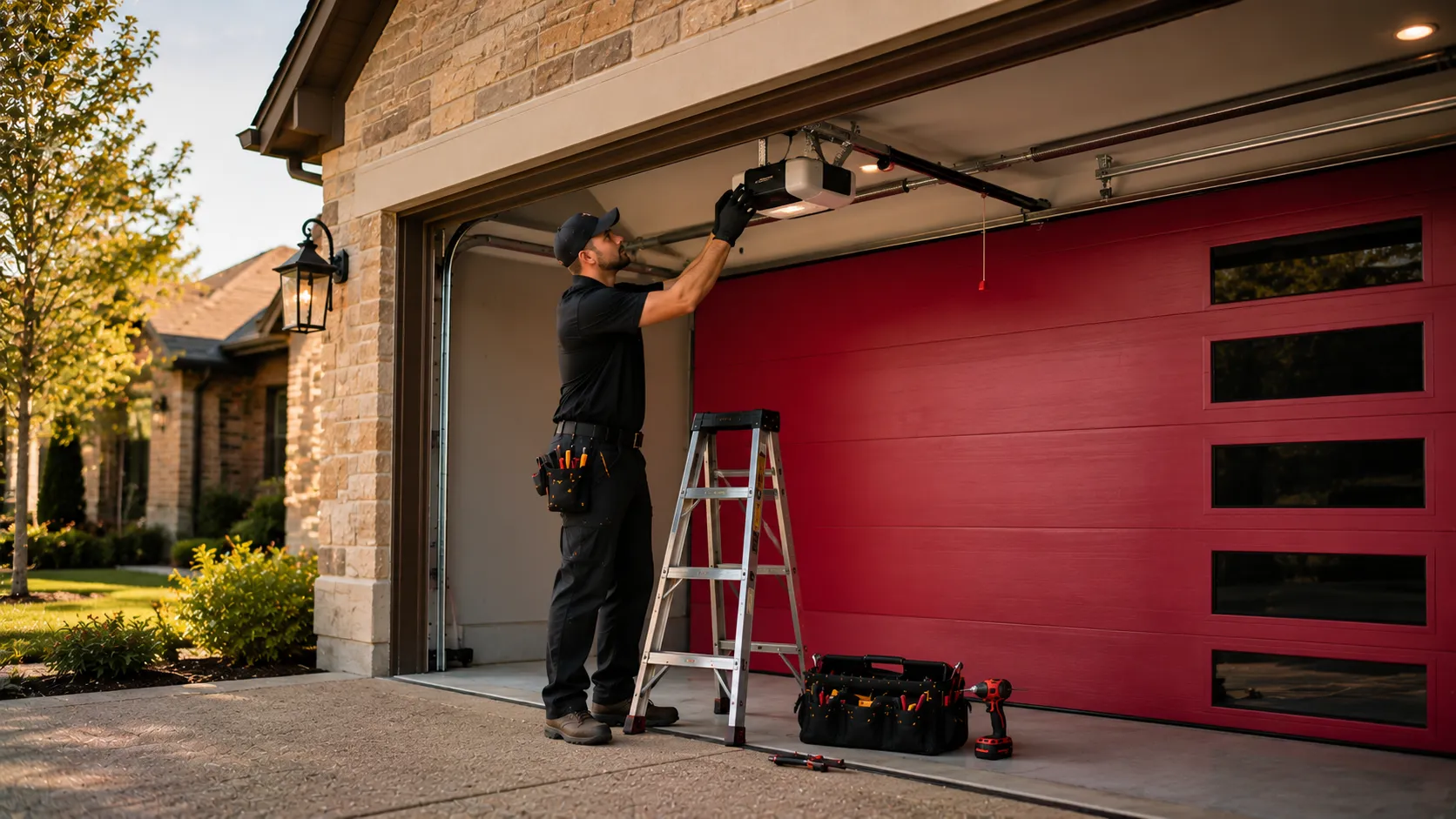
Taking out an old door on a house this age starts with checking whether the track and opening are still square - on a frame built around 1977, they often aren't, and that gets sorted before the new door goes on, not after. The old panel and its hardware come out, the jamb gets checked and shimmed where it's shifted, and the new track gets set level rather than just bolted to the old marks. The door goes up, gets balanced and the spring tensioned to its actual weight, and the opener gets mounted and paired to it. Because the climate here runs mild with the occasional freeze, we set weatherstripping and bottom seal for that swing rather than for a hard winter - it doesn't need the heavy cold-weather kit, just a seal that actually sits flat against a slab that's had decades to settle. Last step is running the door through its full cycle and checking the auto-reverse and safety sensors before we call it finished.