Stocked Parts
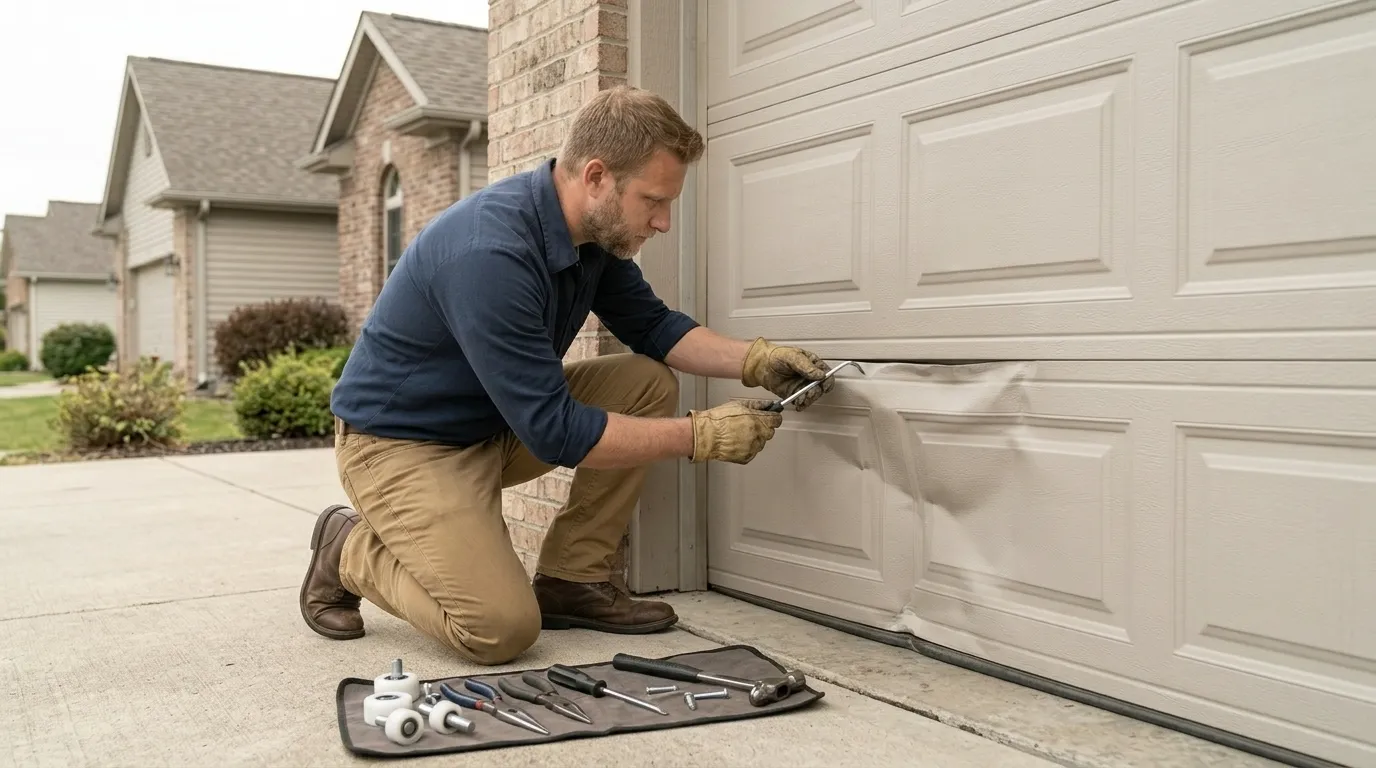
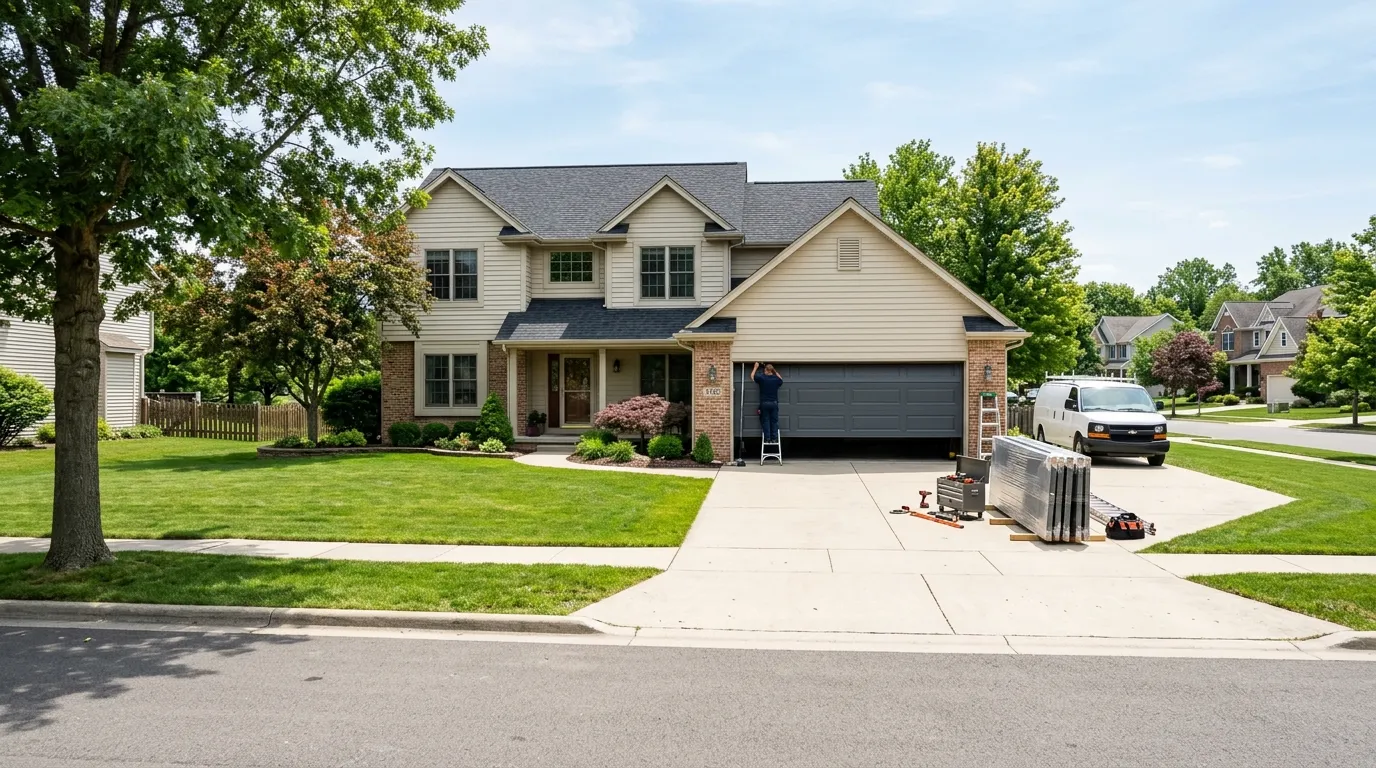
Most of the panel swaps we do out in Sheldon aren't from storm damage or a backed-into door - they're steel panels that have finally rusted through at the bottom seam or warped enough that the door won't seal against the slab anymore. Sheldon houses date mostly to 1977, a few years ahead of the 1981 median build year across the rest of the service area we cover from Humble, which means a good share of the original doors out here are still steel, single-layer, non-insulated panels on tracks that were never rebuilt.
That vintage matters for parts. A door from the late '70s often used panel widths and rib patterns that current manufacturers don't stock in an exact match - you can get close in a same-brand replacement door, but matching a single panel to the rest of an original run sometimes isn't possible. When that happens we're honest about it: sometimes the fix is one new section that's a close match, and sometimes it's cheaper and more honest to replace the whole door rather than chase a discontinued panel. We carry common panel sizes and finishes for the doors that show up most in this stretch of the service area, and we bring options for both insulated and non-insulated panels, since the climate here is mild with only occasional freeze, so insulation is a comfort choice more than a structural need.
Doing It Yourself
Swapping a single garage door panel yourself is possible if the door is a common size and the section bolts to standard hinges, but on a lot of the older Sheldon stock the fasteners and hinge spacing are non-standard enough that a DIY panel doesn't line up without shimming or a new hinge set entirely. If your door came in during that stretch of houses built through the late 1970s and 80s, measure the exact panel height and the hinge-hole spacing before you order anything online, because a panel that's a quarter inch off in either direction will bind against the roller track.
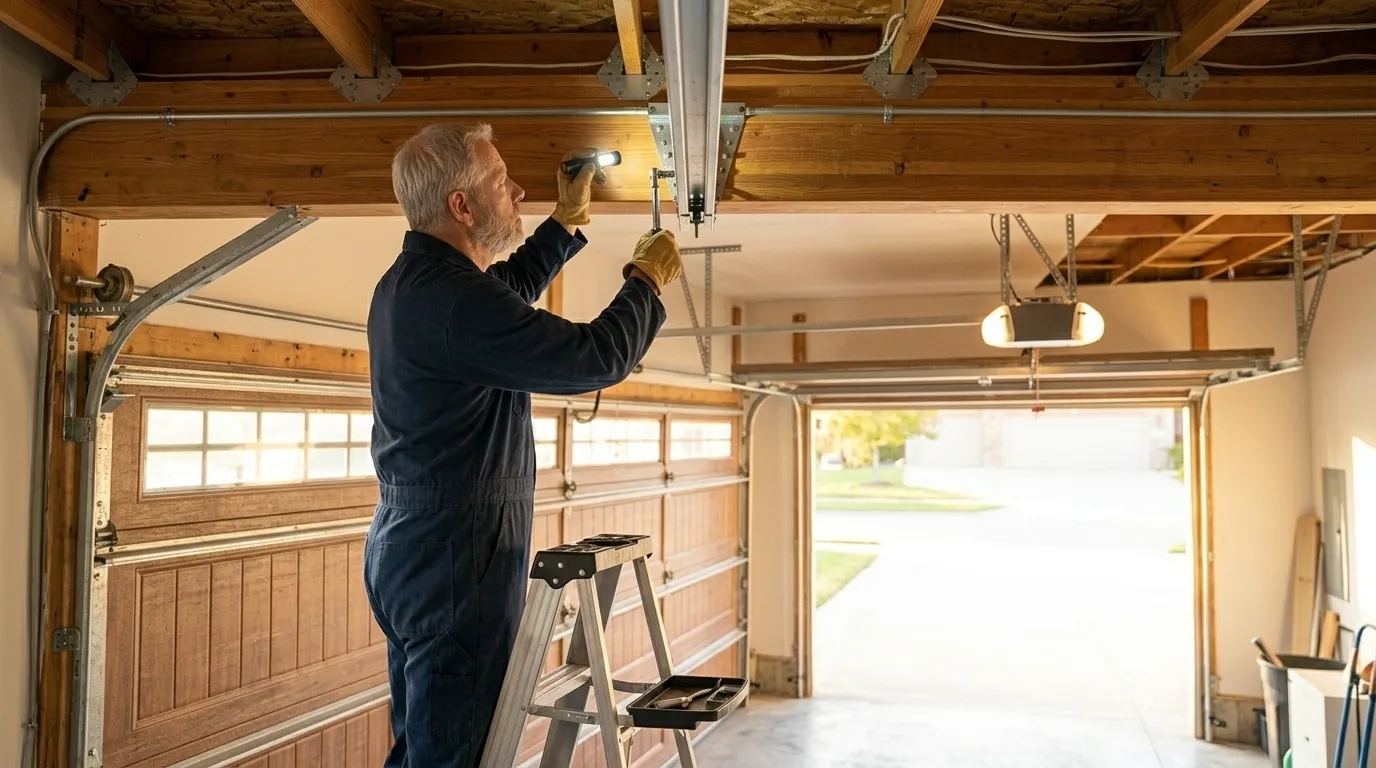
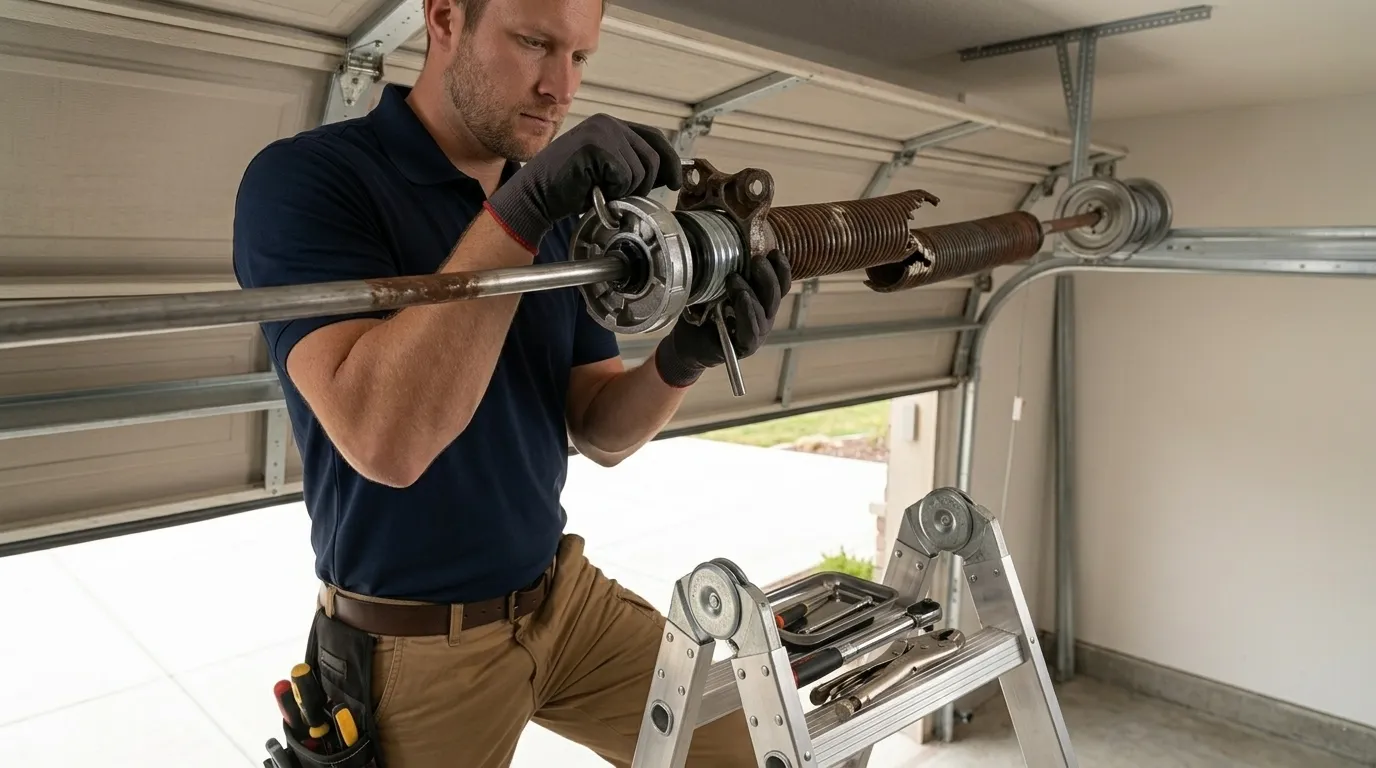
The other risk is the spring. Any time you take a panel off a door, especially a heavier double door, the torsion or extension spring is still under load and it can hurt you badly if you don't know how to lock it out. We're not going to talk you into calling us for a job you can do safely yourself with the right size door - if it's a newer door with a common panel from a big-box brand, a careful homeowner with the right tools can manage it. But if you're not sure what spring type you have or the door is one of the older steel ones common on this side of the service area, that's the point where a DIY attempt turns into a bigger repair bill than the panel itself.
Time on the Job
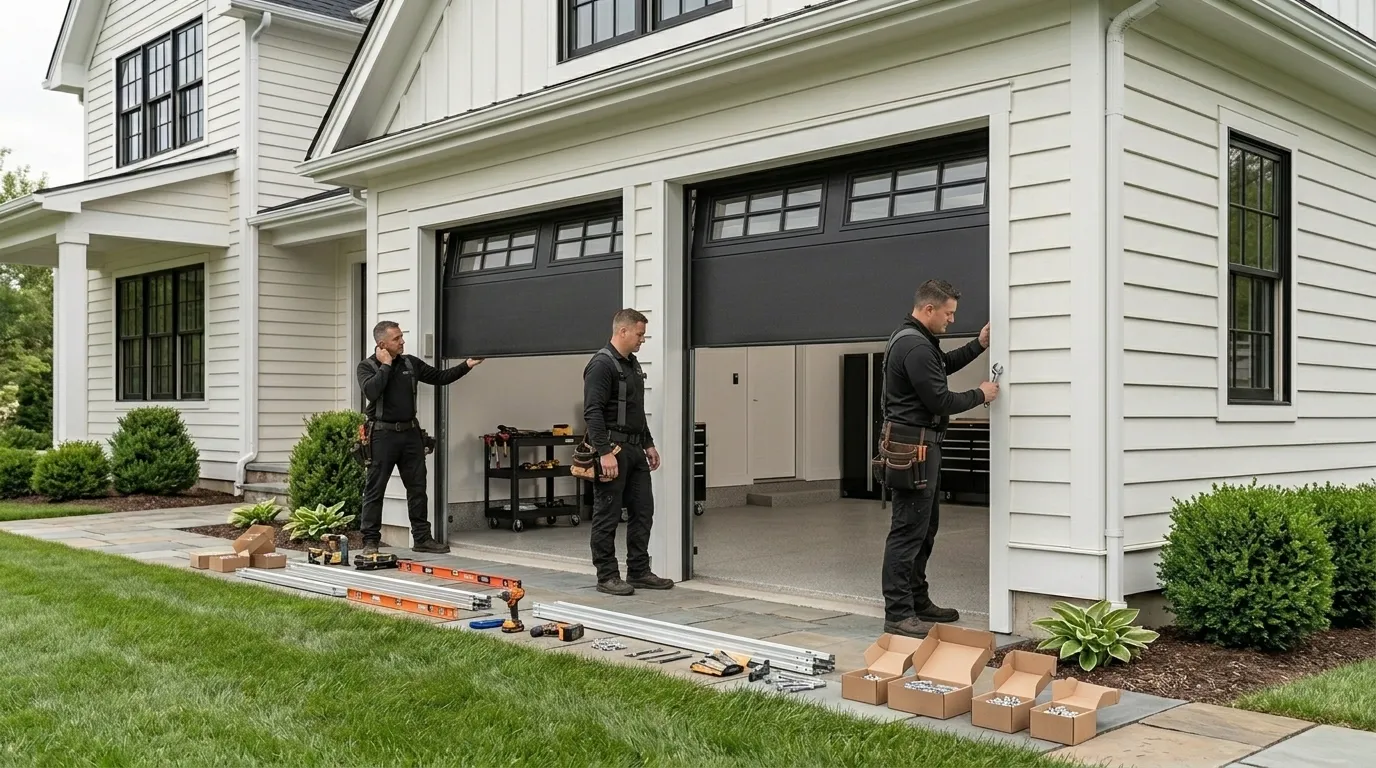
A straightforward matching panel on a newer, common door is usually the shortest version of this job - unbolt the old section, bolt in the new one, adjust cables and rollers, and check the balance. Add time when the door is one of the older steel doors that make up a chunk of Sheldon's housing stock, because those often need extra work freeing rusted bolts or reworking a hinge that's been bent for years. Add more time again if a track section has to come off to get the old panel clear, which happens more on the double doors from that same building era.
We travel out from Humble for every job in Sheldon - there's no branch office here - so the drive itself, about 12 miles each way, is worth factoring into when you book rather than into the repair itself. Once we're on site, the panel swap doesn't take noticeably longer just because of the distance; it's the condition of the hardware underneath that adds time, not the trip to get there.
What the Repair Takes
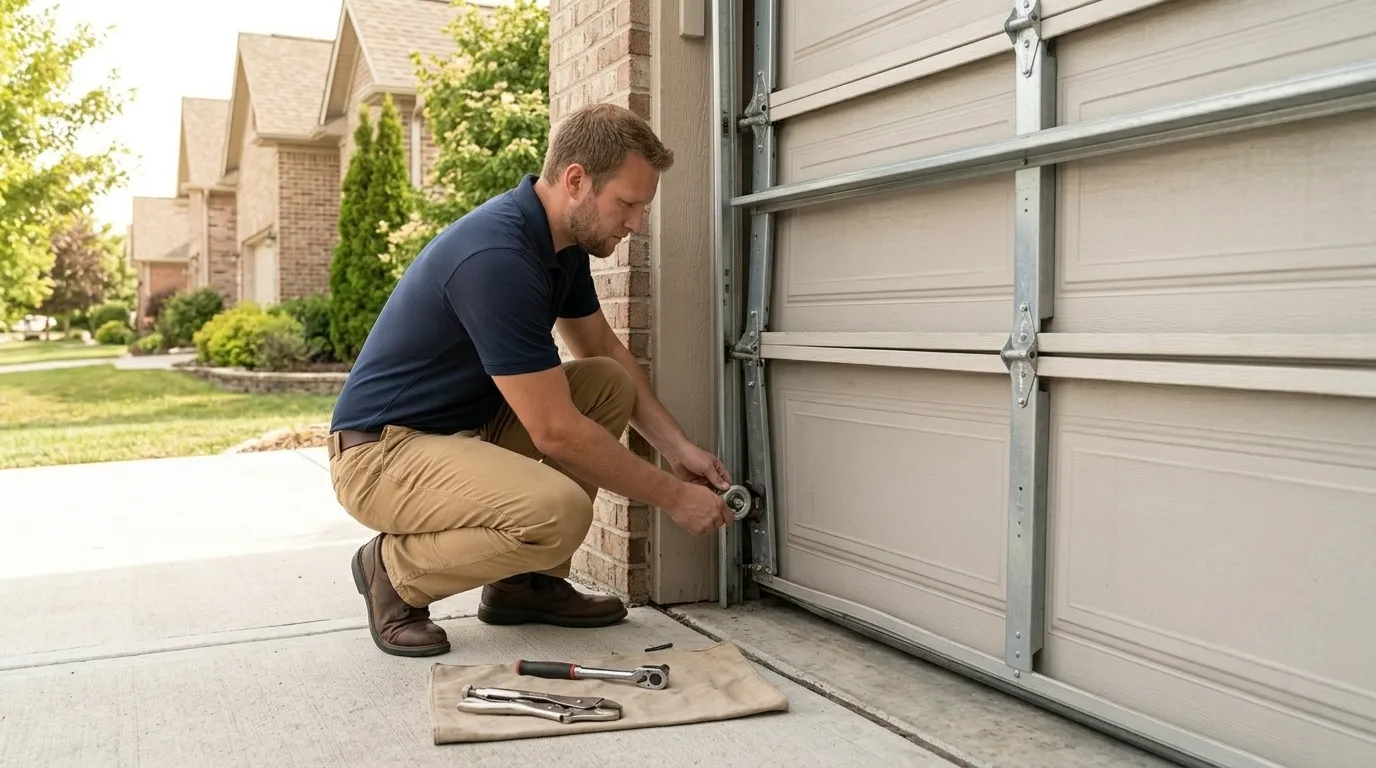
Getting a panel out cleanly starts with locking the spring so the door can't come down on you, then pulling the hinges that hold the damaged section to the panels above and below it. On the older doors common in Sheldon, those hinges are often the original hardware, and the bolts have usually rusted enough that they need to be cut rather than backed out with a socket. Once the section is free, we check the track and rollers on that side, because a warped panel usually means the roller's been running crooked for a while, not just that one bad hit.
The part we can't always control is lead time. If your door needs a panel that matches an exact color, rib pattern, or width from a production run that's twenty or thirty years old, we may have to special-order it, and that can take longer than the swap itself. We'll tell you that up front rather than promise a same-day fix on a panel we don't have in stock. Where the match isn't available at all, we'll walk you through what a full door replacement looks like instead, since a mismatched panel on an otherwise old door usually just makes the door a poor patch job rather than a real fix.