Season by Season
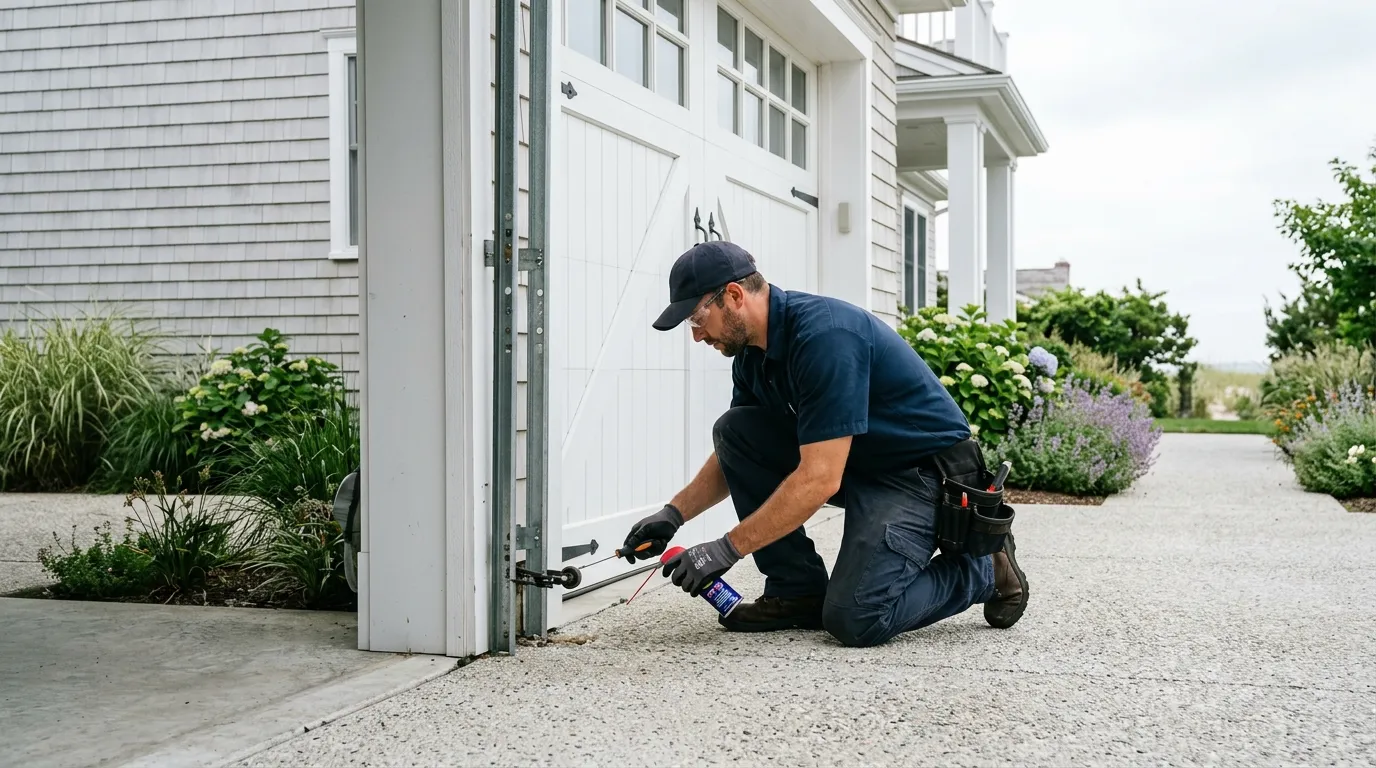
Humble sits in a mild climate band that still sees occasional hard freezes, not the deep freeze-thaw cycles of a true winter climate. That matters for how a door sounds through the year. In the stretch of colder mornings, steel torsion springs contract a little, and a door that ran quiet in October can start to groan or thud on the first pull of a cold snap - the metal is stiffer, the lubricant inside the coils is thicker, and slack in the cable shows up as a bang instead of a smooth roll. Come the long hot, humid stretch, it flips: wood-composite panels and jamb frames swell slightly, tracks that were plumb in winter bind a hair, and openers strain harder to pull a door that's suddenly a little tighter in its frame. Neither extreme is severe here, which is exactly the trap - the hardware in this area was never built to shrug off routine deep freezes, so the occasional one still finds the weak spring or the dry roller. A door that's quiet in April and starts talking in January isn't announcing a new problem. It's usually telling you about wear that was already there, just muffled until the temperature moved.
What to Look At First
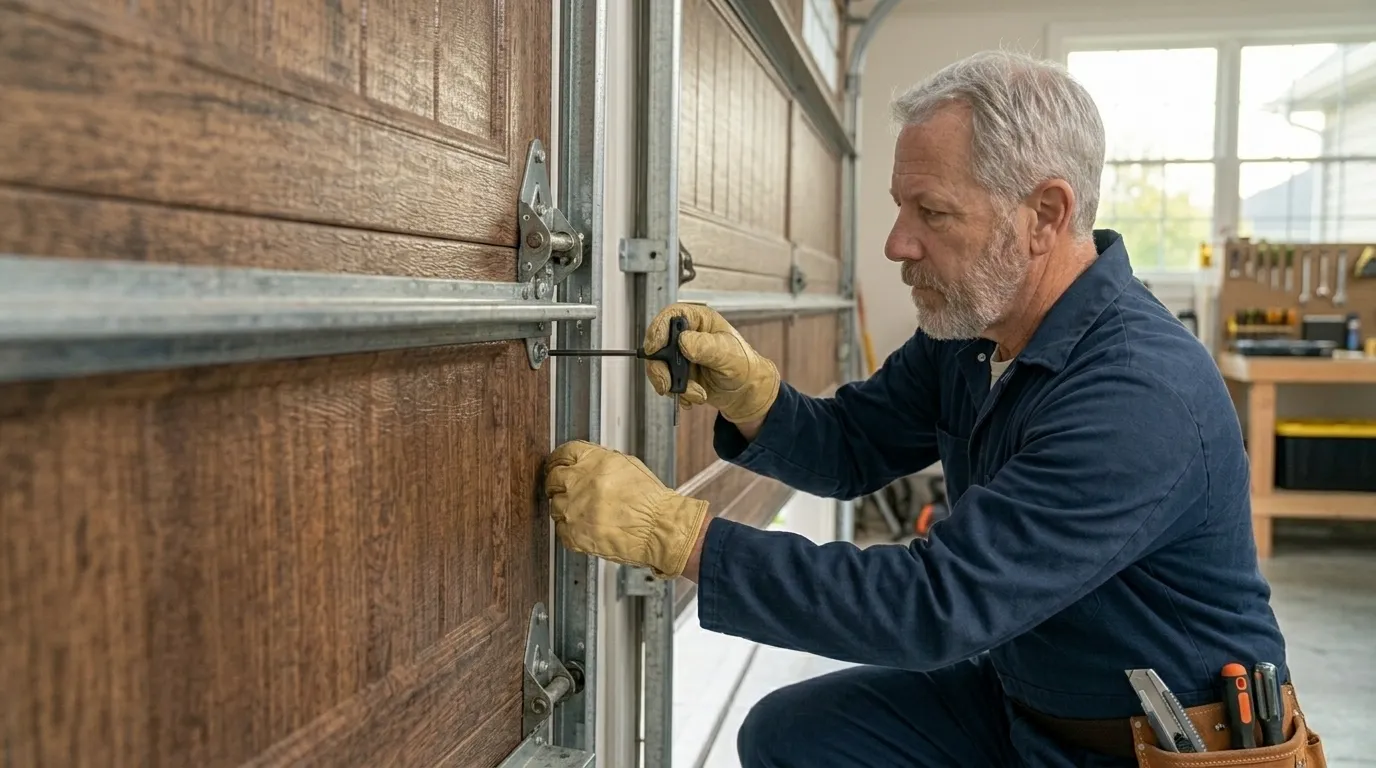
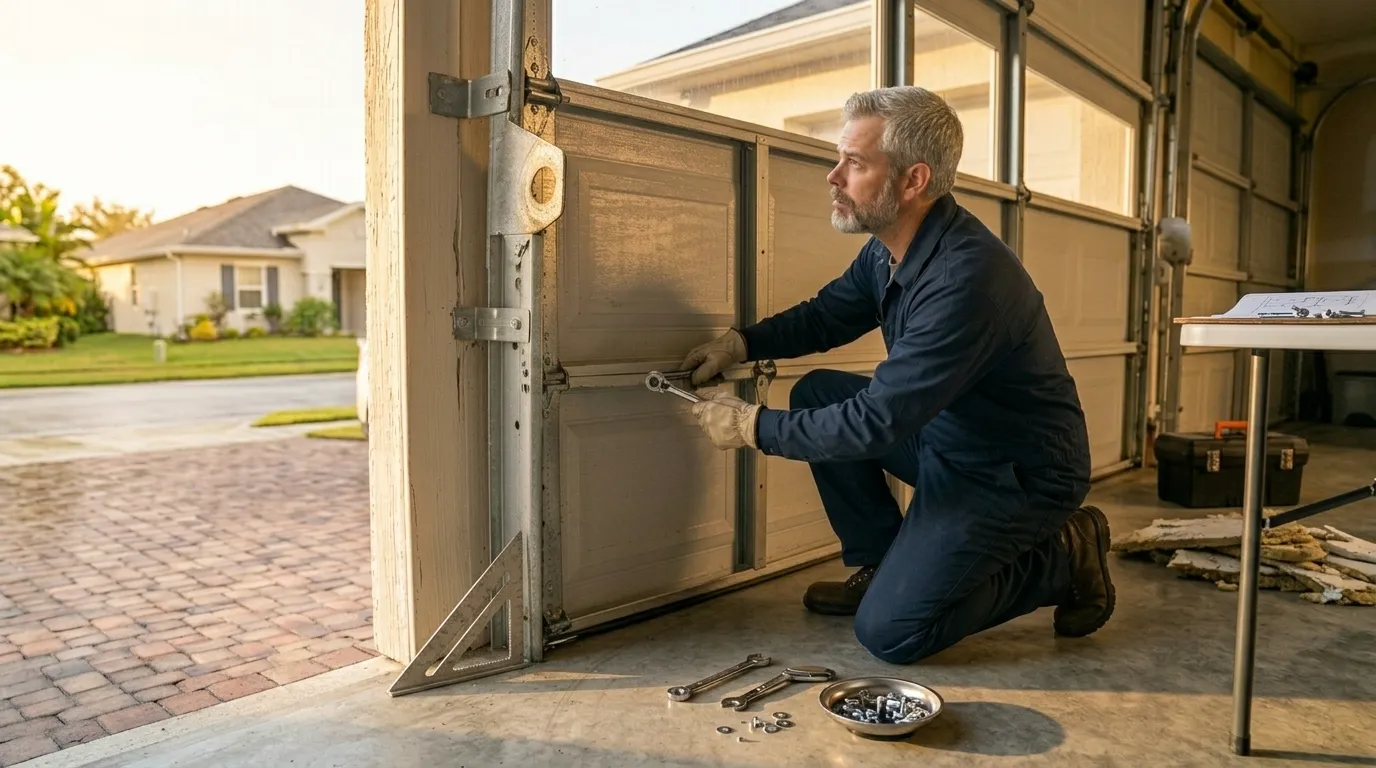
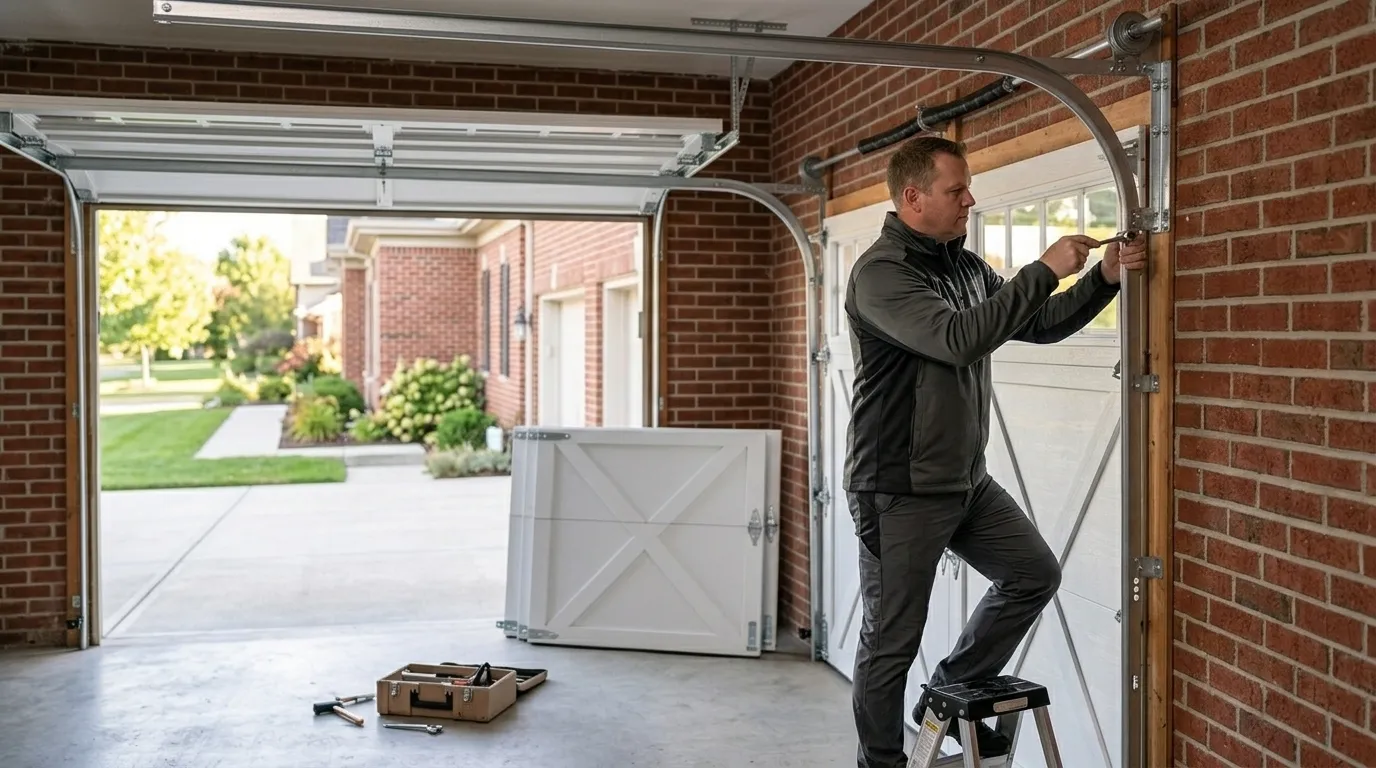
Housing across the service area went up mostly between 1956 and 2011, with the median build year landing around 1981, and most of the stock in the 18 named areas we cover dates to the 1980s and 90s. That era matters more than most homeowners realize. A lot of these doors were fitted with the torsion springs and chain-drive openers standard to that period, and thirty-plus years is well past the working life of a spring even if it's never fully failed. Start by looking at the spring itself - a visible gap in one of the coils, or rust bridging the winds, means it's past due regardless of what noise it's making. Next look at the rollers: steel rollers from that era wear a flat spot and start to clunk with each rotation, where nylon replacements roll quiet. Then check the opener's drive gear, a common failure point once a chain-drive unit from the 80s or 90s hits its second or third decade - it strips slowly, and the grinding gets louder each week rather than showing up all at once. If your house falls in that build window, these three spots are where the noise is coming from before you look anywhere else.
How Local Conditions Play In
With 17,400 owner-occupied houses among the 30,112 households across this service area, a lot of doors are original to houses built in that same 1981-median window, and they're carrying original springs and openers into a climate that gives them occasional freezes to fail on. That combination - older hardware, a mild climate with just enough cold snaps to stress it - is why noise complaints here cluster in the same few weeks each winter rather than spreading evenly across the year. A household in this area earns a median $70,478, which puts a full spring-and-cable job well within reach without shopping the cheapest bid, and that's worth knowing before you let a noisy door run for another season to save money. We can't get to every noise the same day parts are needed - some opener gear kits and less common spring sizes for older doors take a few days to source, and we'll tell you that up front rather than promise a same-visit fix we can't back up. Across the areas we reach, from Aldine and Kingwood in close to Dayton and Splendora further out, the story is the same: it's the age of the door meeting the swing in temperature, not one dramatic event.