Season by Season
Humble sits in a mild climate band with only occasional freeze events, and that swing matters more than people think. Most of the year the metal track and rollers run warm, which lets steel expand slightly and rubber rollers stay flexible. When a cold front does push through and temperatures drop near freezing, that same track contracts a fraction of an inch and a plastic roller that was already worn can crack or bind instead of rolling smooth. It's not the deep-freeze damage you'd see further north - we don't get the frost-heave problems that crack slab foundations and pull anchor brackets out of true. What we do get is a slow cycle: humid heat most months, a handful of freeze mornings each winter, repeated year after year. That cycle is what loosens track bolts and glazes old rollers, not any single dramatic event. If your door has started binding or popping on the same cold mornings each year, that's the pattern, not a coincidence.
What to Look At First
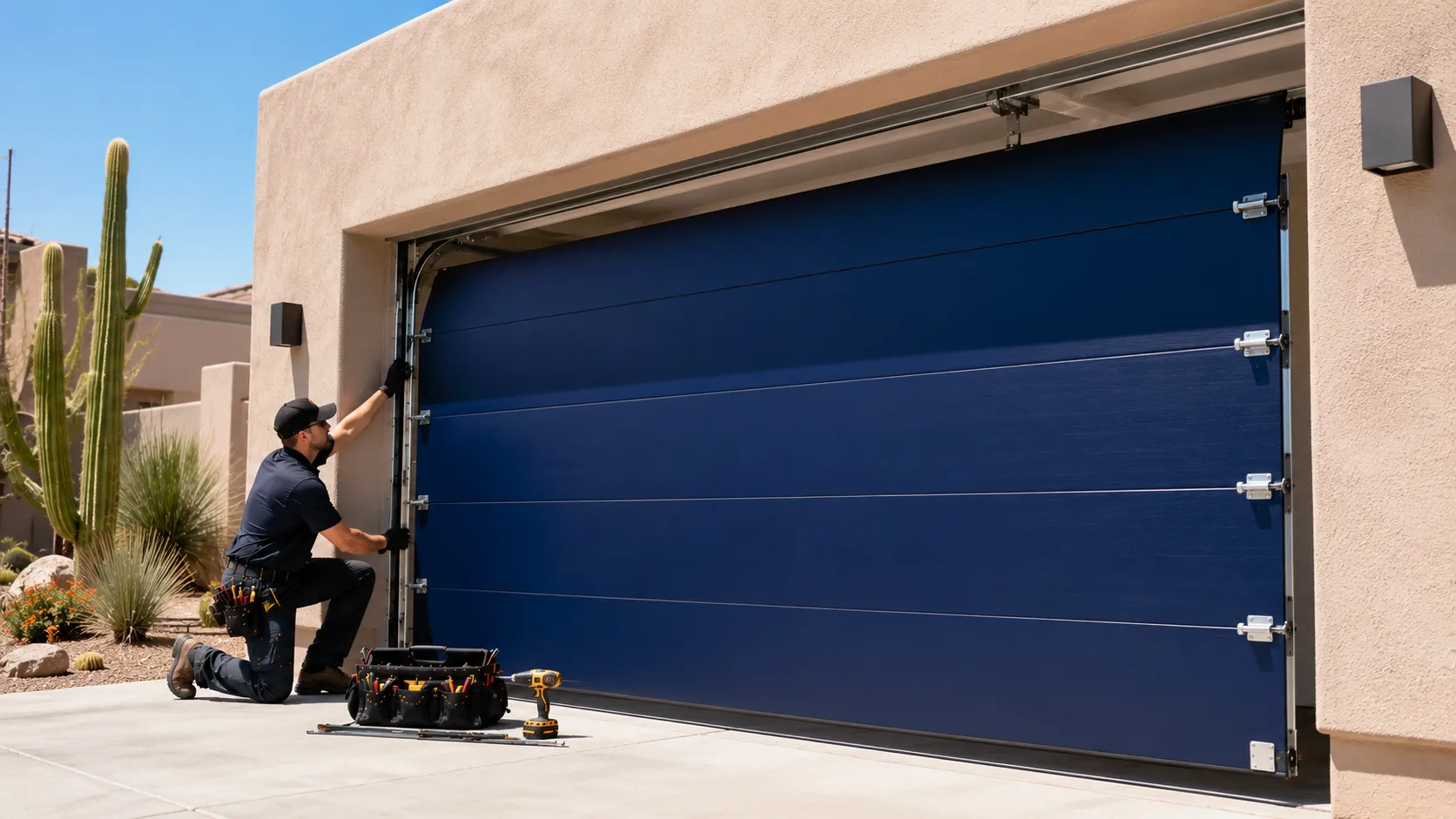
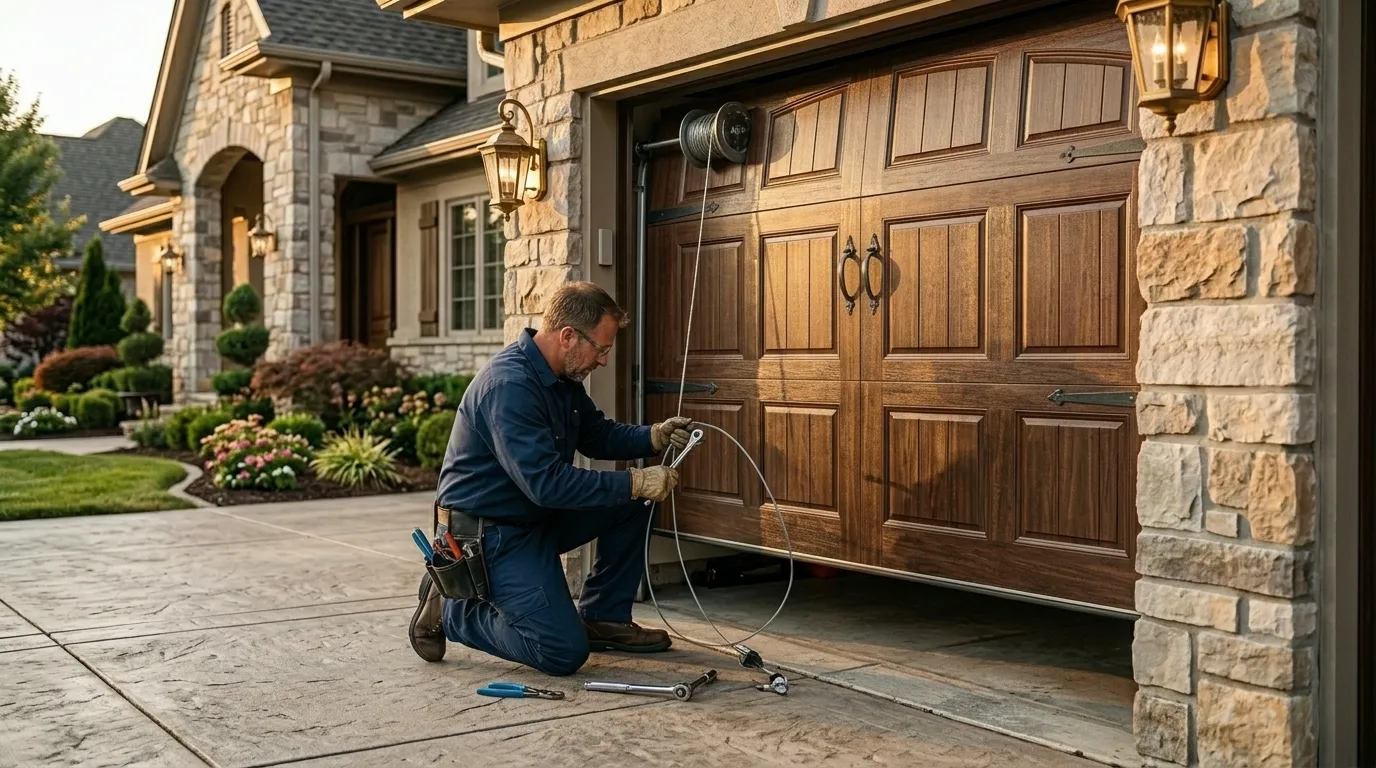
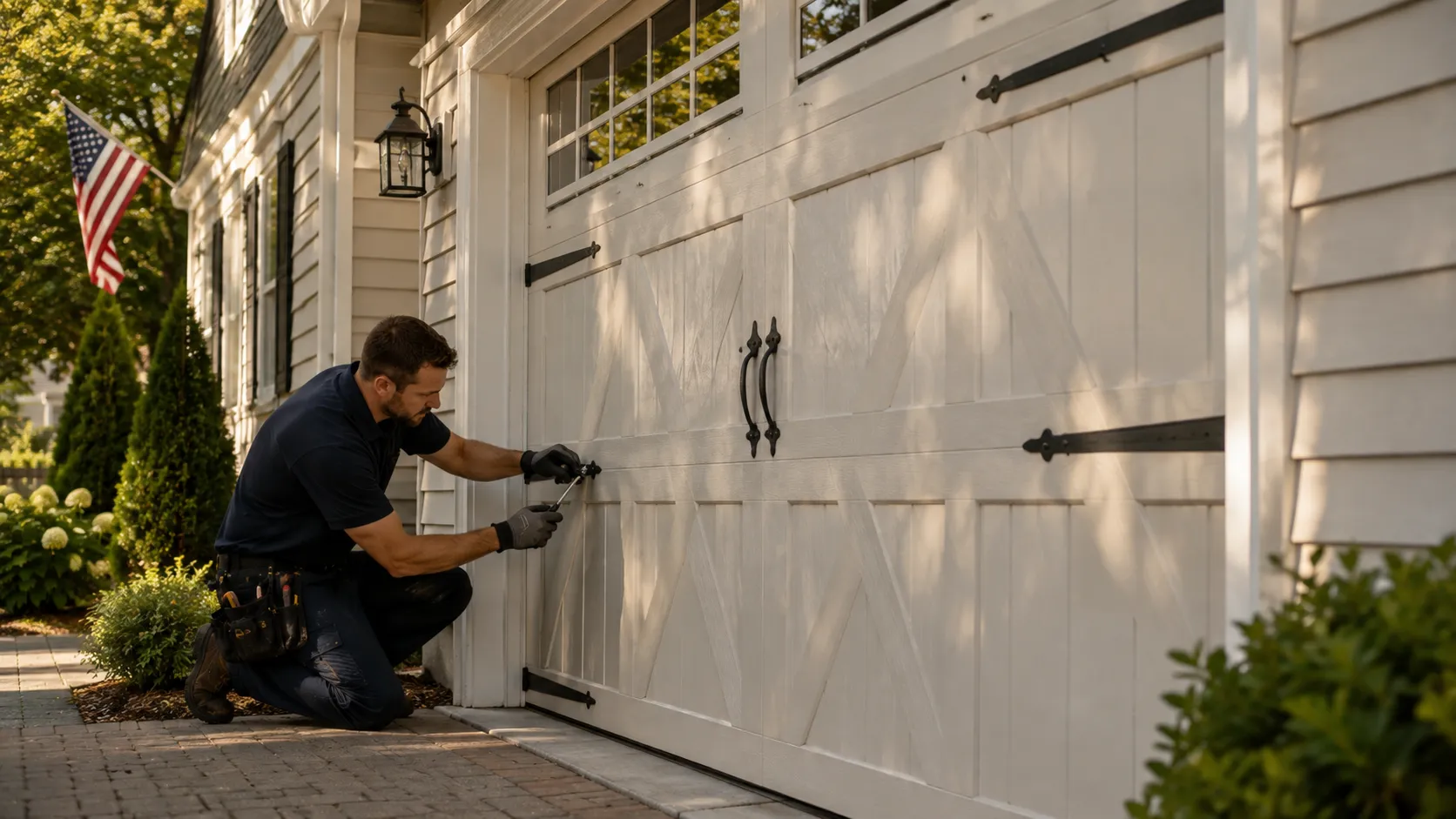
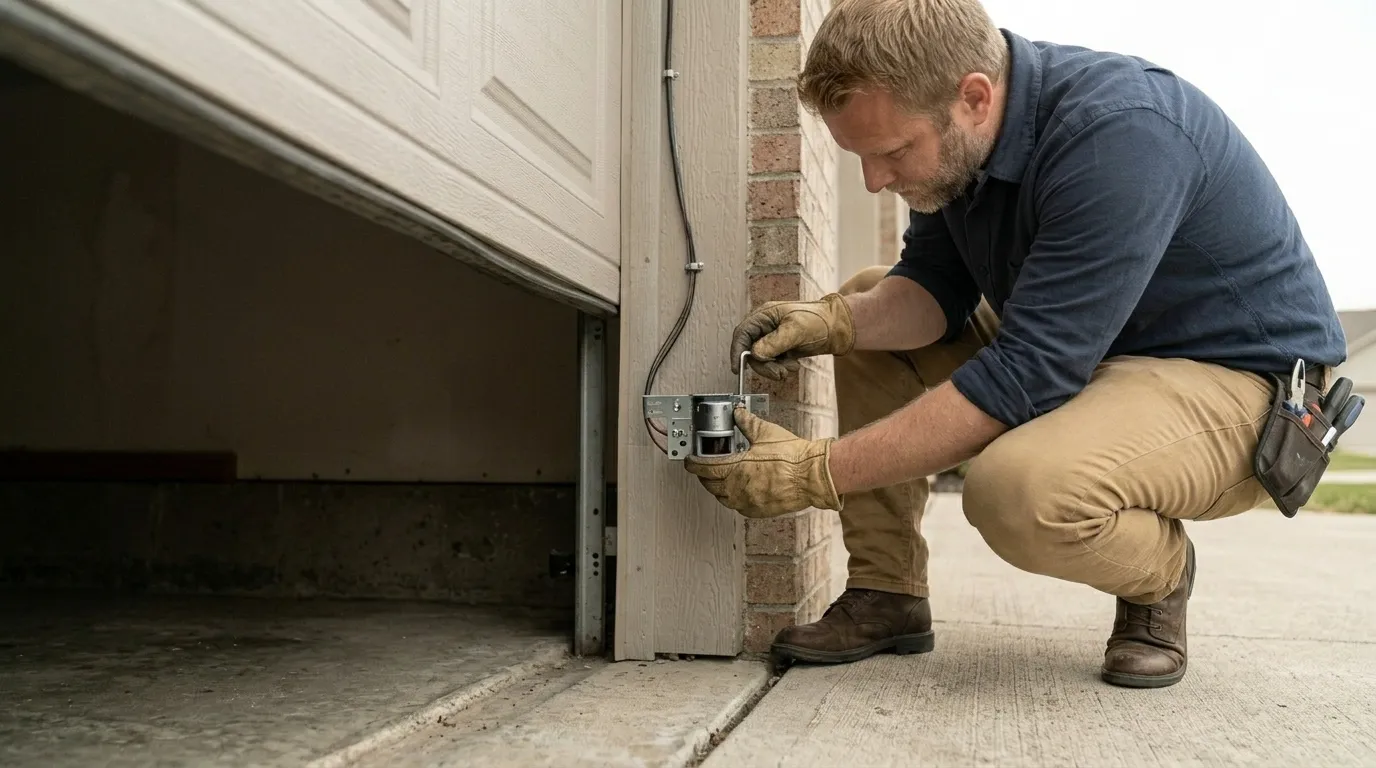
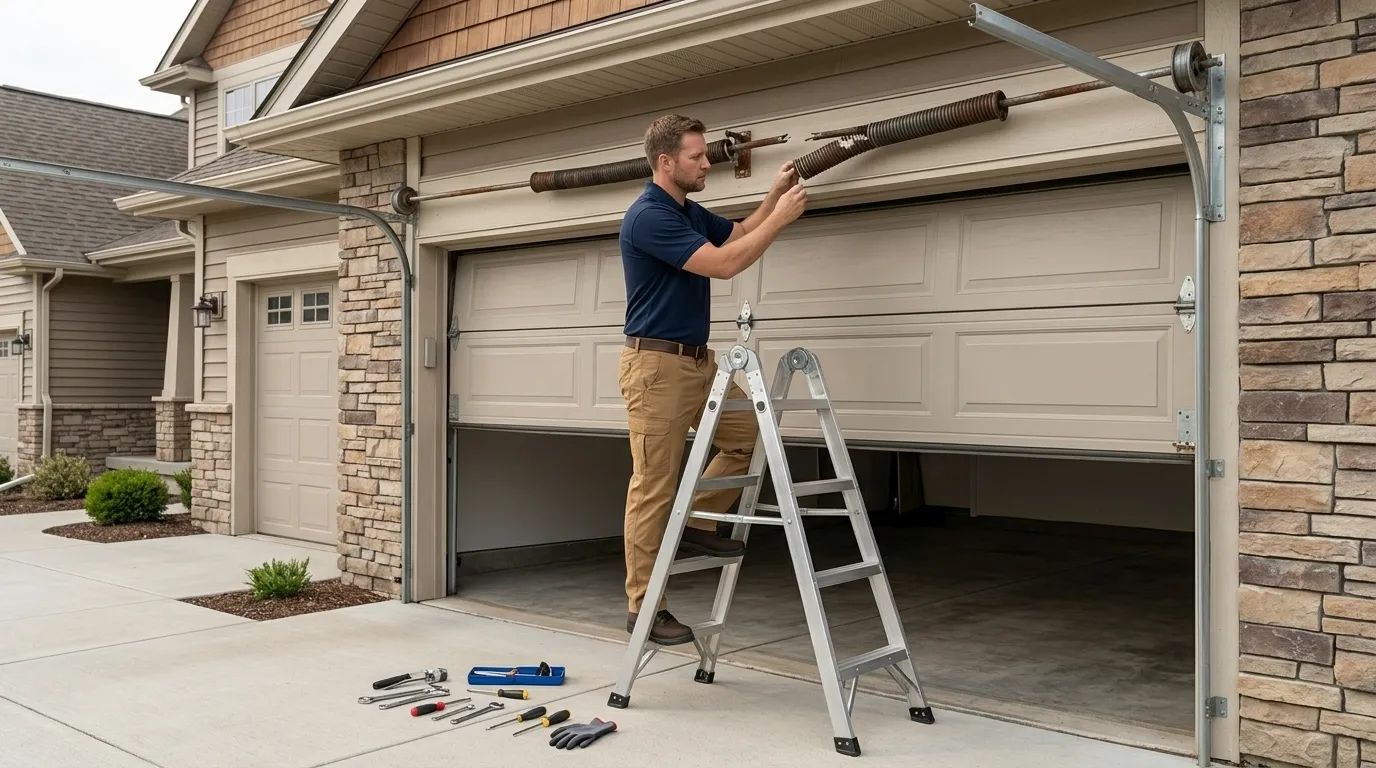
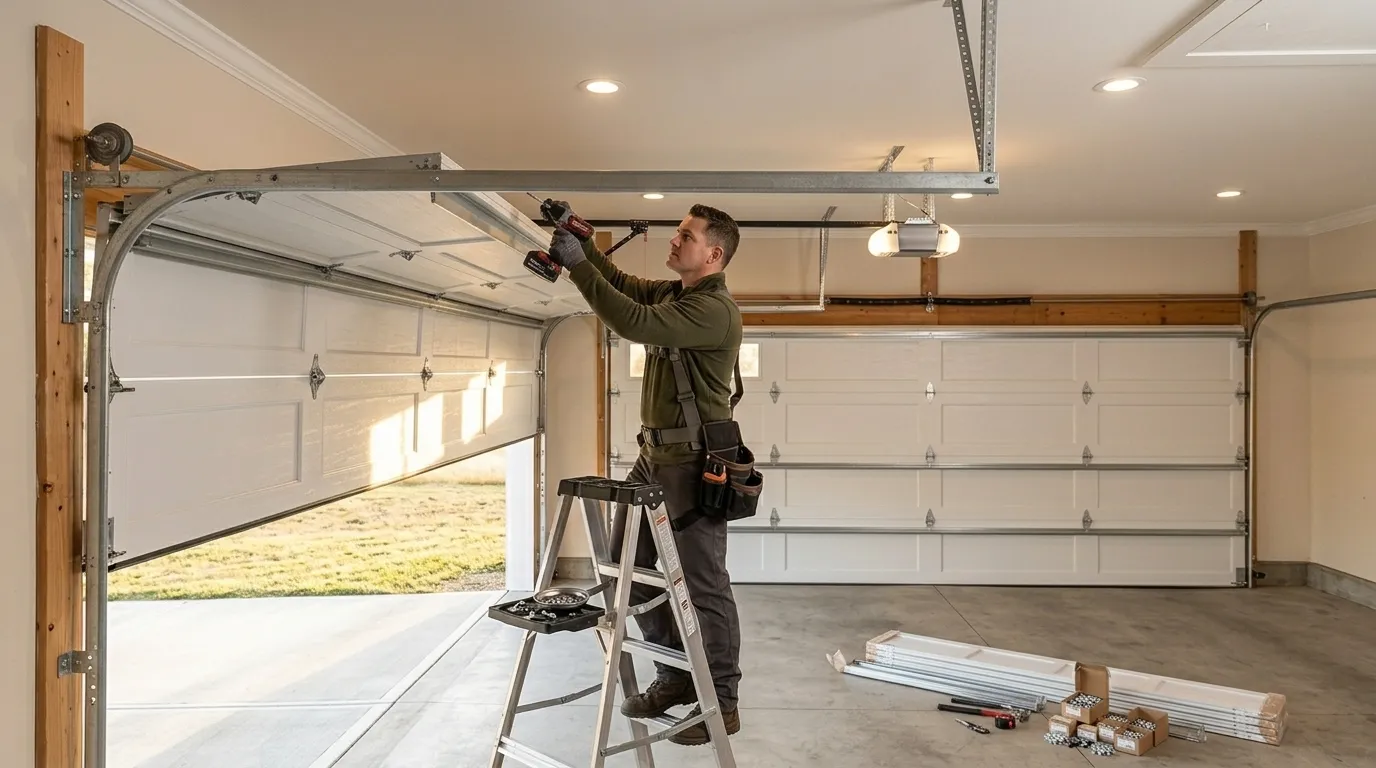
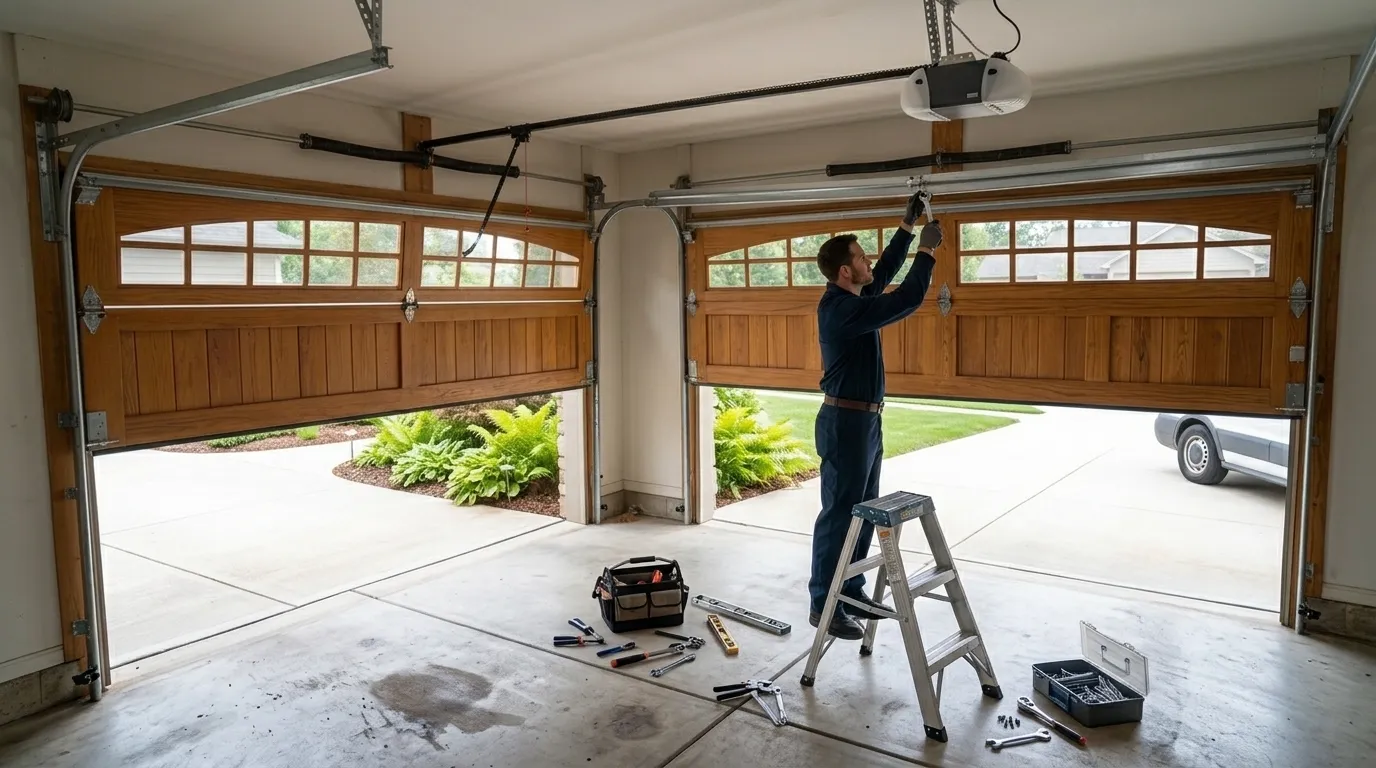
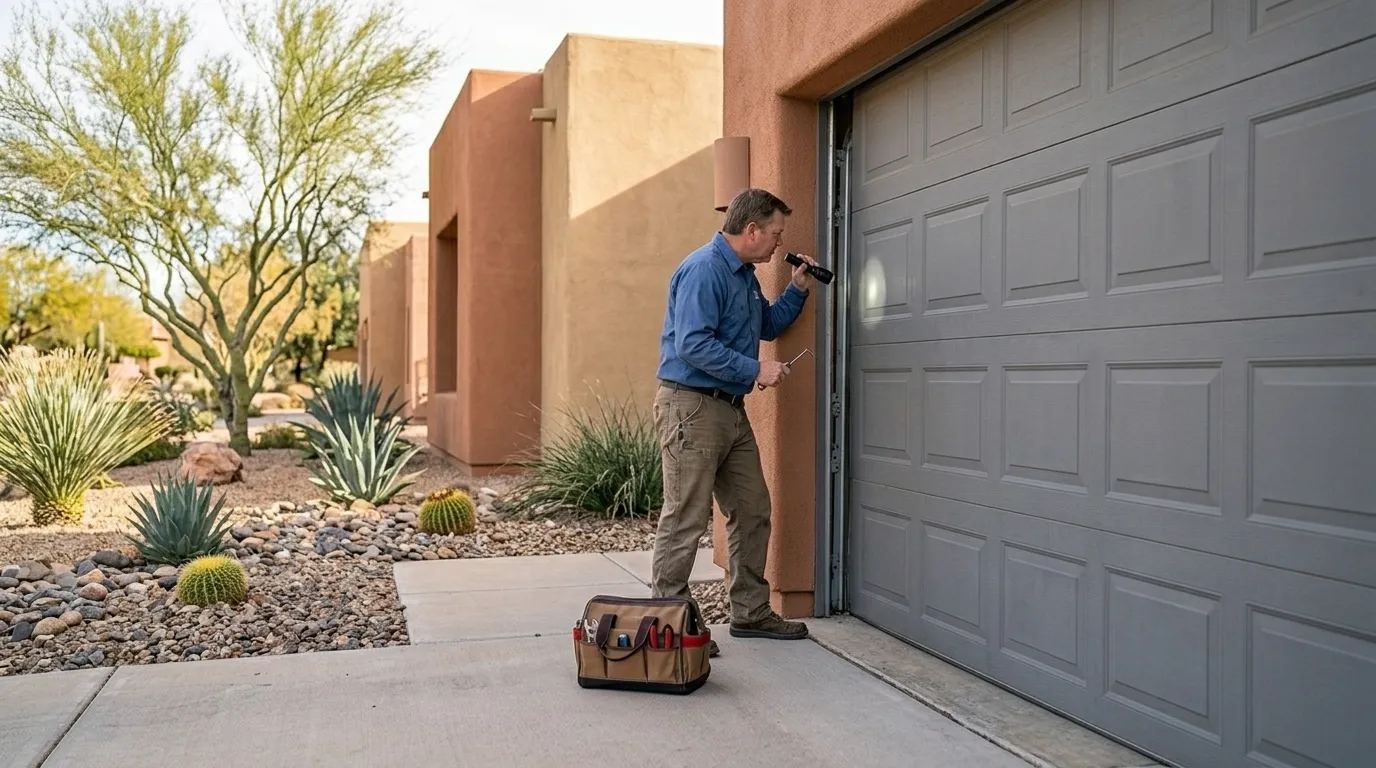
Given that housing across this service area was built between 1956 and 2011, with the median home going up around 1981, a lot of what's on these doors is original track and hardware from that era. Start at the brackets that hold the vertical track to the frame - on a door pushing forty years old, those lag screws have backed out a turn or two from thousands of open-and-close cycles, and a bracket that's even a little loose lets the track flex sideways every time the door runs past it. Next look at the rollers themselves. Original steel rollers from 1980s and 90s installs don't have sealed bearings, so they wear a groove that lets the door wander off center. Check the track for a visible bow or a spot where it's pinched narrower than the rest - that's usually where a door has jumped before and been forced back on without the track being straightened. None of this takes tools, just a flashlight and five minutes before you call anyone out.
How Local Conditions Play In
Across the eighteen named areas that make up most of this housing stock, the pattern is consistent: 1980s and 90s builds with original one-piece track systems that were never upgraded when the opener or panels were replaced. That matters here because Humble's climate doesn't force annual hardware replacement the way a harder freeze-thaw region would - so track that would've been swapped out on schedule elsewhere just keeps running, wearing a little more each mild summer and taking a little more strain on the handful of freeze mornings each winter. With median household income here around $70,478 and roughly 17,400 owner-occupied houses in the service area, a lot of owners are maintaining a door that's outlasted at least one opener already. One honest limit: if the track itself is bent rather than just loose, straightening it rarely holds - past a certain point replacing that section is cheaper than a callback in six months.