The Split Between Old and New
Barrett's houses run older than most of what we see across the rest of the coverage area. The median build year here is 1976, while the broader service area spans 1956 to 2011 with a median of 1981. That five-year gap sounds small until you're standing in front of the door. A house built in the mid-70s almost never has the same garage door hardware as one built in the 90s, and Barrett has more of the older kind than most of its neighbors.
The practical result: fewer of the sectional steel doors on extension springs that showed up once builders standardized in the 80s and 90s, and more of the earlier setups - single-panel or early sectional doors, often on hardware that's been replaced piecemeal over decades rather than swapped out as a full unit. If your opener looks like it was added ten or fifteen years after the door itself, that's normal for a house this age, not a red flag on its own.
We don't guess at a home's age from the street. We look at the track style, the spring type, and how the panels are hung before we say what's wrong or what it'll cost to fix.
What the Housing Means for Your Door
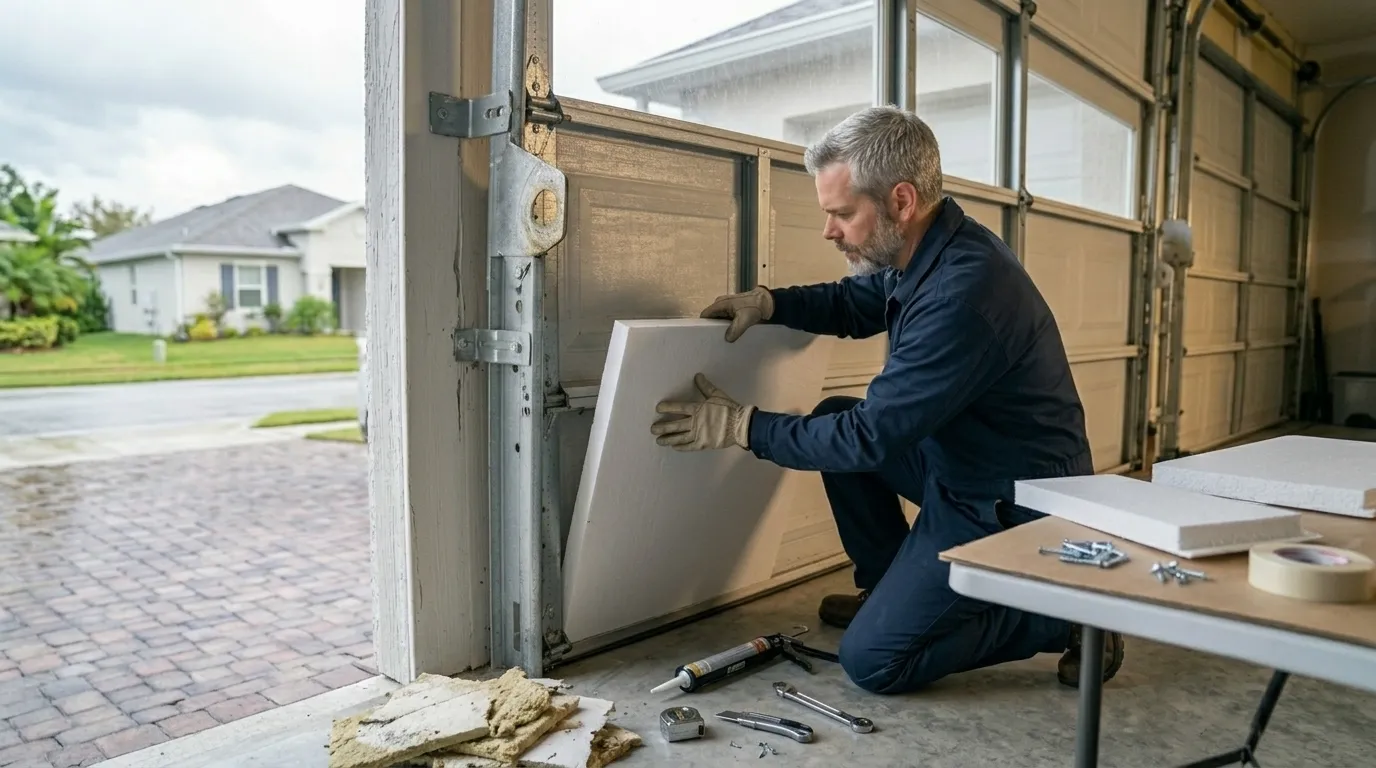
With a 1976 median build year, a lot of Barrett garages still run torsion or extension spring setups that predate the more standardized doors you'd find in 1980s-90s stock. Older tracks tend to be narrower gauge steel, which means more roller noise over time and more sensitivity to a door that's slightly out of square. Panels from this era are also more likely to have been repainted or patched rather than replaced, so color match on a single-panel repair can be a real problem - sometimes full-door replacement is the more honest answer than trying to blend a 40-year-old panel color.
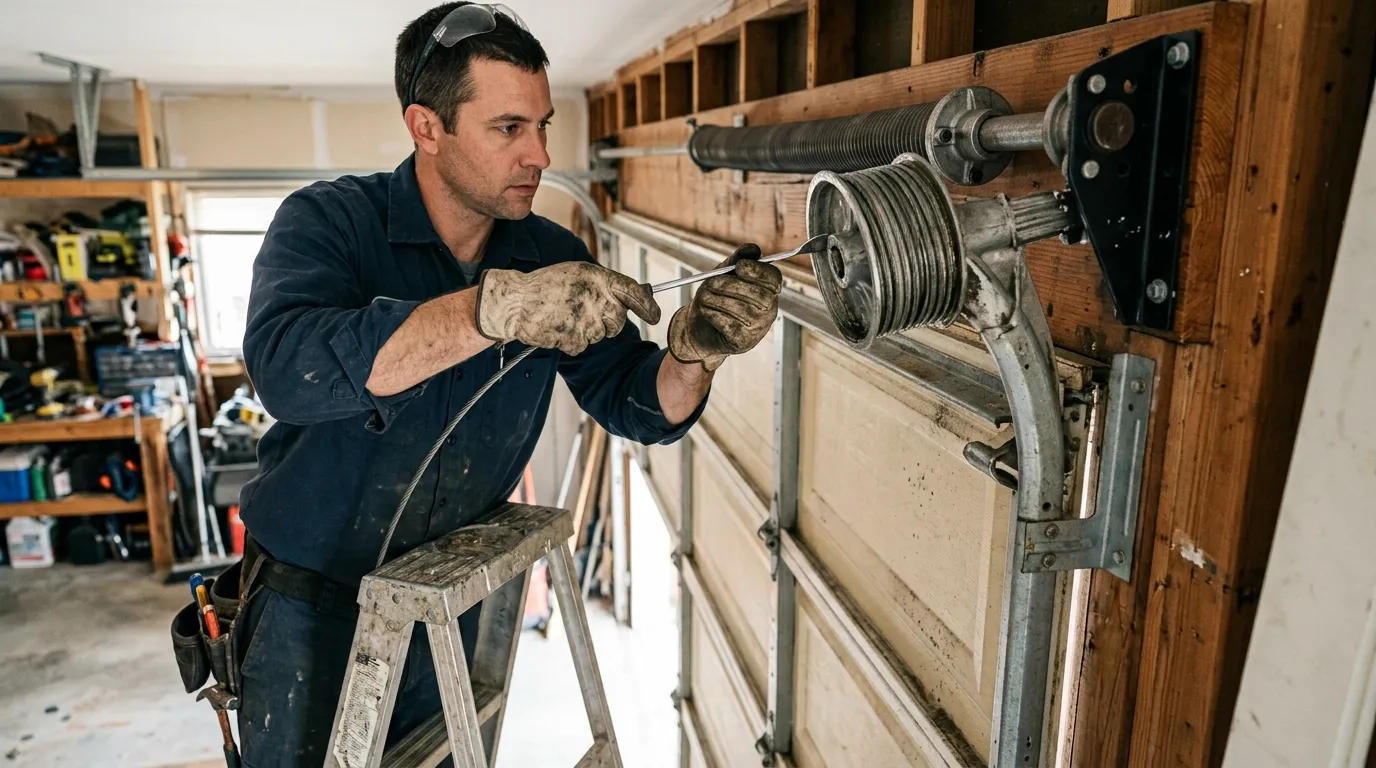
Springs on doors this old have usually been replaced at least once already, sometimes with a spring rated for a different door weight than what's currently hanging. That mismatch is one of the more common issues we find on older stock: a spring that's technically holding but working harder than it should, which shortens the life of the opener motor too.
We won't try to force a modern opener onto rail hardware that's too far gone to support it safely. Sometimes the honest call is replacing the track before the opener goes in, even if that adds a step nobody wanted.
The Houses Here
Barrett is a small pocket within a service area of roughly 30,112 households, but its own household count is closer to 1,081 - a tight, specific stretch of homes rather than a sprawling subdivision. Median household income here runs about $70,594, close to the wider area's $70,478, so this isn't a place where garage doors get swapped out on a whim; repairs tend to matter and budgets tend to matter with them.
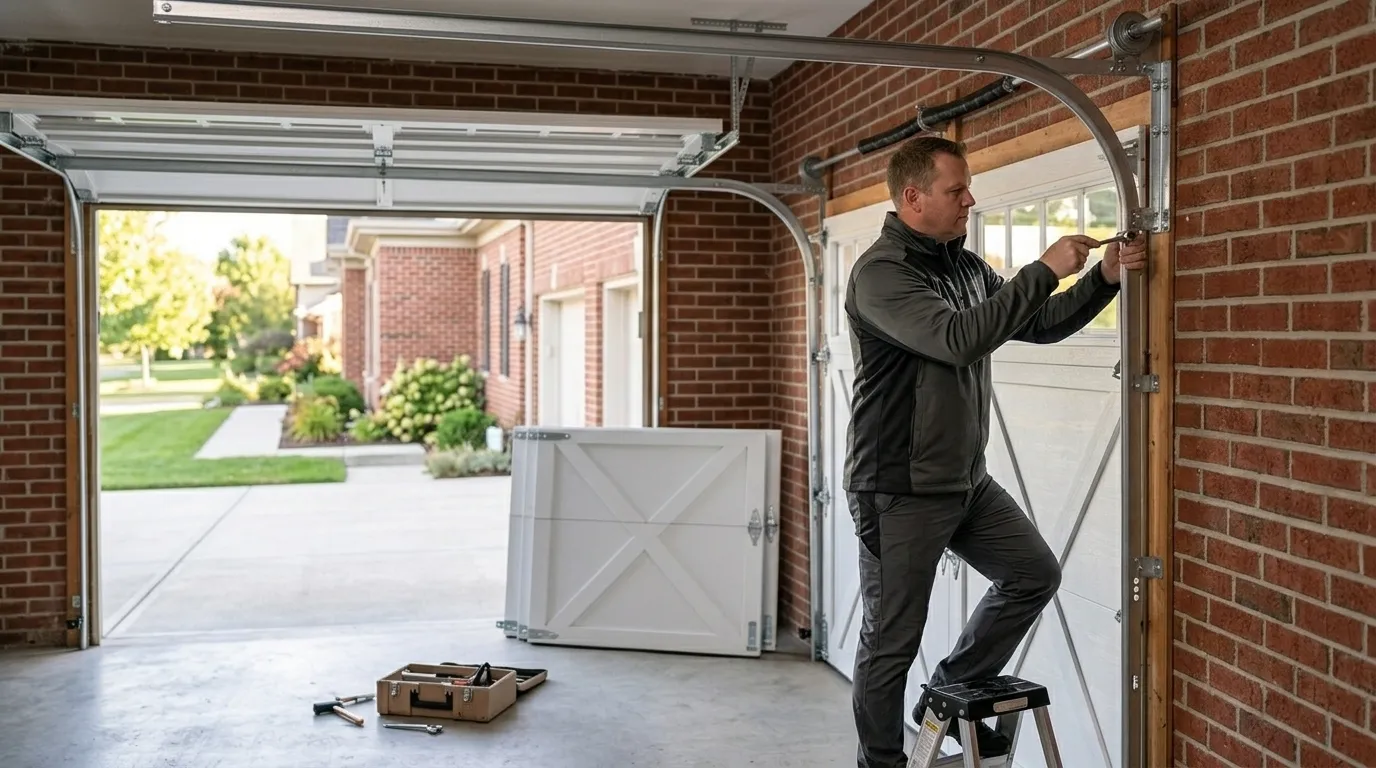
Given the 1976 median build date, we expect to see a decent share of doors original to the house or close to it, alongside openers that were clearly added later as an upgrade. That combination - old door, newer opener bolted onto old track - is exactly the kind of mismatch that causes premature wear on both ends. When we're out this way, we look at the whole system, not just whichever part is making noise that day, because on a house this age the parts are rarely independent of each other.