Season by Season
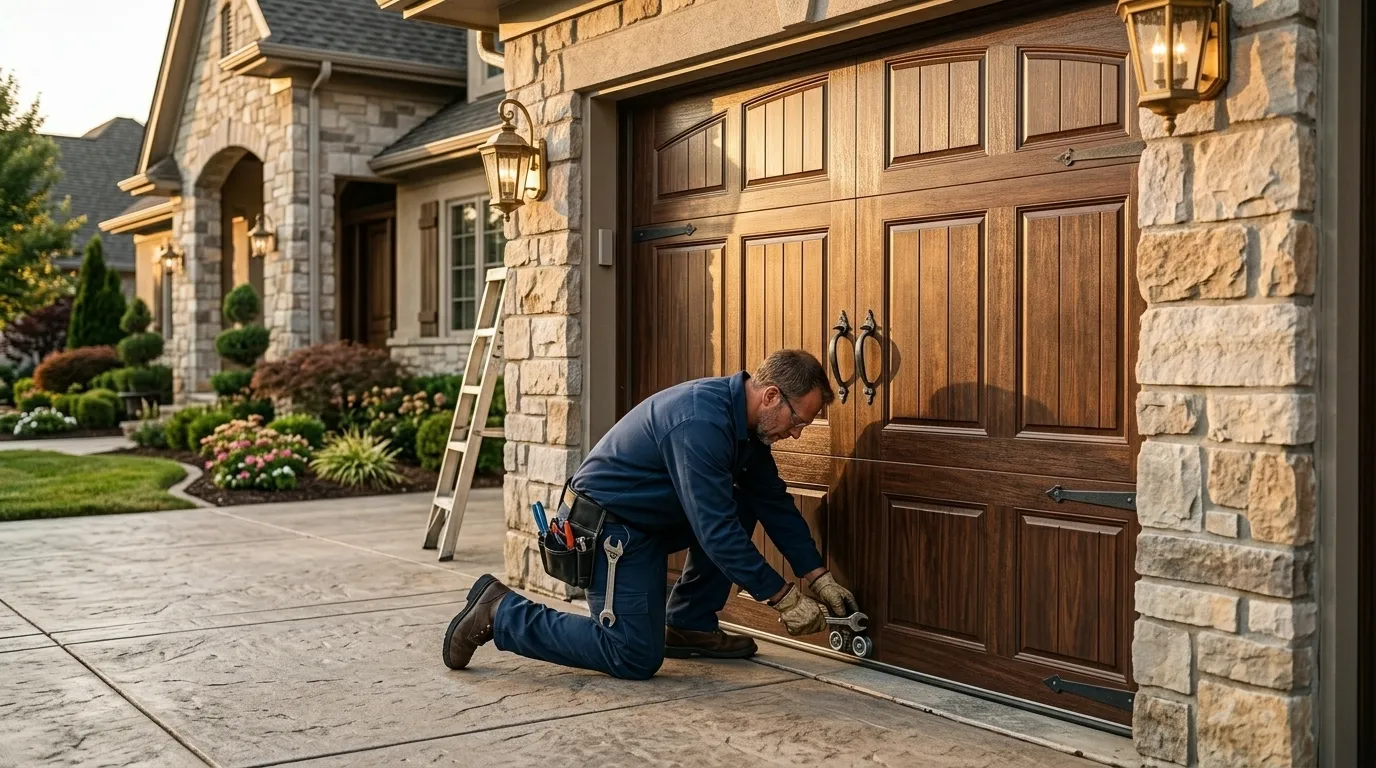
Humble sits in a mild climate band with only occasional freeze, not the hard winters you'd get further north. That's good news for the door itself - the panels, tracks, and rollers aren't fighting ice buildup most of the year. Where the season actually shows up is in the opener. A cold night here and there stiffens the grease on an older chain-drive unit, which is why a door that ran quiet in July can groan in January. Warmer months bring their own strain: heat swells the wood or steel jamb slightly, throws the photo-eye sensors out of true alignment by a hair, and that's often the call we get - "the door won't close, it just blinks." None of this is dramatic weather. It's ordinary wear that shows up differently depending on the month, and it matters more if your opener is already old. If the unit came with the house rather than after it, and the house went up decades ago, you're running gear that was never built with today's battery-backup standard in mind. That's the piece worth tracking through the year, not just when something breaks.
What to Look At First
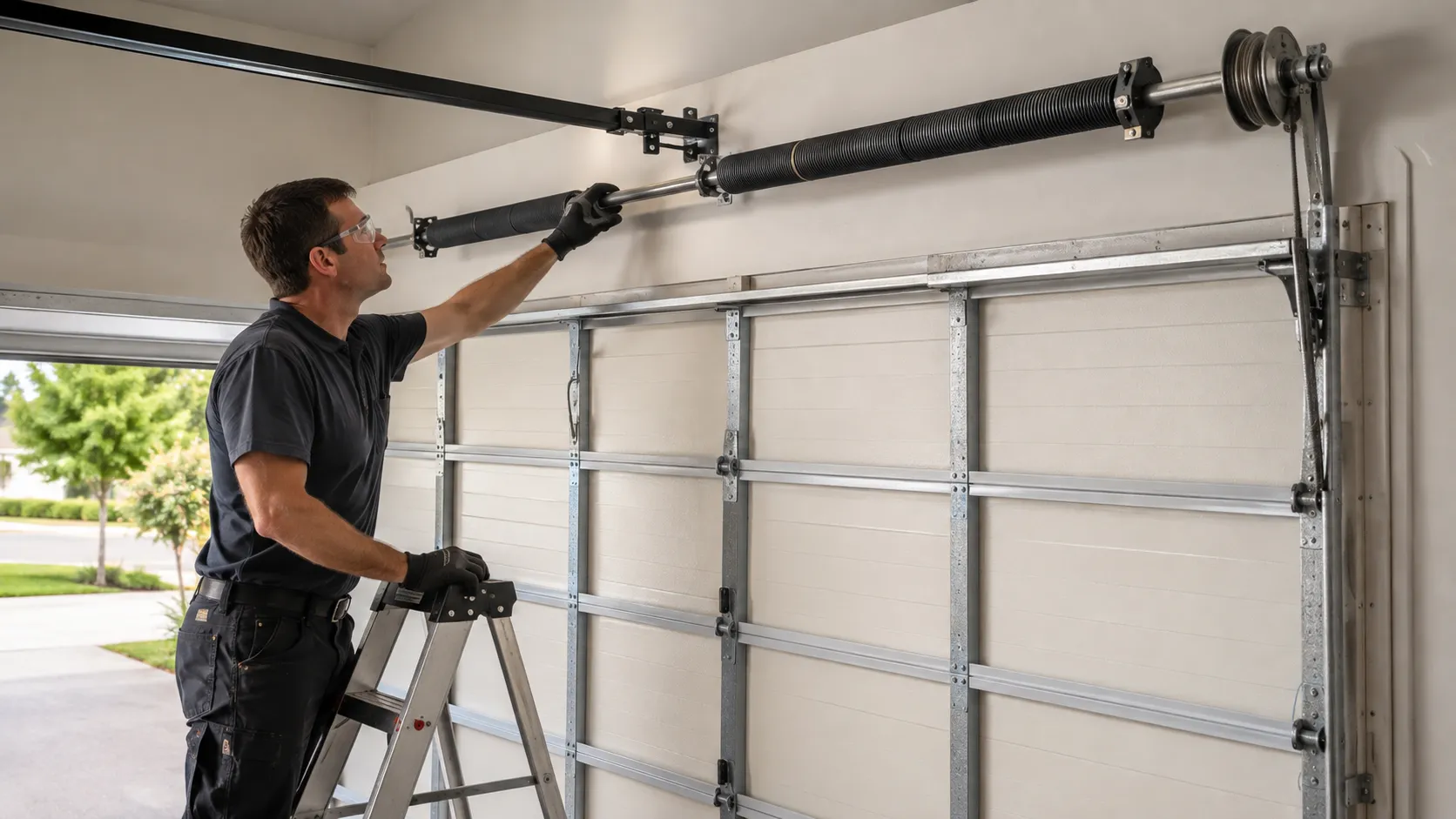
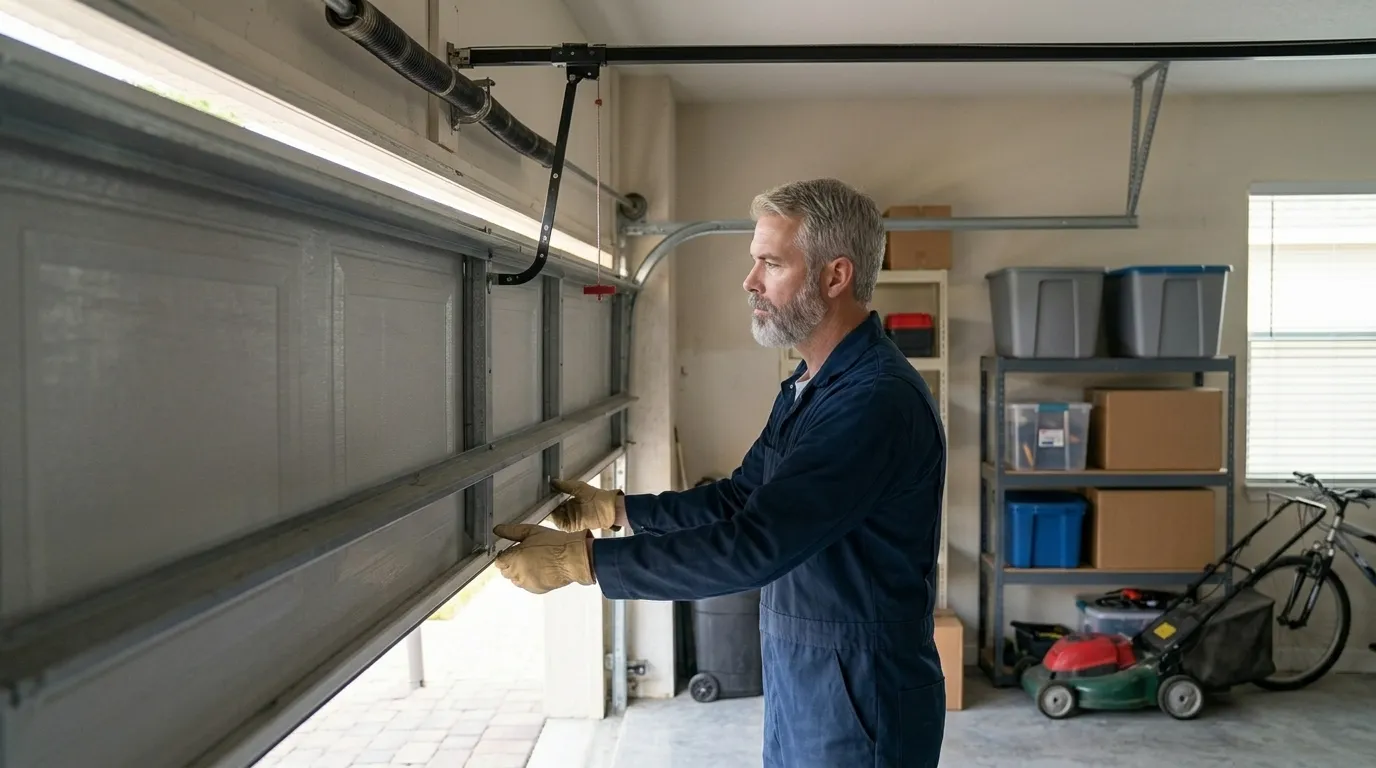
Start with the manual release - the red cord hanging from the trolley. Pull it with the door down and see if the door moves by hand without a fight. If it doesn't, a spring or cable is doing more work than it should, and that's a separate job from the opener. Next, check whether your unit has battery backup built in. A lot of openers installed when this area's housing stock was going up - median build year 1981, most of it dating 1956 to 2011 - predate battery backup as a standard feature. If yours doesn't have it, a power cut means the door is stuck wherever it was when the power dropped, full stop, no override but the manual release. Look at the wall control too: does it have a battery icon or a backup light. Then check the opener's age against the house. If the house is older 1980s-90s stock and the opener looks original, it's probably run 20-plus years on the same gears, and that's past due for a look regardless of what the power grid does.
How Local Conditions Play In
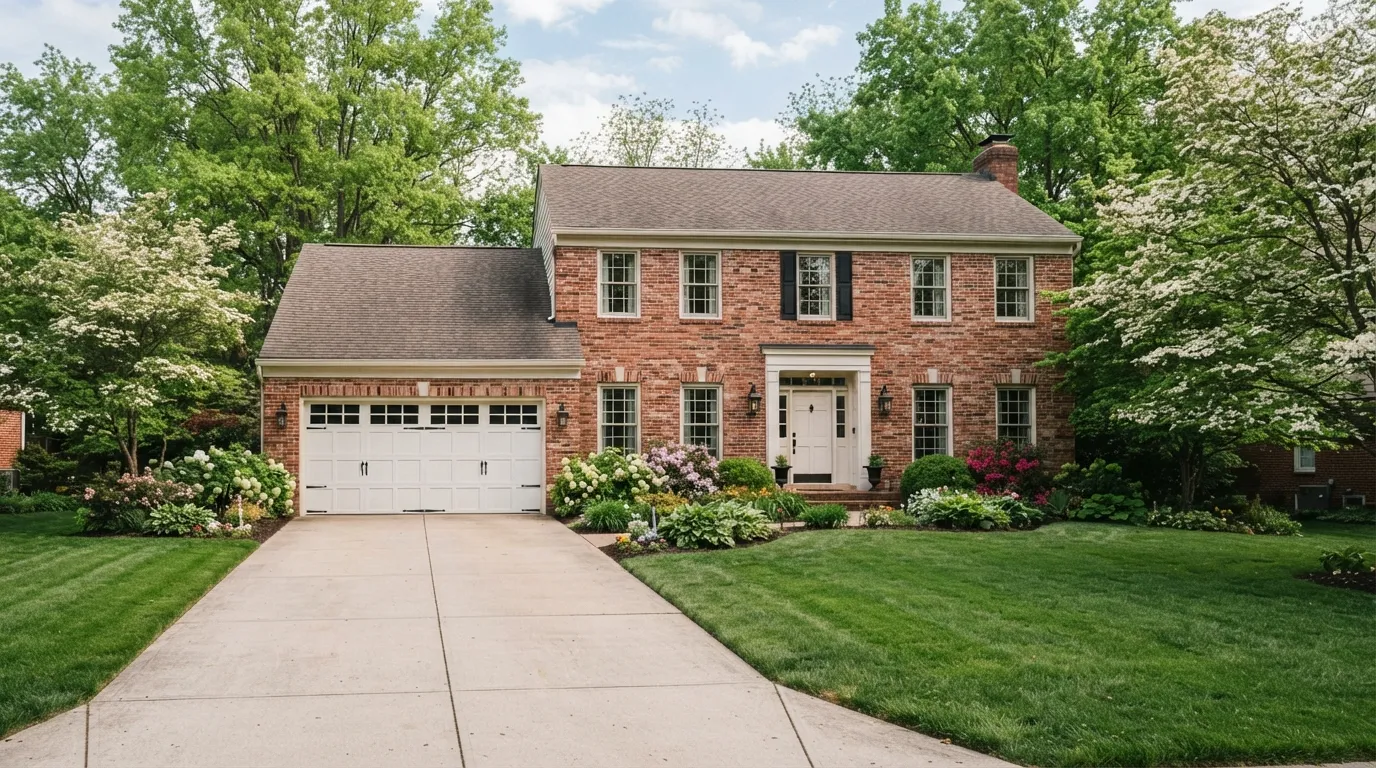
The mix of housing across this area - mostly 1980s and 90s stock spread across the named areas we serve, with some going back to the 1950s - means opener generations are all over the map. A door in a house built in 1975 and one built in 2005 are running different eras of hardware entirely, and parts for the older units are getting harder to source; a burnt-out circuit board from a 1980s opener isn't something we can always match exactly. Humble's mild-with-occasional-freeze climate doesn't stress the mechanics the way a harsher climate would, so we're not chasing weather damage here. What we're chasing is age and power reliability meeting each other at the wrong time - an old opener with no backup, in a house where the door happens to be someone's only way in or out of the garage. If you're not sure which category your setup falls into, the honest first step is checking the opener's install date on the unit itself, not guessing from the house.