Season by Season
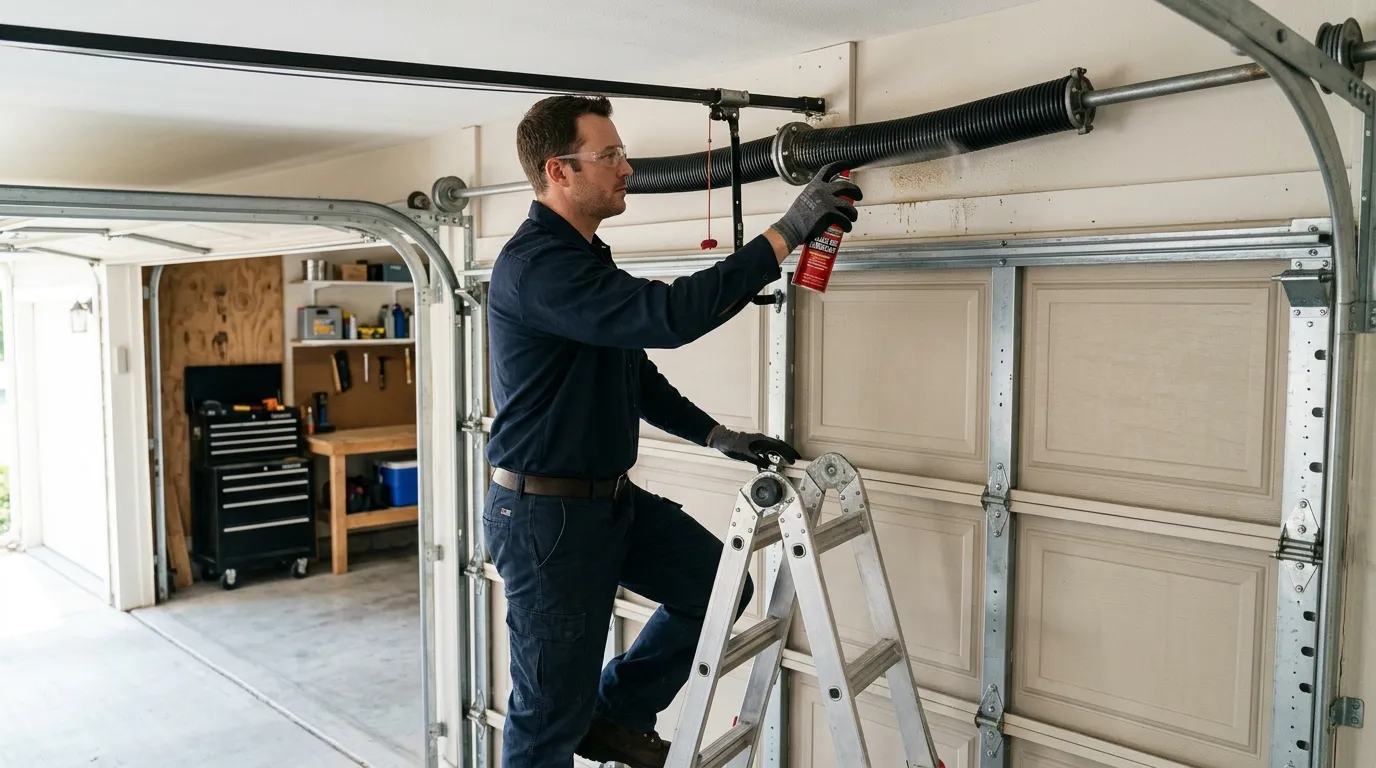
Humble sits in a mild climate band, but it's not a climate that leaves doors alone. Summers push steel panels through repeated heat cycles, and the occasional freeze morning in winter stiffens grease in the spring coils and hardens old weatherstrip until it cracks at the corners. It's not the dramatic swing you'd get further north, but it's steady wear, year over year, on hardware that was never rated for forty years of service.\n\nSpring is when we see the most rust-related calls, because humidity sits in the tracks and bottom brackets after a wet stretch and nobody's out there wiping it down. Fall tends to be quieter, but it's the best time to catch a spring that's a season or two from snapping, before the cold mornings put more load on it. If your door groans on the way up during the first cold snap, that's not the door adjusting - that's the spring telling you it's tired.\n\nNone of this means Humble sees ice storms or hard freezes that crack concrete. It means small stresses, repeated for decades, on doors that were installed when a different set of building standards applied.
What to Look At First
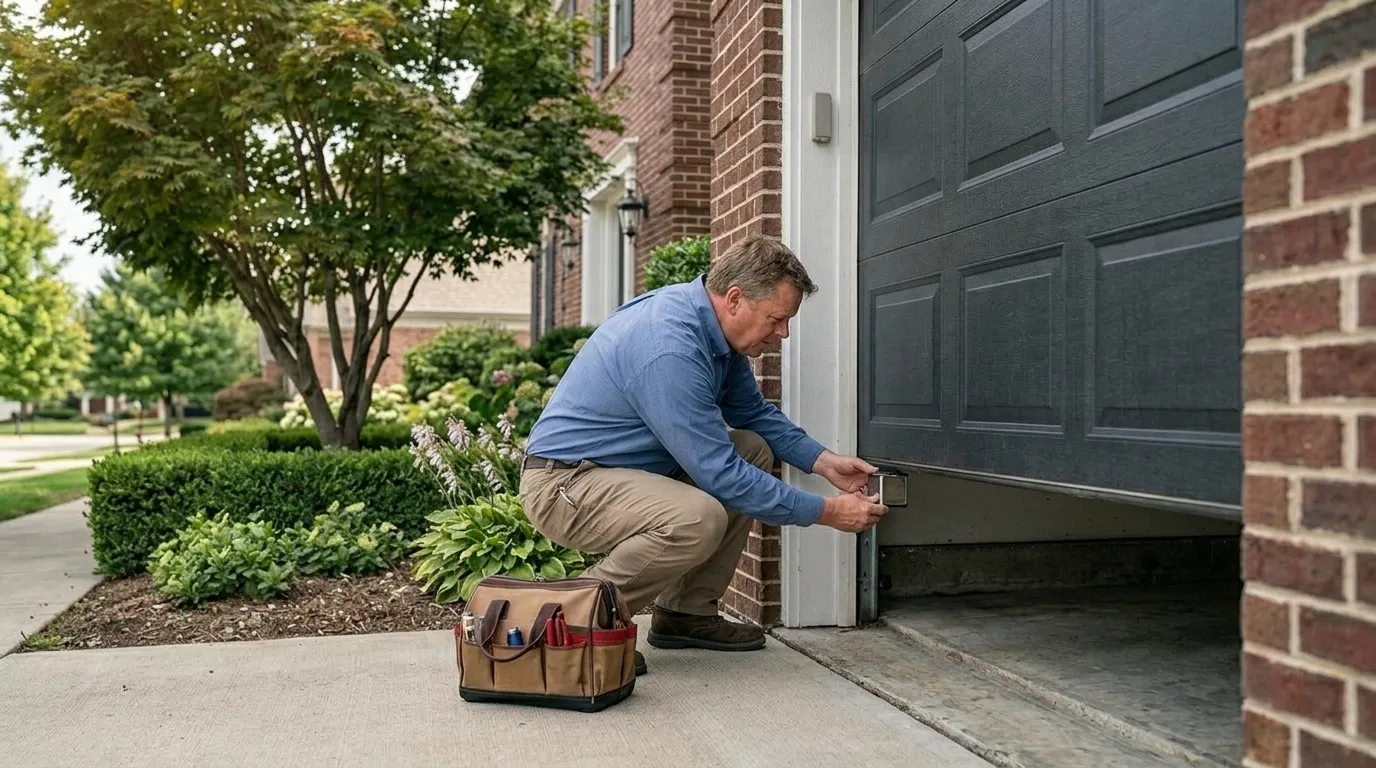
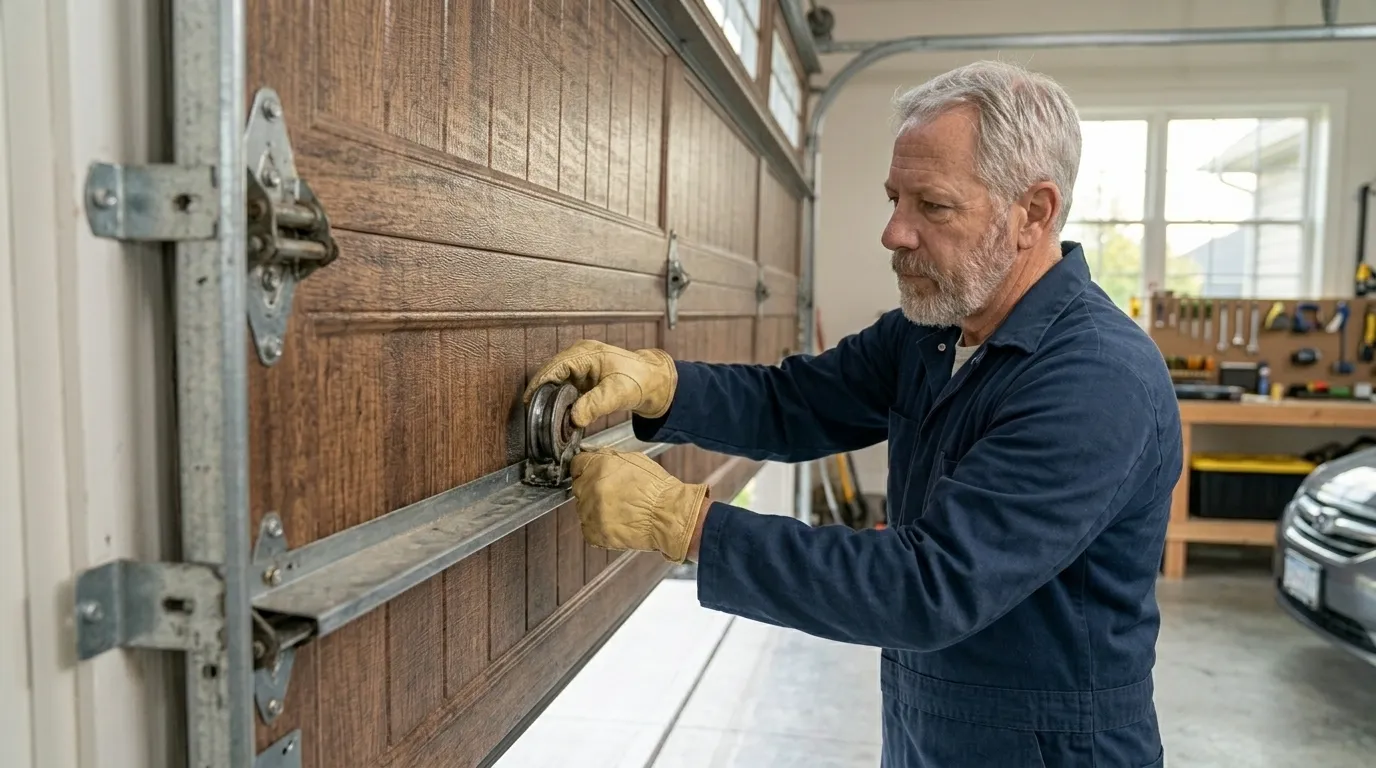
Given that most houses in Humble were built between 1956 and 2011, with a lot of that stock landing in the 1980s and 90s, the first thing worth checking isn't the opener - it's the spring and the bottom panel. Original torsion springs from that era are rated for a fixed number of cycles, and most have long since burned through that count even under light use.\n\nLook at the bottom panel first. If it's steel and shows rust bubbling through the paint at the corners, that's moisture that's been getting in for years, not a one-time spill. Next, check the rollers - if they're the original nylon or steel rollers with no bearing, they'll be loud and pitted by now. Pull the release handle and lift the door by hand with the opener disconnected. If it's hard to lift or it drops on its own, the spring is not doing its job and that's a safety issue, not a convenience one.\n\nLast, check the opener's date. If it predates the mid-90s, it likely lacks the auto-reverse sensors that are standard now, and that alone can be reason enough to replace rather than patch.
How Local Conditions Play In
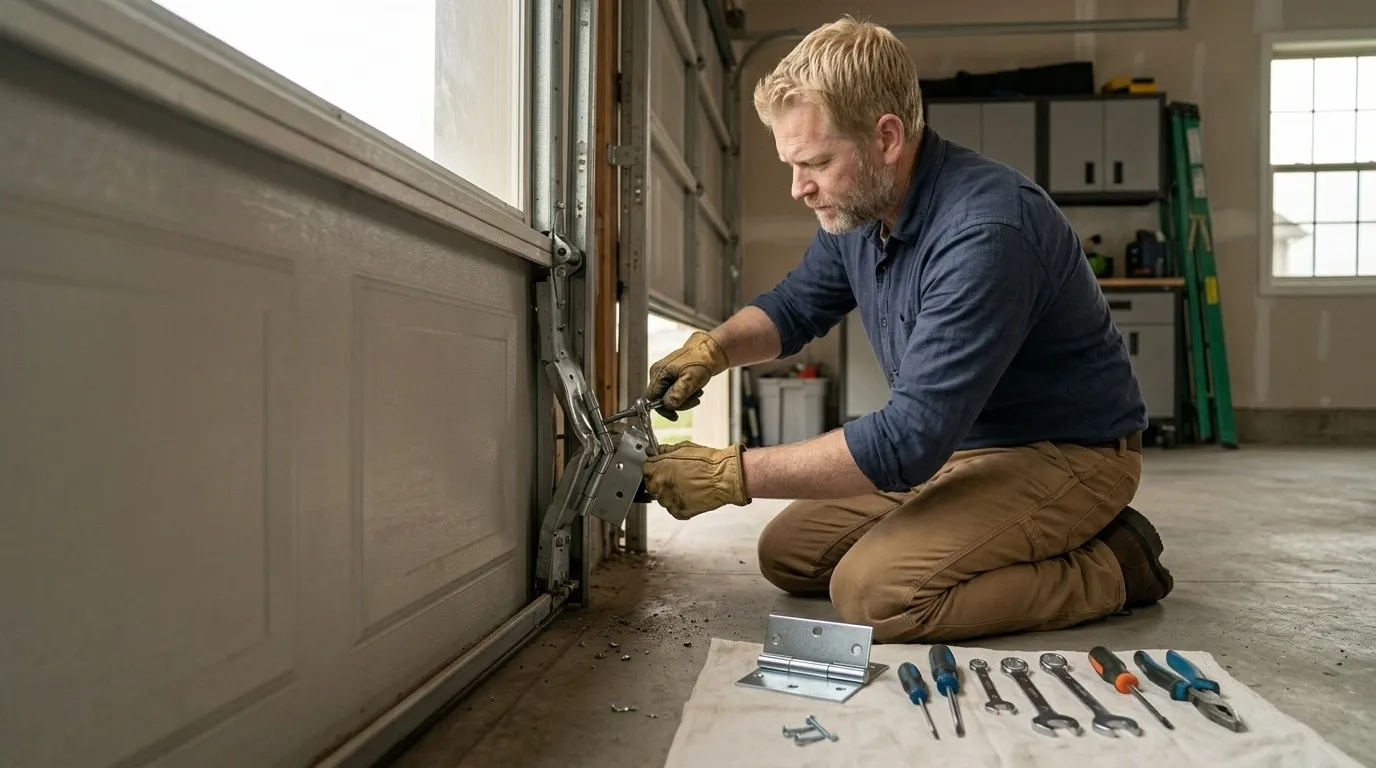
With 30,112 households in the service area and 17,400 of those owner-occupied, a lot of Humble is still living with the door that came with the house. At a median household income of $70,478, most homeowners we talk to are weighing a repair bill against a replacement bill, not treating either as an easy yes.\n\nThat's where the mild-with-occasional-freeze climate matters more than people expect. It's gentle enough that a door doesn't fail catastrophically overnight the way it might somewhere with hard winters, but it's active enough - humidity, heat cycling, the odd cold snap - that a marginal spring or a rusted track corner keeps getting worse slowly, until one cold morning it doesn't lift at all. A door that's been quietly failing for two years picks its moment on the day you least want it to.\n\nOur rule of thumb: if the door is original to a house built in the 1980s or 90s and you're now looking at a second or third repair inside a year, the math usually favors replacing the door rather than the parts. If it's had one issue in a decade, it's probably still worth fixing.